
Road Design Using Civil 3D – Unlock Your Future in Transportation Engineering Today
The demand for smarter, safer, and more sustainable roads is growing every day. Governments, construction firms, and city planners are searching for skilled engineers who can deliver infrastructure that meets modern standards. To achieve this, professionals need tools that bring both accuracy and speed. One such powerful tool is Civil 3D, a design software that has revolutionized road and highway projects across the globe.
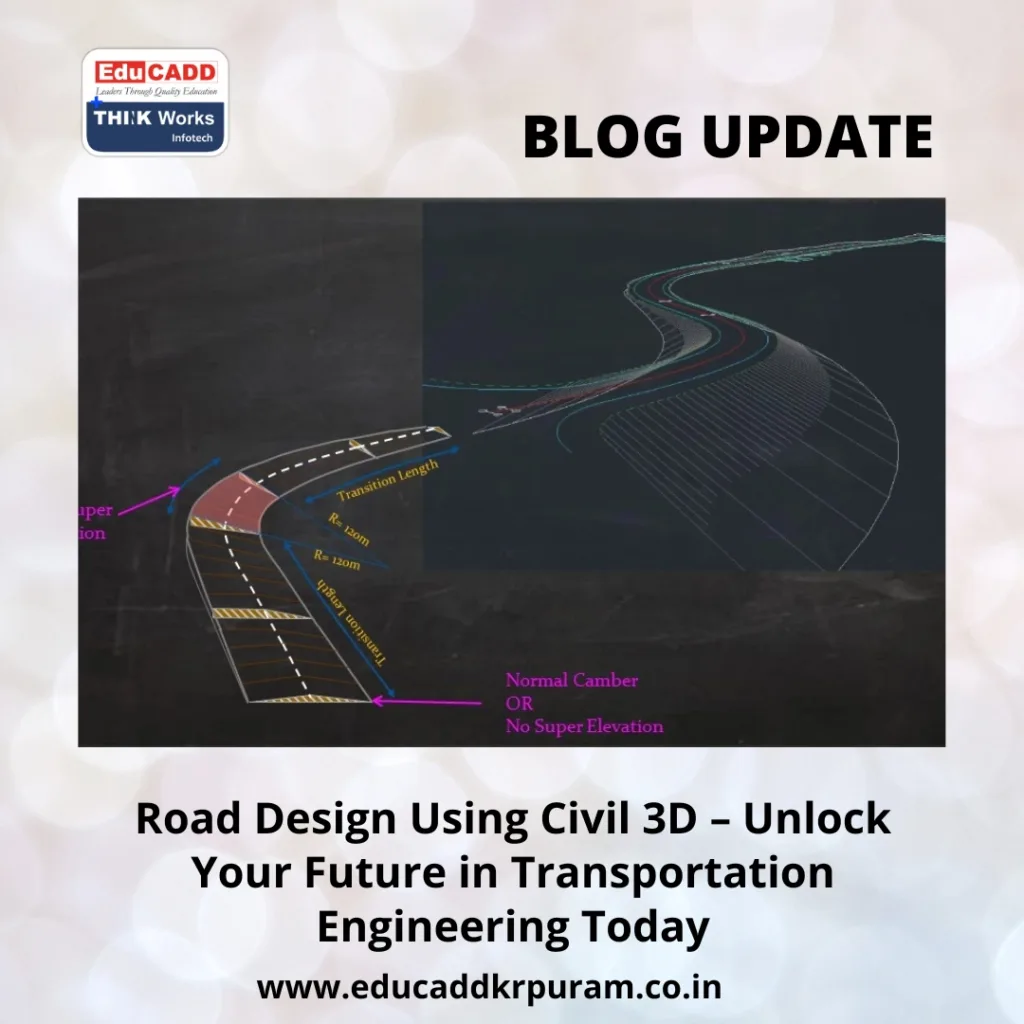
Road Design Civil 3D
If you are an aspiring civil engineer or an experienced professional who wants to upgrade your skills, learning road design using Civil 3D is one of the best choices you can make. This software combines intelligent modeling, data-rich analysis, and seamless documentation to simplify even the most complex road projects. In this blog, we will explore its importance, its core features, the best way to learn it, its practical applications, and the career opportunities it opens for you.
Why Road Design Using Civil 3D Matters Today
Modern infrastructure projects no longer depend on traditional drafting alone. Road networks require precise alignment, quick revisions, and cost-efficient solutions. Manual methods often fall short because they are time-consuming and prone to human error. Civil 3D fills this gap by offering a dynamic design environment.
When you make a change in a road alignment, Civil 3D automatically updates the profiles, cross-sections, and corridor models. This ensures accuracy while reducing repetitive work. Furthermore, the software improves collaboration by allowing multiple teams—such as surveyors, architects, and engineers—to work with the same dataset. That way, the design remains consistent throughout the project.
Thus, road design using Civil 3D is more than just digital drafting. It creates intelligent, adaptable models that behave like real roads, enabling better planning, faster revisions, and higher quality results.
Key Features That Simplify Road Design in Civil 3D
Civil 3D is equipped with advanced tools that make road projects smoother and more accurate. Below are some features that every learner should focus on:
-
Alignment Design – Civil 3D allows you to create precise horizontal layouts with smooth curves and transitions.
-
Profiles and Surfaces – You can generate surfaces from survey data and then design vertical profiles that suit the terrain.
-
Corridor Models – By combining alignments, profiles, and assemblies, Civil 3D creates detailed 3D models of roads that you can analyze and refine.
-
Cross-Sections – The software automatically produces dynamic cross-sections, helping you evaluate your design at different points.
-
Quantity Calculations – Civil 3D makes cut-and-fill analysis simple, saving time during cost estimation and project planning.
These tools transform a simple idea into a practical, construction-ready road design. As a result, engineers can deliver high-quality outcomes while meeting project deadlines.
How to Learn Road Design Using Civil 3D Step by Step
Learning Civil 3D may seem challenging at first, but with the right approach, anyone can master it. Here’s a simple path you can follow:
Step 1: Learn AutoCAD Fundamentals
Civil 3D is built on the AutoCAD platform. A strong foundation in AutoCAD basics such as drawing commands, coordinate systems, and editing tools will help you progress faster.
Step 2: Explore the Civil 3D Workspace
Spend time understanding tool palettes, project settings, and drawing styles. Knowing how to manage templates and styles will keep your projects organized.
Step 3: Practice Surface and Alignment Design
Start by creating surfaces from survey points. Then move on to alignments, which form the foundation of any roadway design.
Step 4: Build Corridor Models
Experiment with assemblies and subassemblies. Modify profiles and alignments to see how the corridor adjusts automatically.
Step 5: Learn Analysis and Reporting
Focus on generating cross-sections, cut-and-fill reports, and construction documentation. These skills connect your design work to actual site execution.
The best way to master Civil 3D is through consistent practice. Enrolling in structured training programs or online courses can also speed up your learning.
Real-World Uses of Road Design in Civil 3D
Civil 3D is not just a classroom tool—it plays a central role in real engineering projects worldwide. Here are some areas where it is commonly applied:
-
Highways and Expressways – Civil 3D ensures geometric accuracy in large-scale highway and interchange projects.
-
City Road Networks – It supports the design of intersections, lane expansions, and pedestrian-friendly layouts in urban planning.
-
Rural Road Development – Governments use it to design cost-effective rural roads that improve regional connectivity.
-
Green Infrastructure – Civil 3D integrates with hydrology tools to design drainage and stormwater management systems alongside roads.
-
Road Renovation Projects – Existing roads can be redesigned in Civil 3D to handle higher traffic loads or meet new safety standards.
Because it produces both 2D plans and 3D visualizations, Civil 3D allows stakeholders to clearly understand project outcomes before construction begins. This reduces costly delays and boosts project efficiency.
Career Growth with Road Design Using Civil 3D
Civil engineering professionals with Civil 3D expertise enjoy significant career benefits. As infrastructure investment continues to rise, these skills become even more valuable.
More Job Opportunities
Many companies now list Civil 3D as a required skill for design engineers, project managers, and transportation planners.
Better Salary Prospects
Civil 3D professionals often earn higher salaries because their skills allow firms to save time and reduce errors.
Global Recognition
Civil 3D is used around the world, giving you access to international job opportunities.
Specialization Options
With expertise in road design, you can grow into roles such as highway engineer, roadway consultant, or transportation specialist. Each of these paths offers stability and long-term growth.
Learning Civil 3D today puts you ahead of competitors who may still rely on outdated design methods.
Conclusion: Begin Your Learning Journey Now
The future of road and highway projects is digital, and Civil 3D is leading this change. By mastering Road Design Civil 3D, you gain a skill that blends creativity with precision. From designing rural roads to planning massive highways, this software enables you to create smarter, safer, and more efficient infrastructure.
Now is the time to take the first step. Start by building your basics, practice consistently, and enroll in structured training programs. Every hour you invest today will strengthen your career tomorrow.
If you want to stay competitive and contribute to the next wave of infrastructure growth, the answer is clear: start learning Civil 3D today and unlock your future in road design.

