
Shaping Tomorrow’s Cities: Advanced Smart Infrastructure Design with BIM Tools
The construction and management of modern urban spaces have evolved dramatically. Today, infrastructure is expected to be not just functional but also intelligent, sustainable, and adaptable. Smart BIM City Design has emerged as a revolutionary approach, enabling architects, engineers, and planners to conceptualize, visualize, and execute projects with unprecedented accuracy.
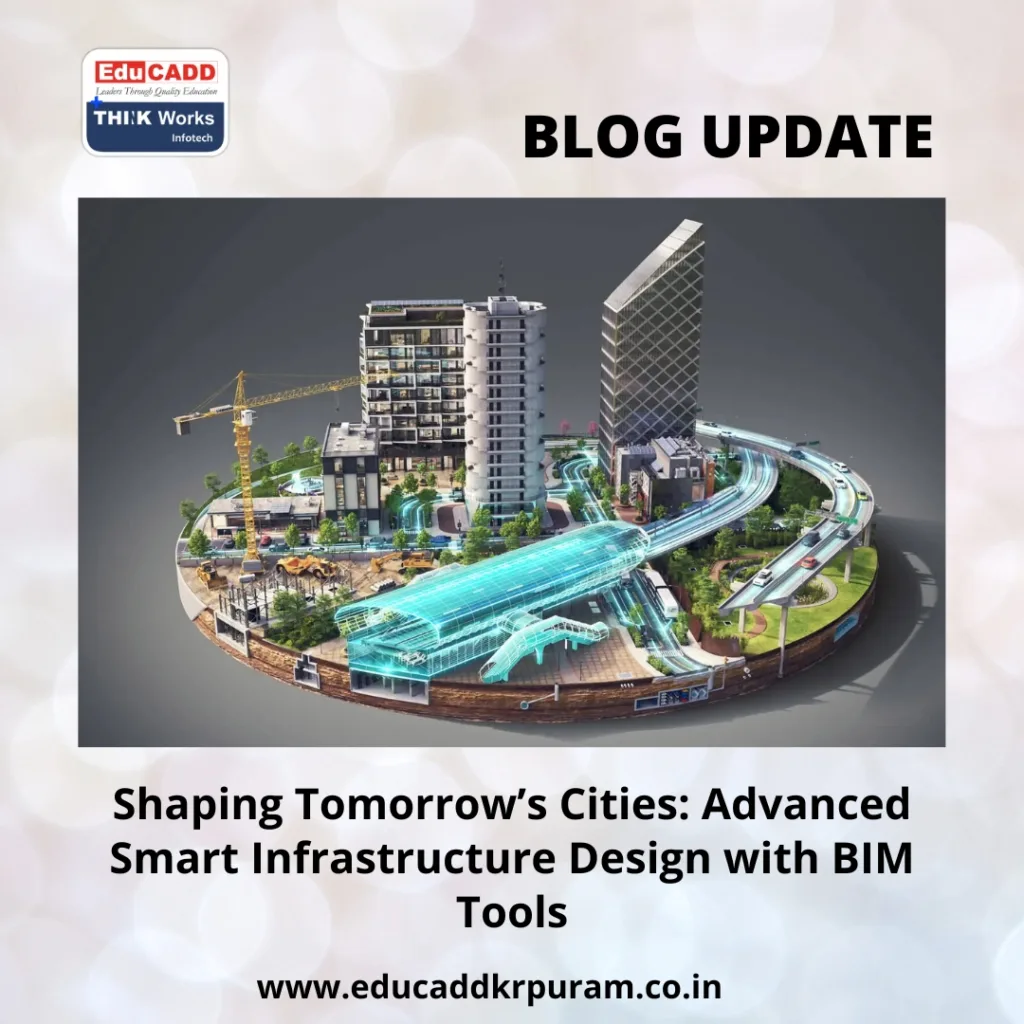
Smart BIM City Design
BIM, or Building Information Modeling, is more than software; it’s a collaborative methodology that combines 3D modeling, data management, and digital workflows. With BIM tools, infrastructure projects become smarter, cost-efficient, and environmentally conscious. This article explores how smart infrastructure design using BIM tools is transforming the way we build cities, emphasizing its benefits, implementation strategies, and future trends.
Understanding Smart Infrastructure and BIM Tools
Smart infrastructure integrates digital intelligence, sustainability, and operational efficiency into physical systems. This includes transportation networks, bridges, utilities, and public facilities. Unlike traditional infrastructure, smart systems rely on real-time data, predictive analysis, and adaptive designs.
BIM tools serve as the backbone of this digital approach. They allow professionals to create 3D models enriched with detailed information about materials, geometry, scheduling, and cost estimates. In smart infrastructure projects, BIM enables early detection of design conflicts, efficient resource planning, and seamless collaboration across multiple teams.
Furthermore, smart infrastructure design using BIM tools facilitates the entire lifecycle management of a project. From initial concept to construction, operation, and maintenance, every phase can be tracked and optimized digitally, reducing errors and ensuring sustainability.
Key Benefits of Smart Infrastructure Design Using BIM Tools
Incorporating BIM into infrastructure projects offers numerous advantages:
-
Enhanced Collaboration: Multiple stakeholders can work on the same model simultaneously. Real-time updates improve coordination and reduce miscommunication.
-
Improved Planning Accuracy: BIM enables scenario simulations, structural analysis, and risk assessments before construction begins, reducing costly errors.
-
Cost and Time Efficiency: Accurate modeling and resource estimation help avoid budget overruns and minimize project delays.
-
Sustainability Integration: BIM allows energy analysis, efficient material usage, and environmental impact assessments, promoting green infrastructure.
-
Lifecycle Management: BIM supports monitoring and maintenance after project completion, ensuring long-term efficiency and durability.
By adopting smart infrastructure design using BIM tools, organizations can deliver projects that are precise, resource-efficient, and future-ready.
Essential BIM Tools for Infrastructure Projects
Several BIM tools have become indispensable for designing smart infrastructure:
-
Autodesk Revit: Ideal for architectural and structural modeling, offering precise visualization and coordination.
-
Navisworks: Facilitates clash detection, project coordination, and timeline management across disciplines.
-
Bentley Systems: Specializes in civil and transportation infrastructure, including geospatial analysis and lifecycle management.
-
Tekla Structures: Focuses on structural detailing, fabrication planning, and highly accurate construction documentation.
-
Civil 3D: Designed for civil projects like roads, bridges, and drainage systems, automating design processes and improving efficiency.
By integrating these tools, professionals ensure that smart infrastructure design using BIM tools is not only precise but also collaborative and adaptable. Each platform contributes to creating a comprehensive digital model for smarter decision-making.
Strategies for Implementing Smart Infrastructure with BIM
Implementing BIM in infrastructure projects requires a structured approach:
-
Digital Modeling: Develop detailed 3D models incorporating topography, environmental conditions, and structural elements.
-
Collaborative Workflows: Engage all stakeholders—including architects, engineers, contractors, and facility managers—in a shared BIM environment.
-
Simulation and Analysis: Use BIM to simulate construction processes, traffic patterns, energy consumption, and potential risks.
-
IoT Integration: Connect BIM models with sensors to monitor infrastructure performance in real-time, including traffic, energy, and structural health.
-
Continuous Monitoring: Post-construction, BIM allows predictive maintenance and optimization, extending infrastructure lifespan and efficiency.
Following these strategies ensures that smart infrastructure design using BIM tools maximizes operational efficiency, reduces costs, and creates resilient urban systems.
Future Trends in Smart Infrastructure and BIM
The future of infrastructure design is digital, intelligent, and connected. Several emerging trends are shaping this evolution:
-
Artificial Intelligence (AI): AI can optimize designs, predict failures, and suggest eco-friendly materials.
-
Digital Twins: Real-time virtual replicas of infrastructure enable monitoring, performance assessment, and predictive maintenance.
-
Cloud-Based Collaboration: Teams worldwide can collaborate seamlessly, improving efficiency and reducing project delays.
-
Augmented and Virtual Reality (AR/VR): AR and VR provide immersive project visualization, facilitating better decision-making and stakeholder engagement.
-
Sustainability Focus: Future projects emphasize energy efficiency, waste reduction, and environmentally responsible practices.
These trends indicate that smart infrastructure design using BIM tools will continue to play a pivotal role in building resilient, adaptive, and sustainable urban environments.
Conclusion: Why Smart Infrastructure Design Using BIM Tools is Vital
In conclusion, Smart BIM City Design represents a paradigm shift in how cities are planned and built. It enables engineers, architects, and planners to deliver sustainable, efficient, and intelligent infrastructure projects. By integrating data-driven workflows, real-time collaboration, and predictive simulations, BIM transforms traditional construction into a modern, adaptive process.
The benefits are clear: better planning, reduced costs, enhanced sustainability, and comprehensive lifecycle management. As cities expand and urban challenges grow, mastering smart infrastructure design using BIM tools is essential for creating resilient, future-ready urban spaces.
Embracing BIM in infrastructure development is not merely adopting technology—it is adopting a smarter, more responsible approach to shaping the cities of tomorrow.

