
Thermal Dynamics in Mechanical Engineering: Designing Components That Withstand Heat
Temperature plays a powerful role in the performance and longevity of mechanical systems. Every mechanical component that operates under motion, friction, pressure, or electrical energy generates heat during its operation. If this heat is not carefully controlled, it can gradually weaken materials, reduce mechanical efficiency, and lead to serious equipment failures. For this reason, engineers pay close attention to how heat behaves inside mechanical components during the design and testing stages. Thermal Dynamics Mechanical Engineering allows engineers to study how heat flows through materials, how temperatures vary across different parts of a structure, and how these variations influence mechanical behavior. By understanding these thermal effects, engineers can design components that maintain strength, dimensional accuracy, and operational reliability even under extreme working conditions. This analysis helps prevent overheating and ensures that systems perform efficiently over long periods.
With the development of advanced engineering software and computational modeling tools, thermal analysis has become far more accurate and efficient than traditional experimental methods alone. Engineers can now simulate real-world conditions and evaluate heat distribution in complex systems before any physical prototype is manufactured. This capability helps reduce development time, minimize design errors, and improve product quality.
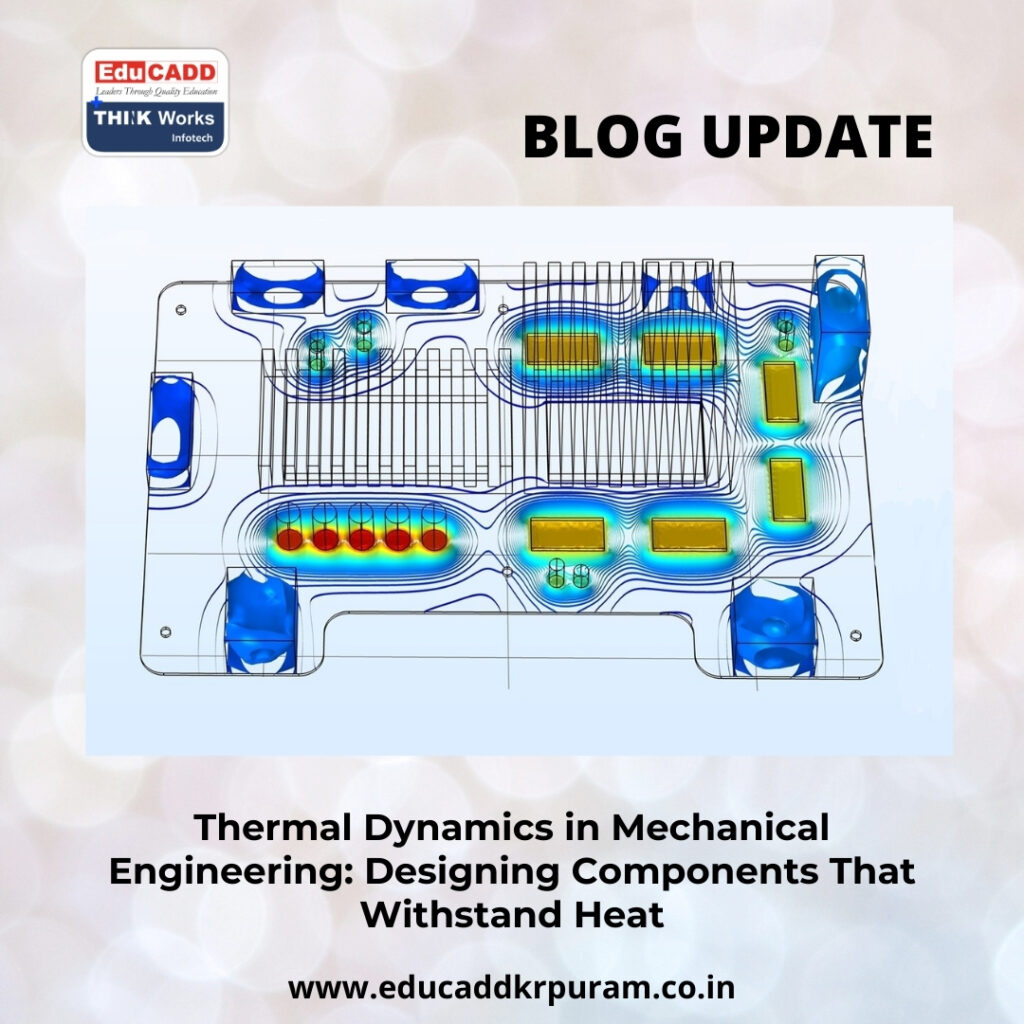
Thermal Dynamics Mechanical Engineering
Today, Thermal Dynamics Mechanical Engineering is used across numerous industries including automotive engineering, aerospace design, power generation, electronics manufacturing, and industrial machinery. By integrating thermal evaluation into the design process, engineers can develop mechanical systems that deliver higher performance, improved safety, and longer service life.
Understanding Thermal Analysis in Mechanical Components
Thermal Dynamics Mechanical Engineering refers to the systematic examination of temperature distribution and heat transfer within mechanical structures. Engineers use this process to understand how thermal energy moves through materials and how temperature changes influence mechanical performance. This knowledge is essential because temperature variations can significantly affect the behavior of materials and structural components.
Mechanical components often operate under conditions where heat is continuously generated. Friction between moving parts, electrical energy conversion, chemical reactions, and environmental exposure all contribute to heat production within machines. If this heat accumulates in certain areas, it can create localized hot spots that weaken the structure and affect operational efficiency.
Thermal analysis helps engineers identify these critical regions and evaluate how heat spreads through the system. By studying temperature gradients and heat flow patterns, engineers can determine whether the design can withstand expected operating conditions.
In addition to identifying potential risks, thermal analysis also supports design improvements. Engineers may modify component geometry, improve ventilation paths, or introduce cooling mechanisms to ensure that heat dissipates effectively throughout the system.
The Role of Temperature in Mechanical Performance
Temperature influences almost every aspect of mechanical performance. As components heat up during operation, their physical properties begin to change. Materials may expand, soften, or lose structural strength depending on the temperature range they experience.
Thermal expansion is one of the most common effects of temperature variation in mechanical systems. When materials absorb heat, their molecules move more rapidly, causing the material to expand. This expansion can alter the alignment of components and affect precision in machines that require tight tolerances.
Another concern is thermal fatigue, which occurs when components repeatedly heat and cool during operation. Over time, this continuous expansion and contraction can create small cracks within the material. These cracks may grow gradually until the component eventually fails.
Thermal analysis allows engineers to predict these effects and design components that tolerate temperature fluctuations without losing functionality. By accounting for thermal influences during the design stage, engineers ensure that mechanical systems maintain reliable performance throughout their service life.
Basic Principles of Heat Transfer
To perform accurate thermal analysis, engineers must understand the basic mechanisms through which heat moves within mechanical systems. Heat transfer occurs through three primary processes: conduction, convection, and radiation. Each process plays an important role in determining temperature distribution within mechanical components.
Conduction occurs when heat travels through solid materials due to molecular interactions. In mechanical systems, heat generated in one area often spreads through adjacent materials by conduction. The rate at which this heat transfer occurs depends on the material’s thermal conductivity.
Convection involves heat transfer through the movement of fluids such as air or liquid coolants. Many mechanical systems rely on convection to remove heat from critical components. For example, cooling fans or liquid coolant systems transport heat away from engines and electronic equipment.
Radiation is the process by which heat energy is emitted as electromagnetic waves. Unlike conduction and convection, radiation does not require direct contact or fluid movement. High-temperature components often release heat through thermal radiation into the surrounding environment.
A thorough understanding of these heat transfer mechanisms helps engineers create accurate models of thermal behavior in mechanical systems.
Thermal Stress and Structural Integrity
When different parts of a mechanical component experience different temperatures, thermal stress may develop within the structure. Thermal stress occurs because materials expand or contract in response to temperature changes. If this movement is restricted by surrounding components, internal forces develop.
These internal stresses can lead to deformation, cracking, or even catastrophic failure if the material cannot withstand the stress levels. Components that operate in high-temperature environments are especially vulnerable to thermal stress.
Thermal Dynamics Mechanical Engineering enables engineers to evaluate these stress levels and determine whether the design can handle temperature-induced forces. By simulating temperature changes, engineers can identify areas where thermal stress may concentrate.
Design improvements such as flexible joints, expansion gaps, or alternative materials can then be introduced to reduce stress buildup. This proactive approach ensures that mechanical systems remain structurally stable even when exposed to extreme temperatures.
Importance of Material Selection in Thermal Design
Material selection plays a vital role in the thermal performance of mechanical components. Different materials respond to heat in different ways, and choosing the right material can significantly improve the durability and efficiency of a system.
Engineers consider several thermal properties when selecting materials for mechanical components. These properties include thermal conductivity, thermal expansion coefficient, heat capacity, and temperature resistance.
Materials with high thermal conductivity transfer heat quickly and are often used in applications where heat must be dissipated efficiently. Aluminum and copper are common examples of such materials. On the other hand, materials with low thermal conductivity may be used as insulation to prevent heat transfer.
Material stability at high temperatures is also an important consideration. Some materials lose strength or deform when exposed to excessive heat. Thermal analysis helps engineers determine whether a material can withstand the expected operating temperatures.
Proper material selection combined with effective thermal design ensures that mechanical components remain reliable throughout their operational life.
Use of Simulation Tools for Thermal Analysis
Modern engineering relies heavily on simulation technologies to analyze thermal behavior in complex systems. Thermal simulation tools allow engineers to create digital models of mechanical components and study how heat flows through them under various conditions.
These tools provide detailed visualizations of temperature distribution across the component. Engineers can easily identify areas where heat accumulates or where cooling may be insufficient.
One major advantage of simulation is the ability to evaluate multiple design options quickly. Engineers can modify geometry, materials, or cooling strategies and instantly observe how these changes influence thermal performance.
Simulation also reduces the need for extensive physical testing. Instead of building numerous prototypes, engineers can perform detailed thermal studies using computational models.
This capability not only saves time but also lowers development costs while improving design accuracy.
Industrial Applications of Thermal Analysis
Thermal analysis is widely used in industries where temperature significantly affects equipment performance and reliability. Engineers rely on thermal evaluation to design components that operate safely under demanding conditions.
Some of the major industrial applications include:
-
Aerospace systems, where aircraft engines and turbine blades must endure extremely high temperatures.
-
Electronics cooling, where effective heat management prevents overheating in microprocessors and circuit boards.
Thermal Dynamics Mechanical Engineering is also essential in power plants, manufacturing equipment, renewable energy systems, and heavy machinery. In each of these fields, controlling temperature is critical for maintaining efficiency and safety.
As industrial systems continue to grow more complex, thermal analysis becomes increasingly important for ensuring reliable operation.
Thermal Management Techniques in Mechanical Systems
Thermal management refers to the strategies used to control temperature levels within mechanical components and systems. Effective thermal management prevents overheating and maintains optimal operating conditions.
Engineers use several techniques to manage heat in mechanical systems. Heat sinks are commonly used to increase surface area and enhance heat dissipation. These devices allow heat to spread over a larger area where it can be released into the surrounding environment.
Cooling systems such as fans, radiators, and liquid coolant channels are also widely used. These systems remove heat from critical components and transfer it away from the machine.
Insulation materials can be applied to limit heat transfer between different sections of a system. This approach helps protect sensitive components from excessive temperatures.
By combining these techniques with proper thermal analysis, engineers create systems that maintain stable temperatures even during heavy operation.
Finite Element Analysis in Thermal Engineering
Finite Element Analysis is one of the most powerful computational techniques used in thermal engineering. This method divides complex structures into thousands or even millions of small elements. Each element is analyzed individually to determine how heat flows through the structure.
By combining the results from all elements, engineers obtain a detailed temperature map of the entire component. This map reveals areas with high temperature gradients or potential thermal stress concentrations.
Finite element analysis allows engineers to simulate real-world operating conditions with remarkable accuracy. Engineers can apply heat loads, environmental temperatures, and cooling conditions to evaluate how the component behaves during operation.
This technique is especially useful for analyzing components with complex geometries that would be difficult to study using traditional analytical methods.
Through finite element modeling, engineers gain valuable insights that help improve design reliability and performance.
Challenges in Performing Thermal Analysis
Although Thermal Dynamics Mechanical Engineering offers many benefits, engineers often encounter several challenges during the process. Mechanical systems frequently involve complex shapes, multiple materials, and varying environmental conditions.
One major challenge is defining accurate boundary conditions. Engineers must determine how heat enters and leaves the system, which requires detailed knowledge of operating conditions.
Another difficulty arises when analyzing transient thermal behavior. Some systems experience rapid temperature changes that occur over very short time intervals. Simulating these dynamic conditions requires advanced computational models.
Material properties may also change with temperature, making the analysis more complex. Engineers must account for these variations to obtain realistic results.
Despite these challenges, modern simulation tools and improved computational methods allow engineers to perform highly detailed thermal analyses with increasing accuracy.
Advantages of Thermal Analysis in Product Development
Integrating thermal analysis into product development provides significant advantages for manufacturers and engineering teams. By evaluating heat behavior early in the design process, engineers can identify potential problems before production begins.
One major benefit is increased product reliability. Components designed with proper thermal considerations are less likely to fail due to overheating or thermal fatigue.
Thermal analysis also improves product efficiency. By optimizing heat transfer and cooling systems, engineers can reduce energy losses and enhance system performance.
Additional advantages include:
-
Reduced prototype costs, because fewer physical models are required during development.
-
Faster design optimization, allowing engineers to test multiple design concepts quickly.
These benefits make thermal analysis an essential tool for modern engineering innovation.
Thermal Analysis in Automotive and Energy Systems
Automotive and energy industries rely heavily on thermal analysis to ensure efficient operation and safety. Vehicle engines, braking systems, and exhaust components generate substantial heat during operation.
Engineers use thermal analysis to design effective cooling systems that maintain optimal engine temperatures. Proper cooling improves fuel efficiency and prevents overheating.
Electric vehicles also depend on advanced thermal analysis, particularly for battery systems. Batteries must remain within a controlled temperature range to maintain performance and prevent safety risks.
In power generation systems, turbines and generators operate under extremely high temperatures. Thermal analysis ensures that these components can withstand intense heat without structural damage.
Through careful thermal evaluation, engineers create systems that operate reliably even under demanding energy conditions.
Future Developments in Thermal Engineering
The field of thermal engineering continues to evolve as new technologies and computational methods emerge. Engineers are exploring innovative ways to improve thermal analysis and enhance heat management in mechanical systems.
Artificial intelligence is increasingly being integrated into thermal simulations. Machine learning algorithms can analyze complex datasets and predict temperature behavior more efficiently.
Another emerging technology is digital twin modeling. A digital twin is a virtual representation of a physical system that updates continuously using real-time data. Engineers can monitor thermal behavior and predict potential problems before they occur.
Advanced materials with superior heat resistance and thermal conductivity are also being developed. These materials will allow engineers to design mechanical components that perform better in extreme environments.
As these innovations continue to develop, thermal analysis will play an even greater role in the future of engineering design.
Conclusion
Thermal Dynamics Mechanical Engineering is a critical aspect of modern engineering that ensures machines and systems operate safely and efficiently. By studying heat transfer, temperature distribution, and thermal stress, engineers gain valuable insights into how mechanical components behave under real operating conditions.
Through advanced simulation tools, accurate modeling techniques, and effective thermal management strategies, engineers can design components that resist overheating and maintain structural stability. These efforts not only improve product performance but also extend the lifespan of mechanical systems.
Industries such as automotive engineering, aerospace technology, power generation, and manufacturing rely heavily on thermal analysis to optimize their designs. As engineering challenges continue to grow in complexity, the importance of understanding heat behavior within mechanical systems will only increase.
Future advancements in artificial intelligence, digital simulation, and advanced materials will further enhance the capabilities of thermal analysis. By integrating these innovations into engineering workflows, designers will continue to develop stronger, safer, and more efficient mechanical components for the next generation of technology.

