
Engineering Smarter Panels: Unlocking High-Performance Control Panel Design with AutoCAD Electrical Automation
In today’s rapidly evolving industrial landscape, efficiency, precision, and speed are no longer optional—they are critical requirements. AutoCAD Electrical Panel Design, which serves as the backbone of industrial automation systems, has traditionally been a time-intensive and detail-oriented process. Engineers had to rely heavily on manual drafting, which often resulted in inconsistencies, delays, and avoidable errors. However, with the advancement of intelligent design technologies, the approach to control panel engineering has transformed significantly.
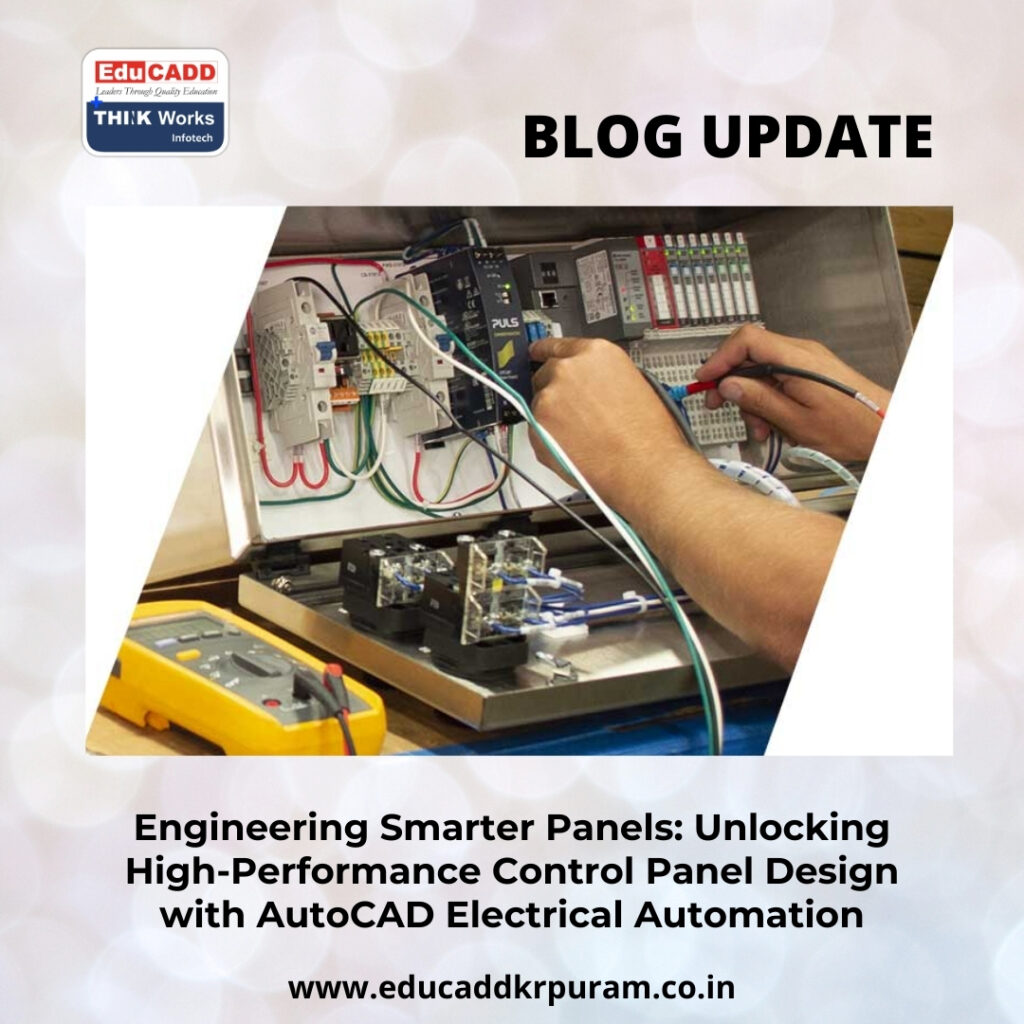
AutoCAD Electrical Panel Design
AutoCAD Electrical has emerged as a powerful solution that introduces automation into the design workflow. By minimizing repetitive tasks and enhancing accuracy, it empowers engineers to focus on innovation and system optimization. Automation in control panel design not only accelerates project timelines but also ensures high-quality outputs that meet industry standards. This blog explores how automated tools are redefining control panel design, offering deeper insights into processes, benefits, and future potential.
1. The Shift from Manual Drafting to Intelligent Automation
AutoCAD Electrical Panel Design has witnessed a remarkable shift from traditional manual drafting to automated digital processes. In earlier practices, engineers spent countless hours creating schematics, labeling components, and verifying connections manually. This approach was not only time-consuming but also prone to human error.
With automation, these repetitive tasks are handled by intelligent systems that ensure consistency and speed. Engineers can now generate complex designs with minimal effort while maintaining high accuracy. This transition has allowed organizations to improve efficiency and reduce project turnaround time significantly.
The adoption of automation reflects a broader trend toward digital transformation in engineering, where smart tools are replacing conventional methods.
2. What Control Panel Design Automation Truly Means
AutoCAD Electrical Panel Design refers to the use of specialized software to streamline and optimize the design process. It involves automating tasks such as schematic creation, wire numbering, and report generation.
Instead of drawing each element manually, engineers can utilize predefined templates and intelligent libraries. This approach ensures uniformity across designs and reduces the likelihood of errors.
Automation also enhances design flexibility, allowing engineers to make changes quickly without disrupting the entire system. This adaptability is crucial in industries where requirements often evolve.
3. Why AutoCAD Electrical Stands Out in the Industry
AutoCAD Electrical is specifically designed for electrical engineering applications, making it highly effective for control panel design. Unlike general CAD tools, it offers features tailored to electrical workflows.
The platform includes extensive symbol libraries, automated tagging systems, and real-time error checking. These capabilities enable engineers to create accurate schematics quickly and efficiently.
Moreover, AutoCAD Electrical integrates seamlessly with other engineering tools, making it ideal for complex projects that require collaboration across multiple disciplines.
4. Automation Features That Transform Design Workflows
The AutoCAD Electrical Panel Design play a crucial role in enhancing productivity. These features eliminate repetitive tasks and simplify complex processes.
Key functionalities include:
-
Automatic assignment of wire numbers and component tags
-
Smart libraries that allow quick insertion of standard components
These tools help engineers maintain consistency while reducing manual input. As a result, designs are completed faster and with greater accuracy.
5. Achieving Higher Accuracy with Automated Validation
Accuracy is essential in control panel design, as even minor mistakes can lead to operational failures. Automated tools help ensure precision by performing real-time validation checks.
The software can identify issues such as duplicate tags, missing connections, or incorrect wiring. These checks allow engineers to address problems early in the design phase.
By minimizing errors, automation improves the reliability of control panels and reduces the need for costly revisions.
6. Boosting Productivity Through Streamlined Processes
Automation significantly enhances productivity by simplifying workflows. Engineers can focus on critical design aspects instead of spending time on repetitive tasks.
The ability to reuse templates and standard components further speeds up the design process. This allows teams to handle more projects within the same timeframe.
Improved productivity not only benefits engineers but also helps organizations meet tight deadlines and deliver projects efficiently.
7. Ensuring Consistency with Standardized Design Practices
Standardization is a key factor in maintaining quality and consistency in control panel design. Automated tools enforce standards by using predefined templates and design rules.
Engineers can ensure that all designs comply with industry regulations and company guidelines. This reduces variability and improves overall reliability.
Standardized designs are also easier to maintain and update, making them more efficient in the long run.
8. Simplifying Component Management and Selection
Managing components manually can be challenging, especially in complex projects. Automation simplifies this process by providing centralized libraries of electrical symbols and parts.
Engineers can quickly locate and insert components into their designs. This reduces the risk of errors and ensures that the correct parts are used.
Additionally, automated systems generate detailed component lists, improving inventory management and procurement efficiency.
9. Accelerating Project Delivery with Faster Design Cycles
AutoCAD Electrical Panel Design enables faster design cycles, allowing engineers to complete projects in less time. This is particularly important in industries where speed is critical.
Changes can be implemented quickly without requiring extensive rework. This flexibility ensures that projects remain on schedule even when requirements change.
Faster delivery times provide a competitive advantage, helping organizations meet client expectations and market demands.
10. Enhancing Documentation and Reporting Accuracy
Accurate documentation is essential for the successful execution of control panel projects. Automation ensures that all design data is captured and organized systematically.
AutoCAD Electrical can generate detailed reports, including:
-
Comprehensive bills of materials
-
Accurate wiring and terminal diagrams
These reports provide valuable insights and support efficient manufacturing and installation processes.
11. Facilitating Seamless Collaboration Across Teams
Collaboration is crucial in modern engineering projects. Automated tools enable multiple team members to work on different aspects of a design simultaneously.
Changes made by one engineer are reflected across the entire project, ensuring consistency and reducing conflicts. This improves communication and coordination among teams.
Seamless collaboration leads to better project outcomes and more efficient workflows.
12. Reducing Costs Through Efficient Design Practices
Automation helps reduce costs by minimizing manual effort and errors. Engineers can complete designs faster, increasing overall productivity.
Fewer errors mean less rework, which saves both time and resources. Additionally, optimized designs help reduce material waste.
Cost efficiency is a significant advantage for organizations looking to improve profitability and remain competitive.
13. Supporting Scalability for Growing Projects
AutoCAD Electrical Panel Design it easier to manage large and complex projects. Engineers can handle multiple designs simultaneously without compromising quality.
Scalable tools allow organizations to expand their operations without significantly increasing workload. This is particularly beneficial for companies experiencing growth.
Consistency across projects is maintained, ensuring high-quality outputs regardless of project size.
14. The Future of Control Panel Design Automation
The future of control panel design automation is shaped by emerging technologies such as artificial intelligence and cloud computing. These innovations are expected to enhance design capabilities further.
Cloud-based platforms will enable real-time collaboration and remote access, improving flexibility and efficiency. Engineers will be able to work from anywhere without compromising productivity.
As industries continue to evolve, automation will become an integral part of engineering workflows, driving innovation and efficiency.
Conclusion
AutoCAD Electrical Panel Design has entered a new era with the adoption of automation through AutoCAD Electrical. By reducing manual effort, improving accuracy, and streamlining workflows, automation has transformed the way engineers approach design challenges.
Organizations that embrace these advanced tools can achieve faster project delivery, better quality outputs, and improved cost efficiency. As technology continues to advance, the role of automation in control panel design will only grow stronger, making it an essential component of modern engineering practices.

