
Blueprint to Brilliance: Interior Design Training with Live Projects for Real-World Mastery
Interior design has emerged as one of the most exciting and opportunity-driven careers in today’s creative industry. With rapid urban development and evolving lifestyle preferences, the need for thoughtfully designed spaces has increased significantly. However, becoming a successful interior designer requires more than creativity alone. It demands technical expertise, practical exposure, and the ability to execute ideas effectively. This is why Interior Design Live Training with live projects is gaining immense importance among aspiring professionals.
Unlike conventional learning methods, this training approach focuses on experiential learning. Students are not limited to theoretical concepts; instead, they actively participate in real projects that mirror industry conditions. This enables them to understand how design ideas are transformed into reality. Moreover, such exposure helps in developing confidence and adaptability, which are essential for long-term success.
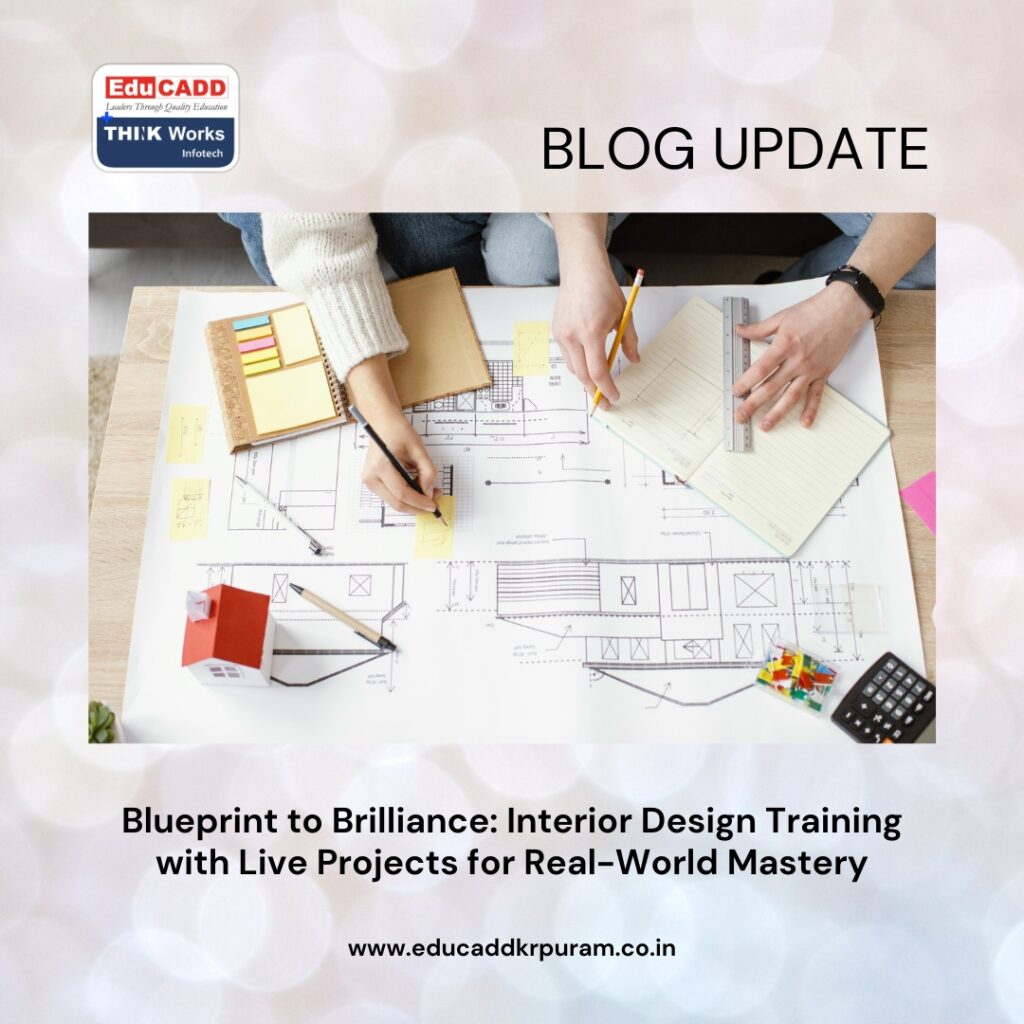
Interior Design Live Training
In this comprehensive blog, we will explore how interior design training with live projects equips learners with the skills needed to thrive in a competitive market. Each section highlights a critical aspect of this learning model and explains its relevance in shaping future designers.
1. The Transformation of Interior Design Education
Interior design education has undergone a remarkable shift over the past decade. Earlier, the focus was primarily on artistic expression and theoretical understanding. While these elements remain important, the industry now expects designers to possess practical knowledge and technical proficiency.
Modern training programs integrate various disciplines such as architecture, technology, and project management. Students learn about spatial arrangements, lighting techniques, and material selection. However, theoretical learning alone cannot prepare them for real-world challenges.
Interior design training with live projects addresses this gap effectively. By combining classroom instruction with practical application, it creates a balanced learning environment. Students gain a deeper understanding of design principles and how they function in real scenarios.
2. Real-World Exposure That Builds Practical Understanding
One of the most significant advantages of live project training is exposure to real-world situations. Students work on actual spaces and interact with real clients, which enhances their learning experience.
They encounter challenges such as limited budgets, tight timelines, and specific client requirements. These factors push them to think critically and develop practical solutions. As a result, they become more resourceful and efficient.
This type of exposure also helps students understand the responsibilities of a professional designer. They learn how to manage expectations and deliver results under pressure, which is crucial in the industry.
3. Closing the Gap Between Knowledge and Application
A common issue in traditional education is the disconnect between what is taught and what is practiced. Interior design training with live projects effectively bridges this gap.
Students first learn theoretical concepts in a structured manner. They then apply these concepts to real assignments. This process reinforces their understanding and improves retention.
Moreover, practical application allows students to experiment with different approaches. They can evaluate what works and what does not, leading to continuous improvement in their skills.
4. Building Strong Communication and Presentation Skills
Communication plays a vital role in interior design. Designers must convey their ideas clearly to clients and stakeholders. Live projects provide an excellent platform for developing these skills.
Students engage in discussions with clients and present their design concepts. They learn how to articulate their ideas effectively and respond to feedback. This enhances their confidence and professionalism.
Additionally, strong communication skills help in building trust with clients. Designers who can understand and address client needs are more likely to succeed in their careers.
5. Gaining Hands-On Experience with Design Technology
Technology has revolutionized the interior design industry. Tools such as AutoCAD, SketchUp, and rendering software are widely used for creating detailed designs.
Interior design training with live projects allows students to use these tools in real scenarios. They create layouts, models, and visual presentations based on actual project requirements.
This hands-on experience improves their technical proficiency and prepares them for industry standards. It also enables them to deliver high-quality work that meets client expectations.
6. Mastering the Art of Space Planning
Space planning is a fundamental aspect of interior design. It involves organizing spaces in a way that maximizes functionality and comfort.
Through live projects, students gain practical experience in analyzing and designing spaces. They consider factors such as movement, accessibility, and usability. This helps them create efficient layouts.
Over time, students develop the ability to balance aesthetics with functionality. This skill is essential for creating designs that are both visually appealing and practical.
7. Exploring Materials, Textures, and Finishes
The choice of materials significantly impacts the outcome of a design project. Live project training exposes students to a wide range of materials and finishes.
They learn about different options, including their properties, costs, and applications. This knowledge helps them make informed decisions during the design process.
Key benefits include:
- Enhanced understanding of material suitability
- Ability to create durable and cost-effective designs
Such insights are crucial for delivering high-quality results in real projects.
8. Learning Budget Management and Cost Efficiency
Budget constraints are a reality in every design project. Interior designers must find ways to deliver quality work within financial limits.
Live projects teach students how to manage budgets effectively. They learn to allocate resources and prioritize essential elements. This ensures that projects are completed without exceeding costs.
Students also gain experience in estimating expenses and negotiating with suppliers. These skills are highly valuable in professional practice.
9. Developing Time Management and Organizational Skills
Time management is critical in the interior design industry. Projects often have strict deadlines that must be met.
Through live projects, students learn how to plan and organize their work. They understand the importance of scheduling tasks and coordinating with different teams.
This experience helps them develop discipline and efficiency. It also prepares them to handle multiple projects simultaneously in their careers.
10. Encouraging Creativity Through Practical Challenges
Creativity is the essence of interior design. However, real-world projects require innovative solutions that align with practical constraints.
Live projects challenge students to think creatively while addressing real issues. They experiment with different ideas and refine their designs based on feedback.
This process enhances their creative thinking and problem-solving abilities. It also helps them develop a unique design style.
11. Creating a Strong and Professional Portfolio
A well-structured portfolio is essential for showcasing skills and securing opportunities. Live projects provide valuable content for building an impressive portfolio.
Students can include real project work, from initial concepts to final execution. This adds authenticity and credibility to their profile.
Important portfolio elements include:
- Detailed project documentation
- High-quality visual presentations
A strong portfolio increases the chances of landing jobs and attracting clients.
12. Understanding Industry Standards and Workflows
Interior design involves adhering to certain standards and practices. Live project training introduces students to these requirements.
They learn about safety regulations, design guidelines, and project workflows. This ensures that their work meets industry expectations.
Understanding these aspects also improves professionalism. Students become more confident in handling real projects and delivering quality results.
13. Expanding Professional Connections and Exposure
Networking is an important aspect of career growth. Live projects provide opportunities to connect with industry professionals.
Students interact with clients, contractors, and suppliers. These interactions help them build valuable relationships that can benefit their careers.
Additionally, exposure to real projects helps students stay updated with industry trends. They gain insights into market demands and emerging design styles.
14. Unlocking Diverse Career Opportunities
Interior design offers a wide range of career options. With practical experience from live projects, students are better prepared to explore these opportunities.
They can work in residential design, commercial spaces, or specialized fields such as sustainable design. Some may choose to start their own ventures, while others join established firms.
Interior design training with live projects gives them a competitive edge. They possess the skills and experience needed to succeed in a dynamic industry.
Conclusion
Interior design is a profession that requires a perfect blend of creativity, technical knowledge, and practical experience. While theoretical learning provides a strong foundation, real-world exposure is what truly prepares individuals for success.
Interior Design Live Training with live projects offers a comprehensive learning approach that bridges the gap between education and industry. It equips students with essential skills, enhances their confidence, and prepares them for real challenges.
As the demand for skilled interior designers continues to grow, choosing the right training method becomes crucial. Programs that emphasize practical experience provide a significant advantage in today’s competitive market.
Ultimately, investing in such training is not just about acquiring skills. It is about building a rewarding career and making a meaningful impact in the world of design.

