
Building the Future Digitally: Why 5D BIM Cost Estimation Training in India Is Redefining Modern Construction Careers
The global construction industry is entering a new era where technology drives every stage of project development. Traditional construction methods that once relied heavily on manual calculations, printed drawings, and disconnected workflows are gradually being replaced by intelligent digital systems. Among the most impactful innovations in this transformation is 5D Building Information Modeling, commonly known as 5D BIM Cost Training. This advanced methodology combines 3D design visualization with scheduling and cost management, enabling construction professionals to plan and execute projects with remarkable accuracy.
India has become one of the fastest-growing construction markets in the world. Massive infrastructure investments, smart city developments, commercial expansions, and transportation projects are increasing the need for skilled professionals who can manage modern construction technologies. Because of this shift, 5D BIM Cost Training training in India has emerged as one of the most valuable career-oriented programs for engineers, architects, quantity surveyors, and project managers.
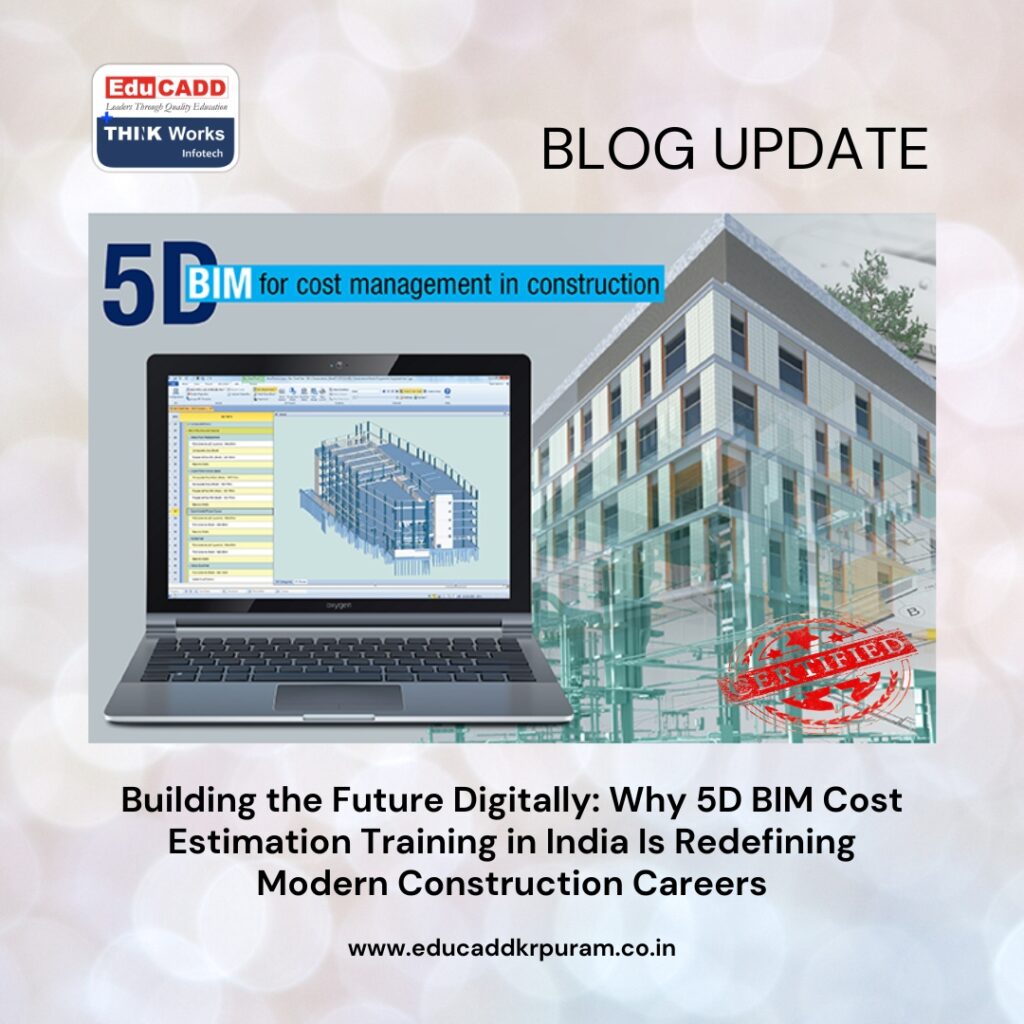
5D BIM Cost Training
This detailed blog explores the importance of 5D BIM Cost Training, the technologies involved, career opportunities, industry demand, future growth, and how this specialized skill is shaping the future of construction management in India and across global markets.
Understanding the Meaning and Structure of 5D BIM Technology
To understand the importance of 5D BIM, it is necessary to first understand the foundation of Building Information Modeling itself. BIM is a digital process used to create intelligent models containing physical and functional information about a building or infrastructure project. The first three dimensions represent the visual structure of the project in a highly detailed digital format.
The fourth dimension adds time-related data such as project schedules, sequencing, and construction timelines. The fifth dimension introduces cost information into the model. This means every component within the project can be linked directly to material pricing, labor costs, procurement expenses, and budgeting systems.
Modern infrastructure projects are becoming more complex every year. Therefore, construction companies require systems that provide greater transparency and coordination. 5D BIM fulfills this requirement by creating a centralized environment where architects, engineers, contractors, and project stakeholders can collaborate effectively throughout the project lifecycle.
Why the Indian Construction Industry Is Rapidly Adopting 5D BIM
India is currently experiencing rapid urban expansion and infrastructure modernization. New highways, airports, railway corridors, industrial parks, hospitals, residential communities, and smart cities are being developed across the country. As projects grow in scale and complexity, traditional management methods often struggle to maintain efficiency and budget control.
5D BIM cost estimation training in India is helping bridge the gap between academic education and industry requirements. Students and working professionals can now gain practical exposure to modern project management tools and workflows. This creates better employment opportunities and prepares candidates for the future of construction technology.
Furthermore, international companies are outsourcing BIM-related services to India because of its strong technical workforce. This global demand is creating additional career opportunities for Indian professionals with BIM expertise.
How 5D BIM Improves Cost Estimation Accuracy in Projects
Cost estimation is one of the most critical factors in construction management. Even small errors in budgeting can lead to delays, financial losses, and project disputes. Traditional estimation methods often involve manual quantity calculations from drawings, which increases the possibility of human error.
5D BIM transforms this process by integrating cost data directly into the building model. Every structural component, wall, beam, pipe, and material element contains associated cost information. Whenever modifications occur within the design, the system updates the quantities and financial calculations automatically.
Because of these benefits, 5D BIM has become a preferred solution for large infrastructure and commercial projects where cost efficiency is essential for project success.
Important Software Platforms Used in 5D BIM Cost Training Programs
Professional BIM training programs focus heavily on industry-standard software applications because practical software expertise is essential for career success. These tools help students understand how modern construction projects are planned, modeled, coordinated, and estimated digitally.
Autodesk Revit is one of the most widely used BIM software platforms. It enables professionals to create intelligent 3D models containing architectural, structural, and MEP components. Revit also supports quantity extraction and project documentation.
Training institutes that provide hands-on experience with these software tools prepare students for real-world project environments. As companies increasingly depend on digital workflows, software proficiency has become one of the most important skills in the modern construction industry.
Essential Skills Students Gain Through 5D BIM Training
A comprehensive 5D BIM cost estimation course develops both technical and managerial skills. Students not only learn software operations but also understand the principles of construction planning, coordination, and budgeting.
One of the most valuable skills gained during training is quantity takeoff. Students learn how to extract precise material quantities directly from BIM models instead of performing manual calculations. This process improves speed and accuracy significantly.
Training also improves analytical thinking and decision-making abilities. Professionals become capable of evaluating project costs, identifying potential risks, and optimizing construction strategies.
Additional skills commonly developed during BIM training include:
- Digital model creation and data management
- Construction scheduling and budget tracking
Career Opportunities After Completing 5D BIM Cost Training Training
The career scope after completing 5D BIM training is extensive and continues to expand rapidly. Construction firms, engineering consultancies, architectural companies, and infrastructure developers actively recruit professionals with BIM expertise.
Entry-level candidates can begin their careers as BIM Modelers or Junior Estimators. With experience, they can advance into positions such as BIM Coordinators, Quantity Surveyors, Cost Engineers, and Project Planning Specialists.
Many organizations also hire BIM professionals for roles related to digital project management, facility management, and construction analytics. Since BIM workflows improve efficiency and reduce project risks, companies increasingly prioritize candidates with these specialized skills.
As digital construction continues to evolve, BIM professionals will remain in high demand across multiple sectors worldwide.
The Growing Importance of BIM in Infrastructure Development
Infrastructure development projects involve complex coordination, strict timelines, and large financial investments. Traditional workflows often struggle to manage these complexities effectively. BIM technology addresses these challenges by providing integrated project visibility.
Large infrastructure projects such as metro rail systems, highways, bridges, airports, and industrial plants require precise coordination between multiple engineering disciplines. 5D BIM helps project teams visualize every stage of development while monitoring schedules and costs simultaneously.
Governments and infrastructure authorities increasingly encourage BIM adoption because it improves project transparency, reduces delays, and enhances long-term asset management. As infrastructure investments continue rising in India, BIM professionals will play an increasingly important role in national development projects.
Practical Learning and Real-Time Project Exposure in BIM Education
Practical exposure is one of the most important aspects of BIM education. While theoretical knowledge provides foundational understanding, real project experience helps students develop industry-ready skills.
Leading training institutes offer live projects, case studies, and simulation-based learning environments where students can apply BIM workflows to actual construction scenarios. This approach helps learners understand project coordination, cost planning, scheduling, and digital collaboration more effectively.
Therefore, practical training plays a major role in shaping successful BIM careers.
How 5D BIM Supports Faster Project Delivery and Reduced Delays
Construction delays can significantly impact project profitability and client satisfaction. Delays often occur due to poor coordination, inaccurate planning, or unexpected design conflicts during execution.
5D BIM helps minimize these challenges by improving project visibility and coordination from the beginning. Teams can simulate construction activities digitally and identify potential issues before actual work starts on-site.
As a result, projects become more efficient and organized. Faster delivery timelines not only improve profitability but also strengthen client relationships and company reputation.
Global Demand for BIM Professionals and International Opportunities
The worldwide construction industry is embracing digital transformation at a rapid pace. Many countries now mandate BIM implementation for government-funded infrastructure projects. This has created a strong global demand for BIM specialists.
Indian professionals are highly respected in the BIM outsourcing market due to their technical expertise and competitive service capabilities. International engineering firms frequently collaborate with Indian BIM teams for modeling, coordination, and estimation services.
This global demand provides long-term career stability for trained BIM professionals. Candidates with strong software skills, project experience, and industry certifications can access excellent opportunities in both domestic and international markets.
Choosing the Best 5D BIM Training Institute in India
Selecting the right BIM institute is extremely important for building a successful career. Students should evaluate multiple factors before enrolling in any training program.
A strong institute should provide updated curriculum content aligned with current industry standards. Trainers should possess practical project experience and strong software knowledge.
Therefore, careful selection of the right training center can greatly influence long-term career growth.
Future Scope of 5D BIM in India’s Construction Industry
The future of BIM technology in India appears exceptionally promising. As urban development accelerates, digital construction methods will become increasingly essential for managing complex infrastructure projects.
Emerging technologies such as artificial intelligence, cloud collaboration, automation, and digital twins are expected to integrate closely with BIM systems in the coming years. These advancements will further improve project forecasting, risk analysis, and operational efficiency.
The future construction industry will rely heavily on data-driven planning and intelligent project execution, making BIM expertise one of the most valuable skills for upcoming generations.
Sustainability and Environmental Benefits of 5D BIM Technology
Sustainable construction has become a global priority due to increasing environmental concerns and resource limitations. Builders and developers now seek technologies that minimize waste and improve energy efficiency.
5D BIM supports sustainable construction by providing highly accurate quantity calculations and resource planning. This reduces unnecessary material procurement and minimizes construction waste.
As green construction standards continue gaining importance worldwide, BIM professionals with sustainability knowledge will remain highly valuable in the future construction ecosystem.
Conclusion
5D BIM Cost Training training in India is more than just a technical course. It represents a gateway into the future of digital construction management. As the construction industry evolves, organizations increasingly require professionals who can manage projects intelligently using advanced technologies.
By integrating design, scheduling, and cost management into a unified system, 5D BIM improves accuracy, coordination, efficiency, and project transparency. This makes it one of the most powerful tools in modern infrastructure development.
Investing in 5D BIM cost estimation training today can create a strong foundation for long-term success in the rapidly transforming world of modern construction and infrastructure development.

