
Turning Clicks into Strategy: How Data Intelligence Is Reshaping Digital Marketing Success
The world of Data Intelligence Marketing Strategy has entered a completely new era where decisions are no longer based on assumptions or random promotional efforts. Modern businesses now depend on data intelligence to understand customer behavior, improve marketing strategies, and achieve consistent growth. Every online interaction creates valuable information that helps companies make informed decisions. Whether customers browse a website, engage with social media content, click on advertisements, or purchase products online, each activity provides insights that businesses can use to improve their marketing performance.
In today’s competitive environment, organizations that understand data-driven marketing gain a major advantage over competitors. Companies can identify customer interests, predict buying behavior, and create highly personalized campaigns that increase engagement and sales. Instead of wasting resources on broad marketing approaches, businesses can focus on strategies supported by real-time analytics and measurable results.
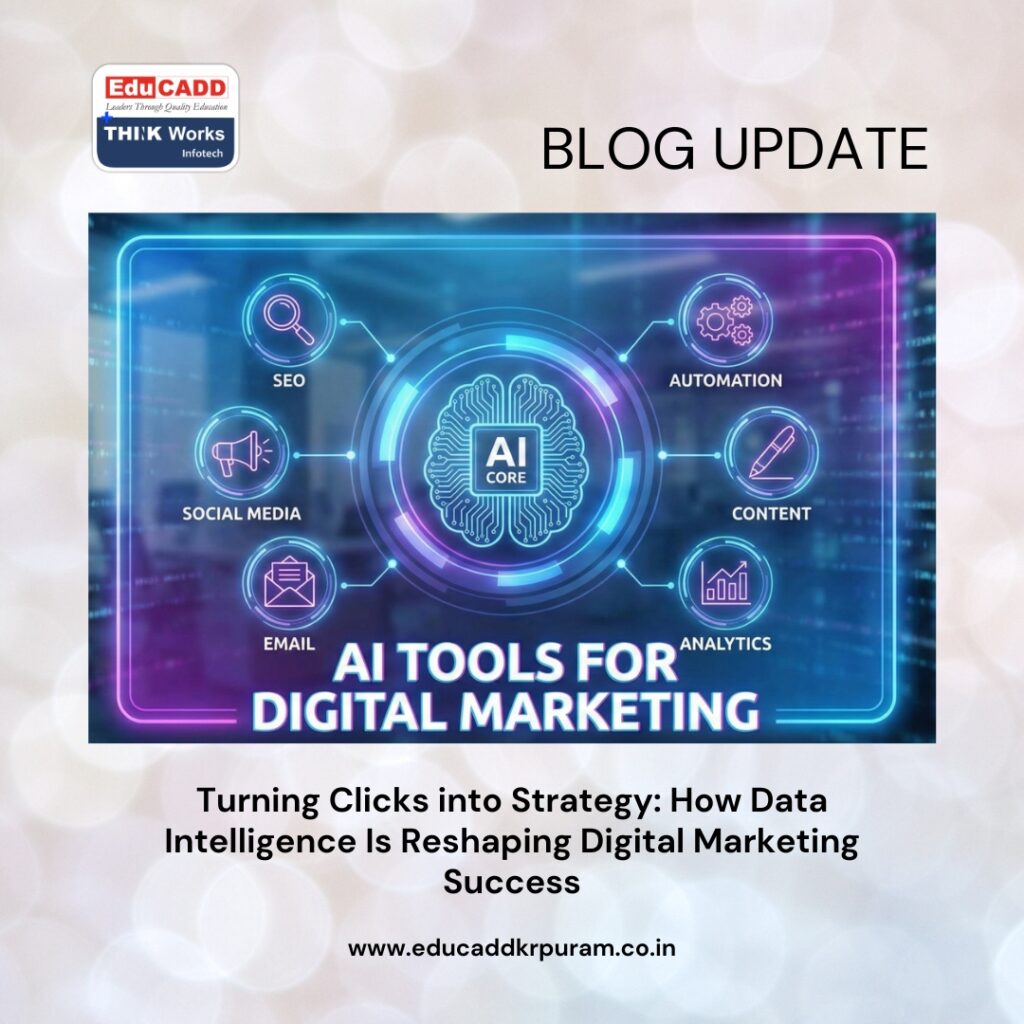
Data Intelligence Marketing Strategy
Data Intelligence Marketing Strategy has also changed the relationship between brands and consumers. Customers now expect businesses to provide relevant recommendations, personalized communication, and seamless digital experiences. As a result, companies must analyze customer data carefully to meet changing expectations and maintain long-term loyalty.
This blog explores how data intelligence is transforming digital marketing, the benefits it provides, the technologies supporting it, and the future opportunities businesses can expect from data-driven decision making.
Understanding the Rise of Data Intelligence Marketing Strategy
Data Intelligence Marketing Strategy in digital marketing refers to the process of collecting, analyzing, and using customer information to improve marketing strategies and business outcomes. Instead of depending on traditional advertising methods alone, marketers now rely on measurable insights to guide every campaign decision.
Businesses gather information from multiple digital channels, including websites, search engines, social media platforms, online advertisements, email campaigns, and customer relationship management systems. These sources provide valuable insights into customer behavior, preferences, and purchasing patterns.
For example, businesses can identify which products customers search for most frequently or which advertisements generate higher engagement rates. This information allows marketers to create campaigns that target the right audience more effectively.
Moreover, data intelligence helps companies monitor campaign performance in real time. Marketers can quickly identify underperforming strategies and make necessary adjustments before significant losses occur. Consequently, businesses improve marketing efficiency while reducing unnecessary expenses.
The increasing use of digital platforms has made data one of the most valuable assets for modern organizations. Companies that use data strategically often achieve stronger customer relationships and better financial results.
Why Customer Data Has Become a Business Asset
Customer data has become essential for organizations because it provides direct insights into consumer behavior and expectations. Modern consumers interact with brands across multiple online channels, and each interaction creates valuable information.
Businesses now use customer data to understand what people want, how they shop, and what influences their purchasing decisions. This level of understanding allows marketers to create more relevant campaigns and personalized customer experiences.
Today’s consumers expect brands to communicate with them in a meaningful way. Generic marketing messages often fail to capture attention because customers prefer personalized recommendations and customized experiences. Data helps businesses deliver content that aligns with individual interests and behaviors.
Additionally, customer data improves strategic planning. Companies can identify market trends, customer demands, and seasonal buying patterns more accurately. This information helps businesses prepare stronger campaigns and allocate marketing budgets effectively.
Organizations that treat customer data as a valuable business resource often outperform competitors. They can respond quickly to changing customer expectations and create marketing strategies that generate measurable results.
The Most Important Sources of Marketing Insights
Businesses collect marketing insights from various online and offline channels. Each source provides unique information that helps marketers improve customer engagement and campaign performance.
Website analytics tools track visitor activity, including page views, session duration, click behavior, and conversion rates. This information helps businesses understand how users interact with their websites and which pages require improvement.
Social media platforms also provide valuable audience insights. Businesses can monitor engagement levels, audience demographics, and content performance to improve social media strategies.
Key sources of digital marketing insights include:
- Search engine traffic and keyword analysis
- Customer responses from email marketing campaigns
Customer relationship management systems store purchasing history, customer inquiries, and communication records. Businesses use this information to personalize marketing messages and strengthen customer relationships.
Online feedback forms and surveys provide direct customer opinions about products, services, and overall experiences. These insights help businesses identify strengths and areas needing improvement.
Furthermore, mobile applications generate valuable behavioral data that companies use to optimize user experiences and improve digital products.
The Role of Analytics in Smarter Marketing Decisions
Analytics has become one of the most powerful tools in modern digital marketing. It allows businesses to measure campaign performance accurately and identify opportunities for improvement.
Web analytics platforms help businesses understand how visitors discover their websites, which content attracts attention, and what actions users take before making purchases. These insights help marketers optimize website design and content strategies.
Social media analytics also provides detailed performance reports. Businesses can identify which posts generate the highest engagement and which audience segments interact most frequently with their content.
Analytics supports better advertising decisions as well. Marketers can compare campaign performance across multiple platforms and invest more resources in strategies that generate stronger results. Consequently, businesses improve efficiency and reduce marketing waste.
Another major advantage of analytics is predictive forecasting. By analyzing historical data, businesses can predict future customer behavior and market trends. This proactive approach helps companies remain competitive and prepare for upcoming opportunities.
Artificial Intelligence and the Future of Marketing Automation
Artificial intelligence has become a driving force behind modern marketing innovation. AI-powered technologies help businesses process large amounts of information quickly and generate accurate insights for better decision making.
Data Intelligence Marketing Strategy automation tools powered by artificial intelligence simplify repetitive tasks such as audience segmentation, email personalization, and campaign scheduling. This automation improves productivity and allows marketing teams to focus on strategic planning.
Machine learning algorithms analyze customer behavior patterns and predict future actions. Businesses use these predictions to create targeted campaigns that improve customer engagement and increase sales performance.
Chatbots and virtual assistants have also become important components of digital marketing. These tools provide instant customer support while collecting valuable interaction data that businesses use to improve customer experiences.
Moreover, artificial intelligence improves advertising efficiency by identifying ideal audience groups and optimizing campaign performance automatically. As technology continues to evolve, AI will become even more important in data-driven marketing strategies.
Personalization and Customer-Centered Marketing
Personalization has become one of the strongest competitive advantages in digital marketing. Customers prefer brands that understand their interests and provide customized experiences instead of generic promotional content.
Businesses use customer data to personalize product recommendations, advertisements, website experiences, and email campaigns. This strategy increases customer engagement because users are more likely to respond to content that matches their preferences.
For example, online retailers recommend products based on browsing history and previous purchases. Streaming platforms suggest movies and shows according to viewing behavior. These personalized experiences improve customer satisfaction and encourage repeat interactions.
Effective personalization strategies often include:
- Customized promotional offers based on buying behavior
- Personalized communication designed for specific audience groups
Data-driven personalization also strengthens customer trust and loyalty. When businesses consistently provide relevant experiences, customers feel more connected to the brand.
Additionally, personalization improves marketing performance because companies target audiences with genuine interest in their products or services.
Enhancing Customer Experiences Through Data
Customer experience has become a key factor influencing business success. Companies that provide smooth and meaningful digital experiences are more likely to attract and retain customers.
Data Intelligence Marketing Strategy helps businesses understand customer expectations and identify areas requiring improvement. By analyzing customer interactions, companies can optimize every stage of the customer journey.
For instance, if website visitors frequently abandon shopping carts, businesses can simplify the checkout process or improve payment options. Likewise, companies can redesign poorly performing pages to improve engagement and usability.
Customer reviews and feedback also provide valuable insights into satisfaction levels and service quality. Businesses use this information to improve products, support systems, and communication strategies.
Furthermore, data allows businesses to deliver timely communication and personalized recommendations. This proactive approach strengthens customer relationships and increases long-term loyalty.
As customer expectations continue to evolve, businesses that prioritize data-driven customer experiences will achieve stronger brand reputation and higher retention rates.
Increasing Profitability Through Data-Driven Campaigns
One of the biggest advantages of data-driven marketing is its ability to improve profitability. Businesses can track campaign performance accurately and invest resources in strategies that deliver the highest returns.
Marketers analyze metrics such as impressions, clicks, conversions, customer acquisition costs, and revenue generation to evaluate campaign effectiveness. These insights help businesses identify successful marketing activities and eliminate ineffective approaches.
If a campaign underperforms, marketers can quickly make adjustments instead of continuing unproductive efforts. This flexibility reduces financial losses and improves overall marketing efficiency.
Data also supports smarter budget allocation. Businesses can focus more investment on high-performing channels while reducing spending on campaigns that fail to produce strong results.
A/B testing is another important strategy in data-driven marketing. Companies compare different headlines, visuals, and calls to action to determine which combinations generate the highest engagement and conversion rates.
As a result, businesses achieve stronger profitability and sustainable growth through data-backed marketing decisions.
Social Media as a Powerful Data Resource
Social media platforms have become major sources of customer information and marketing insights. Millions of users interact with brands daily through comments, shares, likes, and direct messages.
Social media analytics tools help businesses monitor audience behavior, engagement levels, and content performance. Marketers use these insights to improve content strategies and strengthen online visibility.
For example, businesses can identify the best posting schedules, trending topics, and content formats that generate stronger engagement. This information helps companies create more effective social media campaigns.
Influencer marketing also depends heavily on data analysis. Brands evaluate influencer credibility, audience quality, and engagement rates before forming partnerships.
Social listening tools allow businesses to track online conversations about products, competitors, and industry trends. Companies can respond quickly to customer concerns and maintain a positive reputation.
As social media continues to grow, its role in data-driven marketing will become even more important for businesses seeking stronger audience engagement.
Challenges Businesses Face with Marketing Data
Although data-driven marketing offers many advantages, businesses also face several challenges when managing and analyzing large amounts of information.
One common challenge is data overload. Companies collect information from multiple channels, making it difficult to identify valuable insights without proper systems and technologies.
Data privacy concerns also create significant challenges. Customers expect businesses to protect personal information and use data responsibly. Organizations must comply with privacy regulations and maintain transparency to build customer trust.
Another issue involves data accuracy. Incomplete or outdated information can lead to poor marketing decisions and ineffective campaigns. Businesses must regularly update and verify their databases to maintain reliability.
Additionally, many organizations lack professionals with advanced data analysis skills. Businesses need experienced analysts and modern technologies to transform raw data into actionable insights.
Despite these challenges, companies that invest in proper systems, training, and ethical practices can successfully maximize the benefits of data-driven marketing.
Real-Time Insights and Faster Business Responses
Real-time analytics has become increasingly valuable in today’s fast-moving digital environment. Businesses must respond quickly to customer behavior changes and emerging market trends to remain competitive.
Real-time insights allow marketers to monitor campaign performance instantly and make immediate adjustments whenever engagement declines. This flexibility improves campaign effectiveness and reduces wasted marketing expenses.
Businesses can also use real-time data to capitalize on trending topics and customer interests. Companies that respond quickly to viral conversations often achieve higher visibility and stronger audience engagement.
For example, during seasonal events or major industry announcements, brands can launch targeted campaigns based on live audience interactions and current market conditions.
Moreover, real-time analytics improves customer support services. Businesses can identify complaints quickly and provide immediate assistance, improving customer satisfaction and loyalty.
As digital competition continues to intensify, companies that use real-time insights effectively will gain stronger market advantages.
Building a Strong Data Intelligence Marketing Strategy
A successful data-driven marketing strategy requires careful planning, clear objectives, and continuous optimization. Businesses must first identify their goals and determine which metrics are most important for measuring success.
Organizations should invest in reliable analytics tools that provide accurate and actionable insights. These platforms help marketers collect, organize, and analyze data efficiently.
Data integration is another essential factor. Businesses should combine information from websites, social media platforms, email campaigns, and customer databases to gain a complete understanding of audience behavior.
Employee training also plays a major role in successful implementation. Marketing teams must understand how to interpret data and apply insights effectively to improve campaign performance.
Continuous testing and optimization are equally important. Businesses should regularly analyze marketing performance and adjust strategies according to customer behavior and market trends.
By following these practices, organizations can create powerful marketing strategies that support long-term growth and profitability.
Future Trends Shaping Data-Driven Marketing
The future of digital marketing will depend heavily on advanced technologies, automation, and intelligent data analysis. Businesses will continue adopting artificial intelligence and predictive analytics to improve marketing performance.
Predictive technologies will become more sophisticated, allowing businesses to anticipate customer needs with greater precision. Companies will create highly personalized experiences that improve customer engagement and loyalty.
Voice search, augmented reality, and connected devices will generate new forms of customer data. Businesses must develop innovative strategies to analyze and use this information effectively.
Privacy-focused marketing will also become increasingly important. Customers are becoming more aware of data security concerns, and businesses must balance personalization with ethical data practices.
Automation tools will continue simplifying campaign management and improving operational efficiency. Organizations that adapt quickly to these emerging trends will gain stronger competitive advantages in the digital marketplace.
Why Data Intelligence Is Essential for Long-Term Growth
Businesses that fail to embrace data intelligence risk losing relevance in today’s highly competitive environment. Modern consumers expect personalized communication, fast responses, and meaningful digital experiences.
Data-driven marketing helps organizations understand customer behavior more effectively and create campaigns that deliver measurable outcomes. This approach improves customer engagement, increases revenue, and strengthens brand visibility.
Additionally, businesses can make smarter investment decisions by analyzing campaign performance and market trends. Instead of relying on assumptions, organizations use factual insights to guide marketing efforts.
Data intelligence also supports innovation and strategic planning. Businesses can identify emerging opportunities, changing customer expectations, and industry developments before competitors react.
As technology continues to evolve, data will remain one of the most valuable business assets. Companies that embrace intelligent marketing strategies today will be better prepared for future success.
Conclusion
Data Intelligence Marketing Strategy has transformed digital marketing into a more strategic, efficient, and customer-focused industry. Businesses now rely on analytics, artificial intelligence, customer insights, and real-time information to make smarter marketing decisions and achieve sustainable growth.
Modern consumers expect personalized experiences and relevant communication from brands. Companies that understand customer behavior through data analysis can create targeted campaigns, improve customer engagement, and strengthen long-term loyalty. In addition, data-driven strategies help businesses reduce unnecessary spending and maximize marketing returns.
Although challenges such as privacy concerns, data management, and skill shortages still exist, organizations can overcome these obstacles through proper technologies, employee training, and ethical practices. As digital marketing continues evolving, the importance of data intelligence will only increase.
Businesses that invest in data-driven marketing today will gain stronger competitive advantages, improve profitability, and build lasting customer relationships. In the modern digital world, data is no longer just information. It has become the foundation of successful marketing innovation and long-term business success.

