
Engineering the Future Digitally: How Civil CADD Transforms Construction from Ground Surveys to Project Success
The construction and infrastructure sector has entered a new era where digital technology drives efficiency, precision, and innovation. As projects become larger and more complex, engineering teams need advanced tools that can simplify workflows while maintaining high levels of accuracy. This is where Civil CADD Construction Engineering has established itself as a vital component of modern project development. From analyzing raw survey data to producing detailed engineering drawings, Civil CADD Construction Engineering enables professionals to manage every phase of infrastructure planning with confidence and control.
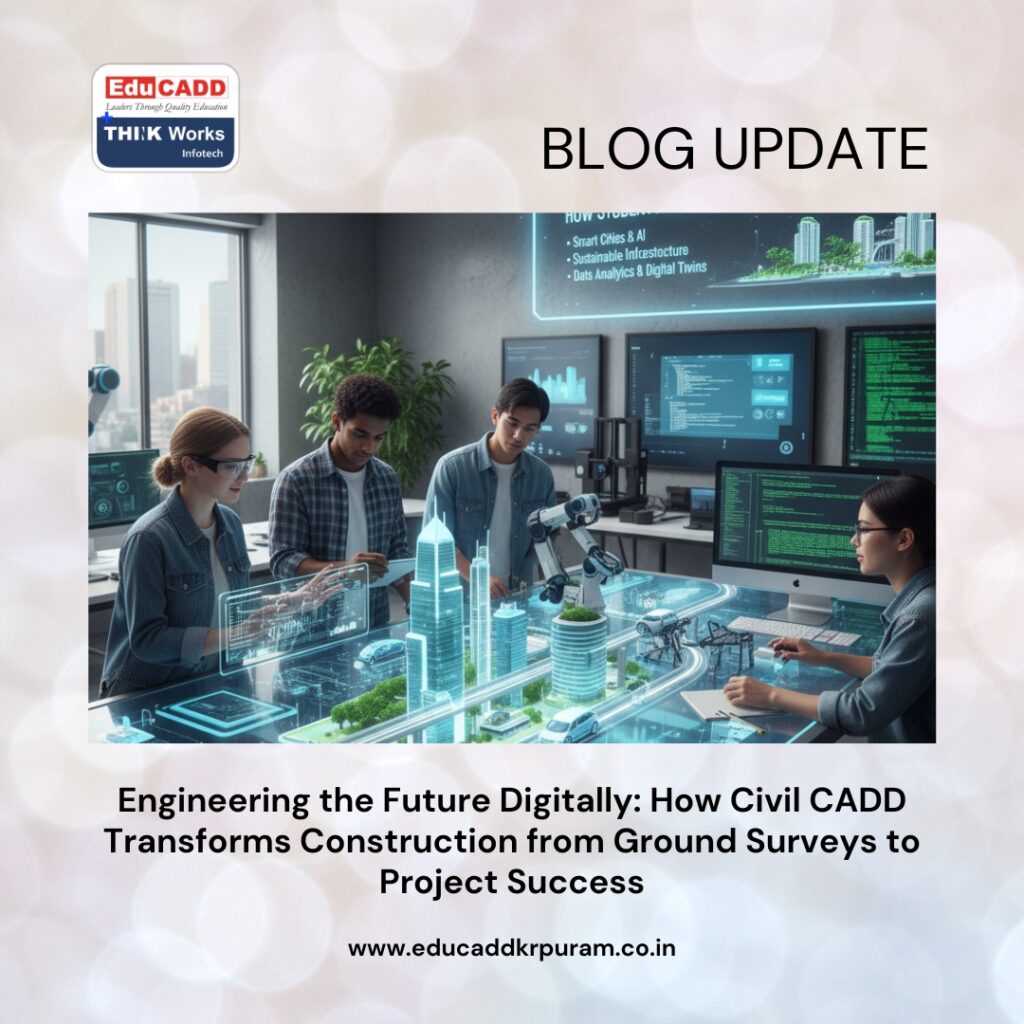
Civil CADD Construction Engineering
In today’s competitive environment, project owners expect faster delivery, better quality, and optimized costs. Meeting these expectations requires more than traditional drafting methods. Engineers need intelligent software that can convert field information into practical design solutions. Civil CADD Construction Engineering provides exactly that capability. It bridges the gap between real-world construction sites and sophisticated digital models, allowing engineers to visualize, evaluate, and refine projects before construction begins. As a result, organizations can reduce risks, improve collaboration, and deliver successful infrastructure projects that meet modern standards.
The Evolution of Civil Engineering Through Digital Design
Civil engineering has experienced remarkable technological advancement over the past few decades. Earlier, engineers relied heavily on manual drafting techniques, paper blueprints, and time-consuming calculations. While these methods helped build important infrastructure, they often created challenges related to accuracy, revisions, and project coordination.
Civil CADD has completely transformed this process by introducing digital design environments that allow engineers to work more efficiently. Instead of manually redrawing plans whenever changes occur, professionals can make instant modifications within the software. These updates automatically reflect across related project components, ensuring consistency throughout the design process. Furthermore, digital workflows enable engineers to manage complex projects with greater confidence and precision. This evolution has significantly improved productivity while setting new benchmarks for engineering excellence.
Converting Site Information into Meaningful Project Data
Every infrastructure project begins with understanding the site conditions. Survey teams gather essential information regarding land elevations, contours, property boundaries, natural features, and existing infrastructure. However, the true value of this information emerges only when it is properly analyzed and integrated into the design process.
Civil CADD converts raw survey data into structured digital models that engineers can use for planning and development. These models provide a realistic representation of site conditions, helping professionals understand terrain characteristics and potential challenges. Additionally, digital site models support better decision-making because engineers can evaluate multiple scenarios before selecting the most suitable design approach. This capability improves project planning while reducing uncertainties that could affect future construction activities.
Enhancing Design Precision for Better Project Outcomes
Accuracy remains one of the most important factors in successful infrastructure development. Even minor design errors can lead to significant financial losses, scheduling delays, and operational challenges. Civil CADD helps minimize these risks by offering advanced drafting and modeling tools that ensure exceptional precision.
Engineers can create highly detailed plans that include dimensions, alignments, elevations, grading information, and structural elements. Because the software maintains consistency throughout the design process, modifications can be made without introducing unintended discrepancies. Moreover, Civil CADD allows professionals to verify design accuracy before construction begins. This proactive approach helps identify issues early, reducing the likelihood of costly revisions during later project stages.
Revolutionizing Transportation Infrastructure Projects
Transportation networks play a critical role in economic development and community connectivity. Designing roads, highways, flyovers, and transportation corridors requires careful planning and technical expertise. Civil CADD Construction Engineering simplifies these tasks by providing specialized tools specifically developed for transportation engineering applications.
Engineers can design roadway alignments, generate profiles, create cross-sections, and calculate earthwork quantities with remarkable efficiency. Furthermore, the software enables transportation planners to evaluate multiple route alternatives and optimize designs based on project requirements. These capabilities contribute to safer, more efficient transportation systems while reducing design time and improving project performance. Consequently, Civil CADD has become an essential technology for modern transportation infrastructure development.
Supporting Comprehensive Land Development Planning
Land development projects often involve extensive coordination among engineers, architects, planners, environmental consultants, and government authorities. Managing these interactions effectively requires accurate information and seamless communication. Civil CADD provides the digital framework necessary to support this collaborative process.
The software allows professionals to design residential communities, commercial complexes, industrial zones, and mixed-use developments within a unified environment. Site grading, lot layouts, road networks, and utility systems can all be planned together to ensure consistency and efficiency. Additionally, project updates can be shared quickly among stakeholders, reducing delays and improving coordination. This integrated approach helps development projects progress smoothly from concept to completion.
Strengthening Drainage and Utility Infrastructure Design
Infrastructure projects depend heavily on well-designed drainage and utility systems. Without proper planning, communities may face issues such as flooding, service disruptions, and increased maintenance costs. Civil CADD helps engineers create reliable systems that support long-term functionality and performance.
Using advanced design tools, professionals can develop stormwater networks, sewer systems, water distribution pipelines, and utility corridors. The software enables engineers to analyze system performance, identify potential conflicts, and optimize layouts before construction begins. As a result, projects experience fewer installation challenges and improved operational reliability. Effective drainage and utility planning also contribute to safer and more sustainable infrastructure development.
Improving Collaboration Across Multidisciplinary Teams
Modern infrastructure projects require input from professionals representing various disciplines. Engineers, surveyors, architects, contractors, and project managers must work together to achieve common objectives. Civil CADD enhances collaboration by providing a centralized platform where project information can be shared and updated efficiently.
When changes occur, team members can access revised drawings and project data in real time. This transparency reduces communication gaps and helps prevent misunderstandings that could delay project progress. Furthermore, digital collaboration tools support remote working environments, allowing teams to contribute effectively regardless of location. Improved coordination ultimately leads to better project execution and stronger stakeholder relationships.
Driving Productivity Through Intelligent Automation
One of the most valuable advantages of Civil CADD is its ability to automate repetitive engineering tasks. Traditional drafting methods often require significant manual effort, increasing project timelines and creating opportunities for human error. Automation addresses these challenges by streamlining routine activities.
Civil CADD can automatically generate annotations, dimensions, profiles, reports, and quantity calculations. Engineers therefore spend less time on administrative work and more time focusing on technical problem-solving and design optimization. Additional productivity gains occur because project documents remain synchronized whenever modifications are made. These efficiencies help organizations handle larger workloads while maintaining high-quality standards.
Key productivity benefits include:
- Faster generation of engineering drawings and project documentation.
- Reduced manual effort through automated calculations and updates.
These advantages contribute directly to improved project delivery and operational efficiency.
Optimizing Cost Control and Resource Utilization
Financial performance remains a major concern for every construction project. Accurate cost estimation and effective resource management play a crucial role in determining project success. Civil CADD Construction Engineering provides valuable tools that help organizations achieve better financial control throughout the project lifecycle.
Engineers can calculate excavation volumes, material quantities, and construction requirements with a high degree of accuracy. These calculations support realistic budgeting and procurement planning. Furthermore, project teams can compare alternative design solutions to identify opportunities for cost savings. Better visibility into project requirements allows organizations to allocate resources more effectively while minimizing waste and unnecessary expenditures. Consequently, Civil CADD contributes to stronger financial outcomes and improved project profitability.
Advancing Sustainable Infrastructure Development
Sustainability has become an essential consideration in contemporary engineering practice. Governments, businesses, and communities increasingly expect infrastructure projects to minimize environmental impacts while supporting long-term development goals. Civil CADD helps engineers achieve these objectives through smarter planning and resource optimization.
Digital modeling capabilities allow professionals to evaluate environmental factors during the design phase. Engineers can optimize grading plans, improve stormwater management, and reduce material consumption without compromising project performance. Additionally, digital documentation decreases reliance on paper-based processes, supporting environmentally responsible project management practices. Through informed decision-making and efficient design solutions, Civil CADD plays a significant role in advancing sustainable infrastructure development.
Supporting the Growth of Smart Cities
Urban populations continue to expand rapidly, creating new challenges for city planners and infrastructure developers. Smart city initiatives aim to address these challenges by integrating technology into transportation, utilities, communication systems, and public services. Civil CADD serves as a foundational tool in achieving these ambitious goals.
Engineers use Civil CADD to design and coordinate complex urban infrastructure systems that support connected communities. Digital models enable planners to analyze future growth requirements and evaluate infrastructure performance under varying conditions. Moreover, integration with advanced technologies such as GIS and Building Information Modeling enhances project intelligence and planning accuracy. These capabilities help cities create efficient, resilient environments capable of supporting future generations.
Reducing Risks Through Advanced Project Visualization
One of the greatest challenges in infrastructure development is ensuring that all stakeholders clearly understand the proposed design. Traditional technical drawings may not always communicate project details effectively, particularly for non-technical audiences. Civil CADD addresses this issue through advanced visualization capabilities.
Detailed digital models provide realistic representations of proposed projects, allowing engineers, clients, contractors, and regulatory agencies to review designs before construction begins. Potential conflicts and design issues become easier to identify and resolve during the planning phase. Additionally, enhanced visualization improves stakeholder confidence by providing a clear understanding of project outcomes. This proactive approach significantly reduces project risks while supporting better decision-making.
Key risk-reduction advantages include:
- Early detection of design conflicts and construction challenges.
- Improved communication with clients, contractors, and authorities.
These benefits contribute to smoother project execution and fewer unexpected complications.
Integrating Emerging Technologies into Modern Engineering Workflows
The future of civil engineering will be shaped by emerging technologies that enhance efficiency, accuracy, and innovation. Civil CADD continues to evolve by integrating with cutting-edge solutions that expand its capabilities and value.
Modern Civil CADD platforms connect seamlessly with drone surveying systems, laser scanning technologies, reality capture tools, and cloud-based data environments. These integrations allow engineers to collect and analyze information more efficiently than ever before. Artificial intelligence and machine learning technologies are also beginning to influence project workflows by supporting predictive analysis and intelligent automation. As technological innovation continues to accelerate, Civil CADD will remain at the center of digital engineering transformation.
Building Strong Careers Through Civil CADD Expertise
The increasing adoption of digital engineering technologies has created strong demand for professionals with Civil CADD skills. Employers across the construction, infrastructure, and consulting sectors seek individuals who can contribute to efficient project planning and delivery through advanced digital workflows.
Learning Civil CADD opens opportunities in transportation engineering, land development, surveying, utility design, construction management, and urban planning. Professionals gain valuable technical expertise that enhances their career prospects and industry relevance. Furthermore, organizations recognize Civil CADD proficiency as a critical skill that supports innovation and productivity. As digital transformation continues to reshape the engineering profession, expertise in Civil CADD will remain highly valuable for long-term career growth and success.
Conclusion
Civil CADD Construction Engineering has fundamentally changed the way infrastructure projects move from concept to reality. By transforming field data into intelligent digital designs, it enables engineers to plan, analyze, and execute projects with unprecedented accuracy and efficiency. From transportation systems and land development projects to smart city initiatives and sustainable infrastructure solutions, Civil CADD supports every stage of modern engineering practice.
As construction technologies continue to advance, the influence of Civil CADD will only grow stronger. Its ability to improve collaboration, automate workflows, optimize costs, enhance visualization, and support innovation makes it an indispensable tool for today’s engineering professionals. Ultimately, Civil CADD serves as the digital backbone of successful infrastructure development, helping organizations build smarter, safer, and more sustainable projects for the future.

