
Build Smarter, Learn Faster: The Complete Guide to BIM Virtual Classroom Training for Future-Ready Professionals
The architecture, engineering, and construction industries are undergoing a significant transformation driven by digital innovation. Traditional project workflows are steadily giving way to advanced technologies that improve collaboration, accuracy, and efficiency. Among these advancements, Building Information Modeling (BIM) has become an essential component of modern construction practices. As organizations seek professionals who can effectively manage digital construction processes, the demand for BIM expertise continues to rise. This growing need has led many students and working professionals to explore BIM Virtual Classroom Training as a convenient and effective learning solution.
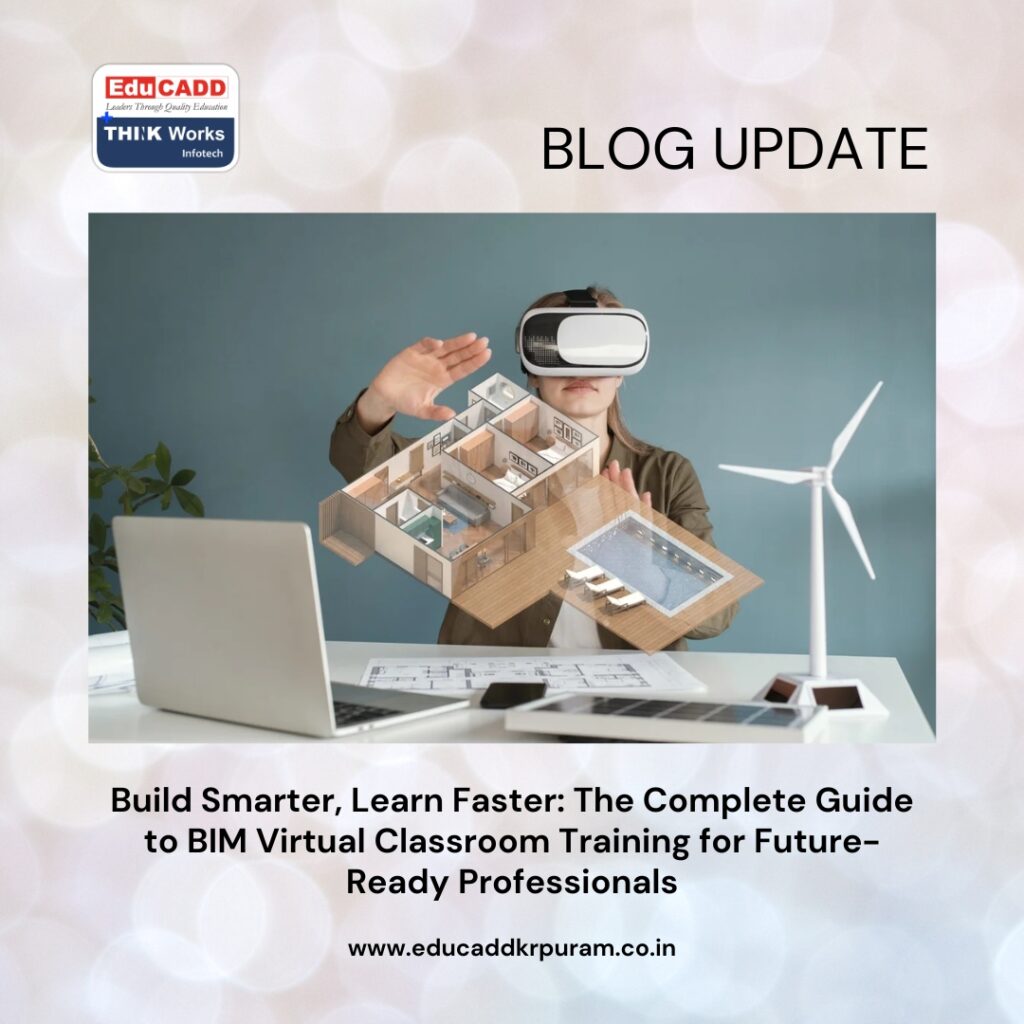
BIM Virtual Classroom Training
By combining live instruction, hands-on practice, and industry-focused curriculum, virtual BIM Virtual Classroom Training acquire practical skills that align with current market requirements. Whether someone is entering the construction sector or looking to upgrade existing capabilities, BIM education offers a pathway toward long-term professional growth and success.
The Digital Revolution Driving BIM Adoption
The construction industry has historically relied on drawings, spreadsheets, and fragmented communication channels to manage projects. However, increasing project complexity has created a need for more integrated solutions. Building Information Modeling addresses this challenge by enabling teams to work within a shared digital environment where information remains connected and accessible throughout the project lifecycle. Architects, engineers, contractors, and project managers can collaborate using intelligent models that contain detailed project data. This approach reduces misunderstandings, improves decision-making, and enhances project outcomes.
As governments and private organizations continue implementing BIM standards, professionals with BIM knowledge are becoming increasingly valuable. Consequently, acquiring BIM skills is no longer viewed as optional but rather as an essential investment in future career development.
What Makes BIM Virtual Classroom Training Different
Unlike conventional classroom learning, BIM Virtual Classroom Training delivers professional education through interactive online platforms. Students participate in live sessions conducted by experienced trainers who guide them through concepts, software tools, and practical exercises. The virtual environment encourages engagement through discussions, demonstrations, assignments, and collaborative activities. Learners can ask questions in real time and receive immediate feedback, creating an experience similar to attending a physical classroom. Additionally, digital learning platforms provide access to training resources, recorded lectures, and project materials that support continuous learning.
This combination of flexibility and structured instruction has made virtual BIM training one of the most popular methods for developing industry-relevant skills in today’s fast-paced professional environment.
Flexibility That Supports Diverse Learning Needs
One of the strongest advantages of virtual BIM education is its ability to accommodate learners with varying schedules and responsibilities. Many professionals wish to improve their qualifications but struggle to attend traditional classes due to work commitments or personal obligations. Virtual training eliminates the need for travel and allows participants to learn from virtually any location. Students can attend sessions from home, office, or even while traveling, provided they have internet access. Furthermore, many programs offer recorded classes that allow learners to revisit complex topics whenever necessary.
This flexibility promotes better understanding and enables individuals to progress comfortably without sacrificing their professional or personal responsibilities. As a result, learning becomes more accessible and practical for a wider audience.
Building Strong Foundations in BIM Concepts
Successful BIM implementation requires more than software knowledge alone. Professionals must understand the underlying principles that guide digital construction workflows. Comprehensive virtual classroom training begins by introducing learners to core BIM concepts, including model-based design, information management, project coordination, and lifecycle planning. Students learn how BIM supports collaboration among stakeholders while improving project transparency and efficiency. These foundational concepts help learners understand the broader impact of BIM on project delivery and asset management.
By establishing a strong theoretical framework early in the training process, participants gain the confidence needed to apply advanced techniques and software tools effectively throughout their professional careers.
Hands-On Experience Through Practical Projects
Practical application plays a critical role in developing technical expertise. Reading about BIM methodologies is valuable, but true understanding comes from applying concepts to realistic scenarios. BIM virtual classroom training emphasizes project-based learning that reflects real industry conditions. Students work on assignments that involve creating models, managing project information, coordinating disciplines, and producing construction documentation.
These activities allow learners to experience challenges commonly encountered in professional environments. Through repeated practice, they develop problem-solving abilities and improve their understanding of digital workflows. The confidence gained from practical project exposure prepares participants to contribute effectively when working on actual construction and infrastructure developments.
Learning Industry-Leading BIM Software Platforms
Modern BIM workflows rely on advanced software applications that support design, coordination, analysis, and project management activities. Virtual training programs typically provide instruction on widely used BIM tools that have become standard within the architecture, engineering, and construction industries. Students learn how to create intelligent 3D models, manage project data, perform clash detection, and generate detailed documentation.
Exposure to these software platforms increases technical proficiency while enhancing employability. Employers often prioritize candidates who can demonstrate software expertise because it reduces onboarding time and increases workplace productivity. Therefore, mastering BIM applications through structured training provides a significant advantage in today’s competitive job market.
Improving Collaboration in Multidisciplinary Projects
Construction projects involve numerous professionals working together to achieve shared objectives. Architects, structural engineers, MEP specialists, contractors, and consultants must coordinate their efforts effectively to avoid costly mistakes and delays. BIM facilitates this collaboration by providing a centralized digital environment where project information can be shared and updated in real time.
During virtual classroom training, students learn collaborative workflows that mirror actual industry practices. They gain experience understanding how different disciplines interact within BIM ecosystems and how coordination contributes to project success. These skills are particularly valuable because modern construction increasingly depends on teamwork and integrated project delivery methods.
Learning from Experienced Industry Professionals
The quality of instruction significantly influences the effectiveness of any training program. BIM Virtual Classroom Training courses are often led by experienced professionals who possess practical knowledge gained through real-world projects. These instructors bring valuable industry insights into the learning process, helping students understand how BIM methodologies are applied in professional environments.
During live sessions, participants can seek clarification, discuss challenges, and receive personalized guidance. Trainers frequently share best practices, workflow optimization techniques, and lessons learned from industry experiences. Such exposure helps learners develop a realistic perspective on project execution while gaining knowledge that extends beyond textbooks and software manuals.
Expanding Career Opportunities with BIM Expertise
The increasing adoption of BIM has created a wide range of employment opportunities across multiple sectors. Organizations involved in architecture, engineering, construction, infrastructure, and facility management actively seek professionals with BIM skills. Individuals who complete BIM virtual classroom training can pursue roles related to modeling, coordination, project management, digital construction, and information management.
These positions often offer competitive salaries and strong career advancement prospects. Furthermore, BIM expertise remains relevant across various project types, including residential developments, commercial buildings, industrial facilities, transportation systems, and public infrastructure. This versatility makes BIM knowledge a valuable asset for professionals seeking long-term career stability and growth.
Enhancing Project Efficiency and Reducing Errors
One of BIM’s most significant contributions to the construction industry is its ability to improve project efficiency while reducing costly mistakes. Traditional workflows often result in design conflicts, communication gaps, and documentation inconsistencies that can delay project completion. BIM addresses these issues by enabling teams to identify and resolve problems during the planning phase. Virtual training helps learners understand how digital models support clash detection, quantity estimation, scheduling, and project coordination.
By mastering these capabilities, professionals can contribute to smoother project execution and better resource utilization. Consequently, organizations benefit from reduced rework, improved quality, and enhanced overall project performance.
Cost-Effective Education for Modern Professionals
Professional development often involves substantial financial and time investments. Traditional training programs may require travel expenses, accommodation costs, and extended periods away from work. BIM virtual classroom training provides a cost-effective alternative that eliminates many of these challenges. Students can access high-quality education without relocating or interrupting their professional responsibilities.
Organizations also benefit because multiple employees can participate in training programs simultaneously without significant logistical complications. Additionally, digital learning materials reduce the need for printed resources, making virtual education both economical and environmentally responsible. This affordability has contributed significantly to the growing popularity of online BIM learning worldwide.
Staying Relevant in an Evolving Industry
Technology continues to reshape the construction sector through innovations such as digital twins, cloud collaboration, automation, artificial intelligence, and smart infrastructure systems. BIM serves as a foundation for many of these developments, making it a critical skill for professionals who wish to remain competitive. Virtual training programs frequently update their curriculum to reflect emerging technologies and industry trends.
This ensures that learners stay informed about evolving best practices and technological advancements. By continuously developing BIM expertise, professionals position themselves to adapt successfully to future industry requirements and capitalize on new opportunities as they emerge.
Creating a Professional Portfolio That Demonstrates Expertise
Employers increasingly seek evidence of practical skills when evaluating job applicants. A strong BIM portfolio allows candidates to showcase their technical capabilities and project experience effectively. During virtual classroom training, students often complete assignments and projects that can be included in professional portfolios. These examples demonstrate proficiency in modeling, coordination, visualization, documentation, and information management.
A well-organized portfolio not only strengthens job applications but also provides confidence during interviews and client interactions. By presenting tangible evidence of their accomplishments, professionals can differentiate themselves from competitors and improve their chances of securing desirable career opportunities.
Why BIM Virtual Classroom Training Represents the Future of Learning
As industries continue embracing digital transformation, education must evolve to meet changing professional needs. BIM virtual classroom training represents a modern learning approach that combines accessibility, flexibility, practical experience, and expert instruction. Learners gain valuable technical skills while developing the collaboration and communication abilities required in contemporary workplaces. The virtual environment mirrors the remote coordination practices increasingly used within construction projects, providing additional professional preparation.
Furthermore, the convenience of online education allows individuals from diverse backgrounds and locations to access high-quality training without significant barriers. These advantages position virtual BIM learning as a powerful tool for career development in the digital age.
Conclusion
The future of construction belongs to professionals who can leverage technology to improve project outcomes, enhance collaboration, and drive innovation. Building Information Modeling has become a cornerstone of modern construction practices, creating strong demand for individuals with specialized BIM skills. BIM Virtual Classroom Training offers an effective pathway for acquiring these capabilities through flexible, interactive, and industry-focused education. From foundational concepts and software mastery to project coordination and career advancement, virtual training equips learners with the knowledge needed to succeed in a rapidly evolving marketplace.
For students, engineers, architects, and construction professionals alike, investing in BIM education today can unlock new opportunities, strengthen professional credibility, and pave the way for long-term success in the world of digital construction.

