
From Physical Products to Digital Perfection: How 3D Scanning Elevates Product Redesign Success
In an era where innovation determines market leadership, businesses can no longer rely solely on traditional design methods to improve their products. Organizations across manufacturing, automotive, aerospace, healthcare, and consumer goods sectors continuously seek ways to enhance product functionality, improve performance, and reduce development costs. One technology that has become a cornerstone of modern engineering is 3D Product Redesign Success. By transforming physical objects into precise digital models, 3D scanning provides engineers and designers with the detailed information needed to make informed redesign decisions.
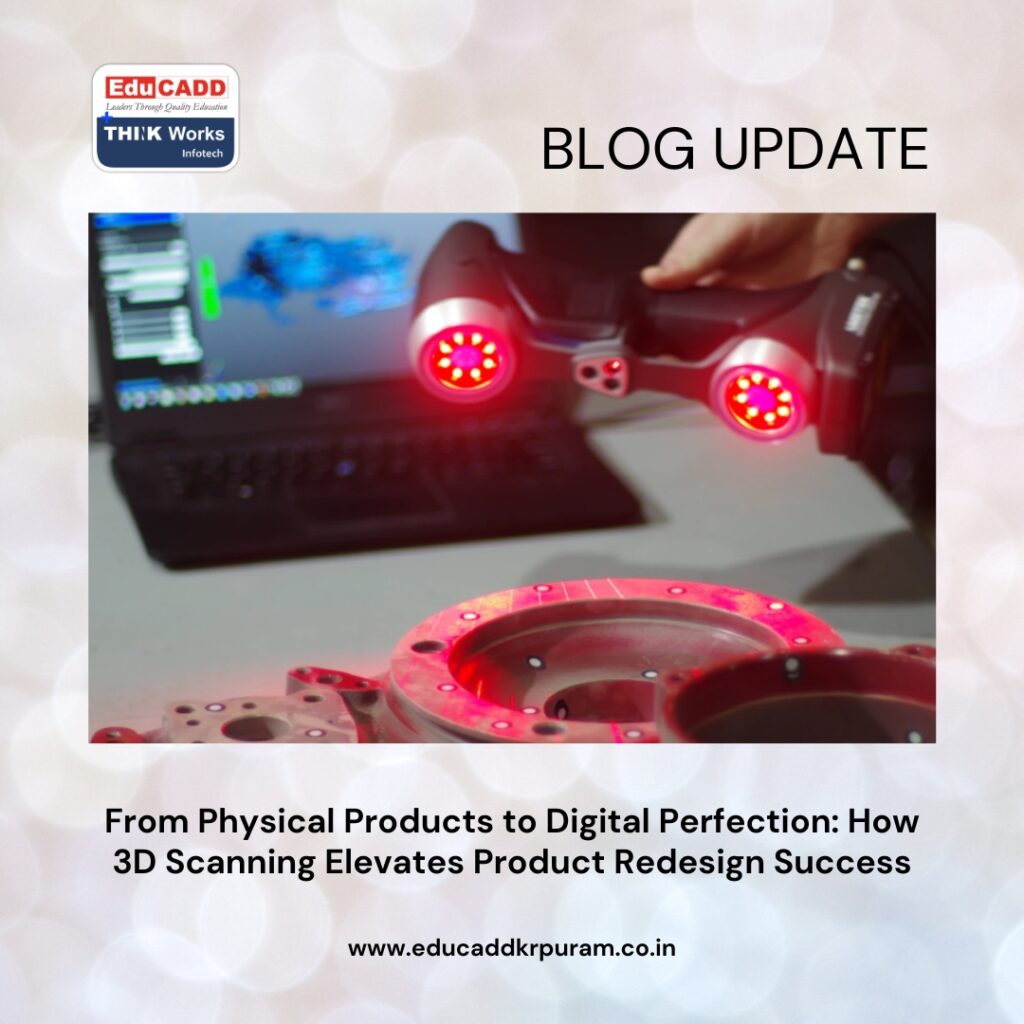
3D Product Redesign Success
This advanced technology not only accelerates development cycles but also improves design accuracy, reduces waste, and supports innovation at every stage of product enhancement. As industries move toward digital transformation, 3D scanning has emerged as an essential tool that bridges the gap between existing products and future-ready solutions.
Understanding the Growing Importance of 3D Product Redesign Success
Product redesign often begins with understanding the strengths and weaknesses of an existing product. Traditionally, this process involved manual measurements, physical inspections, and extensive documentation efforts. While these methods served industries for decades, they often consumed valuable time and introduced opportunities for human error. Today, 3D scanning has transformed how organizations gather product information. Advanced scanners capture millions of surface data points and create highly detailed digital replicas of physical objects.
These digital models provide a comprehensive understanding of product geometry, dimensions, and structural characteristics. Consequently, design teams can begin redesign projects with reliable information, enabling faster decisions and more accurate outcomes. The ability to digitize physical products quickly has become a major advantage for organizations seeking greater efficiency and innovation.
Achieving Superior Accuracy Throughout the 3D Product Redesign Success
Accuracy remains one of the most critical factors in successful product redesign. Even small dimensional inaccuracies can create significant issues during manufacturing, assembly, and product performance evaluation. Traditional measuring tools often struggle when products feature intricate details, curved surfaces, or complex geometries. In contrast, 3D scanning delivers exceptionally precise measurements by capturing an object’s complete surface profile. Engineers gain access to highly detailed digital representations that accurately reflect real-world conditions.
This precision minimizes design discrepancies and ensures that modifications align perfectly with existing components and systems. Furthermore, accurate data reduces the need for repeated measurements and corrective redesigns, helping organizations save both time and resources while maintaining high-quality standards.
Streamlining Reverse Engineering for Existing Products
Many businesses encounter situations where original design files, engineering drawings, or technical documentation are unavailable. This challenge is particularly common with legacy equipment, discontinued products, and older machinery. In such cases, reverse engineering becomes essential for product redesign and modernization efforts. 3D scanning simplifies this process by rapidly converting physical products into editable digital models. Engineers can analyze scanned data, recreate CAD models, and identify opportunities for improvement without manually recreating every feature.
This approach significantly reduces the time required for reverse engineering while ensuring accuracy throughout the process. As a result, organizations can preserve valuable assets, improve outdated designs, and extend product lifecycles more efficiently than ever before.
Accelerating Product Redesign Timelines
In competitive industries, speed often determines success. Companies that can redesign and launch improved products quickly gain an important advantage over competitors. One of the most compelling benefits of 3D scanning is its ability to shorten development timelines. Traditional redesign projects frequently involve lengthy measurement procedures, repeated prototype creation, and multiple rounds of validation.
However, 3D Product Redesign Success provides immediate access to complete product data, allowing teams to begin analysis and design modifications without delay. Engineers can move seamlessly from scanning to CAD modeling, simulation, and optimization activities. This streamlined workflow eliminates bottlenecks and helps organizations bring redesigned products to market faster while maintaining quality and performance standards.
Unlocking New Opportunities for Design Innovation
Innovation thrives when designers have the freedom to explore ideas without being constrained by incomplete information. 3D scanning empowers design teams by providing detailed digital models that serve as reliable foundations for experimentation and creativity. Instead of relying on assumptions, engineers can evaluate actual product geometries and test multiple redesign concepts with confidence. They can optimize structures, refine aesthetics, improve ergonomics, and introduce advanced features more effectively.
Additionally, digital workflows enable rapid iteration and virtual testing, allowing teams to explore a wider range of possibilities before committing to final designs. This ability to innovate efficiently helps organizations create products that stand out in crowded markets and better meet evolving customer expectations.
Capturing Complex Geometries with Exceptional Detail
Modern products often incorporate sophisticated shapes that challenge traditional measurement techniques. Aerospace components, medical devices, industrial tools, and consumer electronics frequently feature organic contours, intricate surfaces, and highly engineered details. Accurately documenting these features manually can be difficult and time-consuming. Fortunately, 3D scanning excels at capturing complex geometries with remarkable precision.
Every curve, edge, texture, and contour is digitally recorded, creating a complete representation of the physical object. Engineers can then analyze these details within digital environments and make informed redesign decisions. This capability ensures that even the most intricate products can be modified and optimized without compromising accuracy or functionality.
Improving Product Performance Through Detailed Analysis
A successful redesign goes beyond visual enhancements and focuses on improving overall product performance. 3D Product Redesign Success supports this objective by providing detailed insights into the condition and characteristics of existing products. Engineers can identify wear patterns, structural weaknesses, manufacturing inconsistencies, and dimensional variations that may impact functionality. With access to accurate digital data, redesign teams can implement targeted improvements that enhance strength, durability, efficiency, and usability. This analytical approach leads to better-performing products that meet customer expectations more effectively.
Furthermore, improved performance often results in increased reliability, reduced maintenance requirements, and stronger brand reputation within competitive industries.
Enhancing Integration with Modern CAD and Engineering Software
Digital engineering relies heavily on computer-aided design and simulation tools. One of the reasons 3D Product Redesign Success has gained widespread adoption is its compatibility with modern software platforms. Once scanned, digital models can be imported directly into CAD systems for modification and optimization. Engineers can edit designs, perform simulations, conduct stress analyses, and validate performance without rebuilding models from scratch.
This integration eliminates repetitive modeling tasks and enables teams to focus on innovation and problem-solving. Moreover, seamless data transfer between scanning systems and engineering software improves productivity and ensures consistency throughout the redesign workflow.
Reducing Costs and Maximizing Return on Investment
Every product redesign project involves financial considerations. Organizations aim to improve products while minimizing development expenses and maximizing profitability. 3D scanning contributes to cost reduction in several important ways. First, accurate digital models reduce the likelihood of design errors that can lead to costly revisions. Second, virtual testing decreases the need for multiple physical prototypes, lowering material and production expenses. Third, streamlined workflows reduce labor requirements associated with manual measurement and documentation.
By improving efficiency and minimizing waste, 3D scanning helps organizations achieve better financial outcomes while maintaining high standards of quality and innovation. These cost-saving benefits make the technology an attractive investment for businesses of all sizes.
Strengthening Team Collaboration and Project Coordination
Product redesign projects often involve collaboration among designers, engineers, manufacturing specialists, quality inspectors, and project managers. Effective communication between these stakeholders is essential for achieving project objectives. 3D scanning supports collaboration by creating a shared digital model that serves as a single source of truth throughout the redesign process. Team members can review, analyze, and discuss the same accurate product representation regardless of their physical location.
This shared understanding reduces misunderstandings, improves coordination, and accelerates decision-making. As organizations increasingly embrace remote and global work environments, digital collaboration tools powered by 3D scanning continue to play a vital role in successful product development.
Supporting Comprehensive Quality Assurance and Validation
Quality assurance remains a critical component of every redesign initiative. After implementing design modifications, organizations must verify that products meet performance requirements and manufacturing specifications. 3D scanning provides powerful inspection capabilities that simplify this process. Engineers can compare scanned components with original CAD models to identify dimensional deviations and assess compliance with tolerances. This approach enables rapid validation and helps detect issues before production begins.
Additionally, detailed inspection reports provide valuable documentation for quality management systems and regulatory compliance. By supporting accurate validation processes, 3D scanning reduces production risks and helps organizations maintain consistently high standards across redesigned products.
Contributing to Sustainable Product Development Practices
Sustainability has become a key priority for businesses seeking to balance profitability with environmental responsibility. Product redesign initiatives often focus on reducing material consumption, minimizing waste, and improving resource efficiency. 3D scanning contributes to these goals by enabling smarter design decisions and reducing unnecessary production activities. Accurate digital models decrease the need for repeated prototypes and lower material waste during development. Engineers can also optimize product structures to use fewer resources while maintaining performance standards.
Additionally, improved accuracy reduces manufacturing defects, helping organizations conserve energy and materials throughout production processes. These sustainability benefits align with modern environmental objectives and support long-term business success.
The Future of 3D Scanning in Product Redesign
As technology continues to evolve, the role of 3D scanning in product redesign will become even more significant. Emerging innovations such as artificial intelligence, digital twins, augmented reality, and advanced automation are expanding the capabilities of digital engineering workflows. Future scanning systems will likely deliver even higher levels of accuracy, speed, and automation, enabling organizations to capture and analyze product data more efficiently than ever before.
Furthermore, integration with smart manufacturing environments will allow redesign teams to make data-driven decisions in real time. Companies that adopt 3D scanning today will be better positioned to leverage these advancements and remain competitive in an increasingly digital marketplace.
Conclusion
The adoption of 3D Product Redesign Success is transforming the way organizations improve and modernize their products. By providing highly accurate digital models, accelerating reverse engineering, reducing development costs, and enhancing collaboration, this technology delivers measurable benefits across every stage of the redesign process. It empowers engineers to make informed decisions, supports innovative design strategies, and improves overall product quality. Moreover, its contributions to sustainability and digital transformation make it an indispensable tool for future-focused organizations. As industries continue to embrace advanced engineering technologies, 3D scanning will remain a driving force behind smarter, faster, and more successful product redesign initiatives, helping businesses create products that meet the demands of tomorrow’s markets.

