
Master the Art of Modern Spaces: Why a Professional Interior Design Course with Certification Is Your Gateway to a Rewarding Career
Interior design has become one of the most influential professions in today’s construction and design industry. Modern homes, offices, hotels, restaurants, retail stores, hospitals, and educational institutions all require thoughtfully designed interiors that combine comfort, functionality, and visual appeal. As people’s lifestyles continue to evolve, the demand for skilled interior designers is increasing rapidly across the globe. A Professional Interior Design Course offers aspiring designers the opportunity to gain industry-relevant knowledge, practical experience, and recognized credentials that employers value.
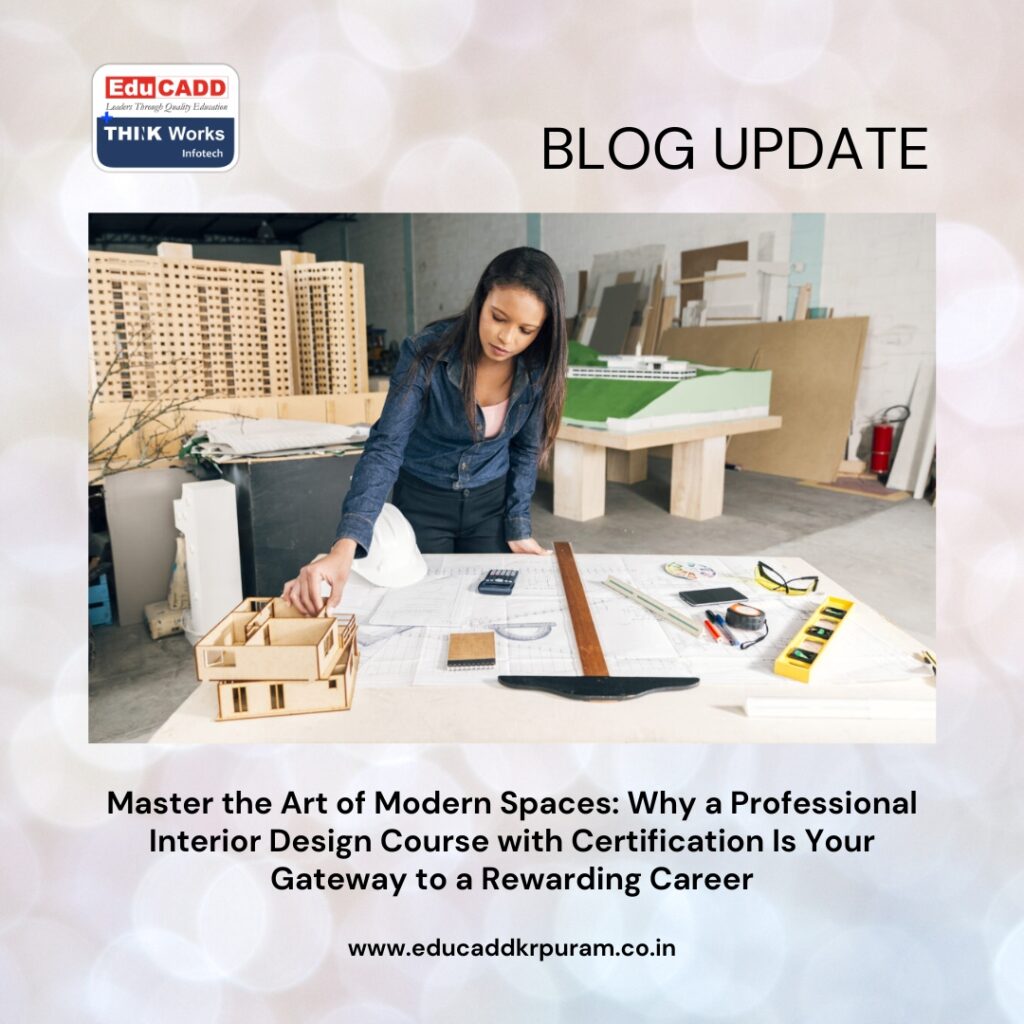
Professional Interior Design Course
Unlike short-term hobby classes, a professional certification program provides comprehensive training in design principles, space planning, materials, lighting, furniture, color psychology, and advanced design software. It also helps students develop problem-solving abilities and creative confidence while preparing them for real-world projects. Whether you are a student planning your future, a graduate seeking specialized skills, or a working professional looking for a career transition, this course can become the foundation of a successful and fulfilling profession in interior design.
Understanding the Role of Interior Design in Modern Living
Interior design is much more than decorating a room with attractive furniture and colorful accessories. It is a professional discipline that focuses on improving the functionality, comfort, safety, and appearance of interior spaces. Every successful project begins with understanding how people interact with a space and how thoughtful planning can improve their daily experiences. A Professional Interior Design Course introduces students to the science and art of designing environments that meet both practical and aesthetic requirements. Learners study spatial planning, circulation patterns, furniture arrangements, lighting distribution, ventilation, acoustics, and ergonomic principles to create interiors that support modern lifestyles.
They also understand how design influences emotions, productivity, and overall well-being. By combining creativity with technical expertise, interior designers help transform ordinary spaces into environments that inspire, comfort, and serve specific purposes. Consequently, professional education becomes essential for anyone who wants to build a meaningful career in this rapidly growing industry.
Why Interior Design Is Becoming One of the Most In-Demand Careers
The demand for qualified interior designers continues to rise because construction and real estate industries are expanding at an unprecedented pace. Residential developments, luxury apartments, commercial complexes, coworking spaces, hospitality projects, healthcare facilities, educational institutions, and retail environments all require skilled professionals who understand interior planning and execution. At the same time, homeowners are becoming more conscious about creating personalized living spaces that reflect their lifestyles and preferences. Businesses also invest heavily in office interiors because attractive workspaces improve employee satisfaction and strengthen brand identity.
Furthermore, sustainable architecture and smart home technologies have created new opportunities for interior designers with specialized knowledge. Completing a Professional Interior Design Course enables students to take advantage of these growing opportunities by equipping them with industry-standard skills and practical expertise. As urbanization continues worldwide, the need for creative and technically proficient designers will only become stronger, making interior design a promising long-term career choice.
A Well-Structured Curriculum That Covers Every Essential Skill
An excellent interior design program follows a carefully planned curriculum that combines creativity with technical education. Rather than focusing only on decoration, students learn every stage of professional interior project development. Each module builds upon previous concepts, helping learners gradually develop confidence and competence in handling complete design assignments.
The curriculum typically includes:
- Principles of interior design and design composition.
- Residential and commercial space planning.
- Color theory and material selection.
- Furniture layout and customized furniture concepts.
- Lighting design for different environments.
- Flooring, ceiling, and wall treatment planning.
- Building materials and construction techniques.
- AutoCAD drafting and technical documentation.
- 3D modeling, rendering, and visualization.
- Cost estimation, project scheduling, and client presentation.
This comprehensive learning approach ensures students graduate with practical knowledge that directly matches current industry expectations. Consequently, they become job-ready professionals capable of contributing effectively from the very beginning of their careers.
Developing Creativity Through Practical Design Thinking
Creativity is one of the most valuable qualities for an interior designer, but successful creativity always follows a structured design process. A Professional Interior Design Course encourages students to think beyond conventional ideas while maintaining functionality and practicality. Throughout the course, learners work on conceptual exercises, mood boards, space analysis, furniture planning, and interior styling projects that sharpen their imagination. Faculty members encourage experimentation with colors, textures, forms, lighting, and materials while helping students understand why every design decision matters.
Each assignment develops problem-solving abilities by requiring students to balance client expectations, available space, project budgets, and construction limitations. Over time, learners become more confident in generating innovative concepts while maintaining professional standards. This balanced approach enables graduates to create interiors that are not only visually attractive but also comfortable, sustainable, and highly functional for everyday use.
Learning Industry-Standard Software for Modern Interior Design
Technology has completely transformed the interior design profession. Today’s designers use advanced software applications to prepare floor plans, working drawings, furniture layouts, realistic renderings, walkthrough animations, and client presentations. Therefore, software proficiency has become one of the most important skills for career success. A Professional Interior Design Course provides hands-on training in industry-standard digital tools that simplify the design process while improving project accuracy. Students learn how to create detailed technical drawings, develop three-dimensional visualizations, experiment with multiple design concepts, and present professional-quality proposals to clients.
These digital skills also improve collaboration with architects, engineers, contractors, and project managers because everyone can work from standardized documentation. Moreover, software-based visualization reduces design errors and allows clients to understand proposed interiors before construction begins. As technology continues to evolve, students trained in modern design software remain highly competitive in the global job market and adapt easily to changing industry requirements.
Practical Training That Prepares Students for Real Industry Challenges
Theoretical knowledge provides a strong foundation, but practical experience transforms students into confident professionals. One of the greatest strengths of a Professional Interior Design Course is its emphasis on experiential learning. Throughout the program, students participate in studio assignments, live projects, site visits, model-making activities, design workshops, and portfolio development sessions. These experiences expose learners to actual construction processes, client meetings, material selection, vendor coordination, and project execution strategies. Instead of relying solely on classroom lectures, students apply their knowledge to realistic scenarios that mirror professional practice.
They learn how to identify design challenges, communicate solutions effectively, and manage projects within time and budget constraints. Faculty members provide continuous guidance and constructive feedback, allowing students to improve with every assignment. This practical exposure significantly boosts confidence and ensures graduates are well prepared to contribute successfully in professional interior design environments from the very first day.
Exciting Career Opportunities After Completing a Professional Interior Design Course with Certification
Completing a Professional Interior Design Course opens the door to diverse and rewarding career opportunities across multiple industries. As construction and infrastructure development continue to grow, organizations actively seek skilled professionals who can design spaces that are functional, attractive, and aligned with modern lifestyles. Interior designers are no longer limited to residential projects. Today, they contribute to corporate offices, luxury apartments, hotels, hospitals, shopping malls, restaurants, educational institutions, entertainment venues, and commercial buildings. Every project requires professionals who understand design concepts, technical drawings, material selection, furniture planning, lighting solutions, and project coordination. Certified designers are often preferred because they possess structured knowledge and practical experience that reduce project risks and improve execution quality.
Furthermore, experienced professionals can specialize in niche areas such as workspace planning, hospitality interiors, healthcare design, retail environments, exhibition design, luxury residences, and sustainable interiors. With dedication and continuous learning, interior designers can enjoy long-term career stability, attractive salary packages, and excellent opportunities for professional advancement both in India and internationally.
Professional Certification Builds Trust and Strengthens Your Career Profile
Certification is one of the strongest indicators of professional competence in today’s competitive employment market. While creativity is essential, employers also seek candidates who have completed structured training from a recognized institution. A Professional Interior Design Course demonstrates that an individual has acquired industry-standard knowledge, practical skills, and technical expertise required for professional interior design projects. During recruitment, certified candidates often receive preference because they require less training and can contribute more quickly to ongoing assignments. Certification also strengthens your resume and creates a positive impression during interviews.
Beyond employment, it builds trust with clients who prefer working with trained professionals capable of delivering quality work within agreed timelines and budgets. Additionally, certification supports long-term career growth by enhancing professional credibility, improving networking opportunities, and increasing confidence during client presentations. As your portfolio expands, your certification continues to reinforce your reputation as a qualified and dependable interior design professional.
Creating a Portfolio That Reflects Creativity and Technical Excellence
A professional portfolio is often the deciding factor during interviews and client presentations because it showcases your design capabilities far more effectively than academic scores alone. Throughout a Professional Interior Design Course, students gradually develop a comprehensive portfolio containing residential layouts, commercial projects, furniture concepts, lighting plans, material boards, rendered visualizations, working drawings, and complete design presentations. Every project included in the portfolio reflects a student’s ability to combine creativity with technical precision. Rather than simply displaying attractive images, a well-developed portfolio explains the complete design journey, including concept development, planning strategies, design challenges, and final solutions.
This approach demonstrates analytical thinking, problem-solving ability, and professional maturity. Digital portfolios further improve accessibility by allowing designers to present their work online to employers and clients across different locations. A carefully organized portfolio strengthens confidence, improves interview performance, and significantly increases the chances of securing desirable employment or independent design projects.
Freelancing and Entrepreneurship Create Unlimited Growth Possibilities
One of the most attractive aspects of interior design is the opportunity to become an independent entrepreneur. After gaining sufficient practical experience through a Professional Interior Design Course with Certification, many professionals establish their own design consultancy or begin working as freelance interior designers. This career path offers creative freedom, flexible working hours, and the ability to choose projects according to personal interests and expertise. Independent designers often collaborate with architects, builders, civil engineers, furniture manufacturers, contractors, landscape consultants, and home décor suppliers to deliver complete interior solutions.
Furthermore, digital marketing platforms and social media have made it easier for designers to showcase completed projects, build personal brands, and attract clients from different cities and countries. As experience grows, freelancers can expand their services by offering project management, turnkey interior solutions, renovation consulting, custom furniture design, modular kitchen planning, and virtual interior consultation.
Some of the most popular career options include:
- Residential Interior Designer
- Commercial Interior Designer
- Office Space Planner
- Hospitality Interior Consultant
- Retail Store Designer
- Furniture Designer
- Exhibition and Event Space Designer
- Modular Kitchen Designer
- 3D Visualization Specialist
- Freelance Interior Design Consultant
These career paths provide excellent earning potential while allowing professionals to express their creativity through meaningful and impactful projects.
Latest Trends Driving the Future of Interior Design
Interior design continues to evolve as technology, sustainability, and customer expectations reshape the industry. Modern clients expect interiors that combine elegance, efficiency, environmental responsibility, and intelligent technology. Consequently, designers must stay informed about emerging trends to remain competitive throughout their careers. Sustainable design practices have become increasingly important because people now prefer eco-friendly materials, energy-efficient lighting systems, recyclable products, and environmentally conscious construction methods. Likewise, smart homes equipped with automation systems require designers to integrate technology seamlessly into interior spaces. Minimalist aesthetics, multifunctional furniture, wellness-oriented environments, flexible workspaces, biophilic design, and space-saving solutions have also gained significant popularity.
Additionally, virtual reality, augmented reality, artificial intelligence, and advanced rendering technologies are transforming how designers communicate ideas and present projects to clients. Students who continuously update their knowledge remain well positioned to capitalize on future opportunities while delivering innovative solutions that meet changing market expectations.
Selecting the Best Institute for a Successful Interior Design Career
Choosing the right training institute is one of the most important decisions for anyone pursuing a career in interior design. Although many institutes offer similar-looking courses, the quality of education can vary considerably. Before enrolling in a Professional Interior Design Course with Certification, students should carefully evaluate factors such as curriculum quality, faculty experience, practical exposure, software training, infrastructure, placement support, and industry partnerships. Experienced instructors with professional backgrounds can provide valuable insights into real-world project execution, helping students understand current industry practices and employer expectations. Modern computer laboratories equipped with updated design software enable learners to develop technical expertise through practical assignments.
Workshops, seminars, guest lectures, design competitions, and site visits further enhance learning by exposing students to real construction environments and professional workflows. Institutes that emphasize portfolio development, communication skills, interview preparation, and placement assistance provide students with a significant advantage during the job search. Therefore, investing time in selecting the right institute ultimately contributes to long-term professional success.
Conclusion
The future of interior design is brighter than ever, driven by rapid urbanization, innovative construction practices, technological advancements, and increasing demand for personalized living and working environments. Enrolling in a Professional Interior Design Course with Certification is a valuable investment for individuals who wish to transform their creativity into a rewarding profession. The course provides comprehensive knowledge of design principles, space planning, furniture design, lighting concepts, construction materials, project management, and industry-standard software while strengthening practical skills through hands-on training.
Furthermore, recognized certification enhances professional credibility, improves employability, and builds client confidence. Whether your goal is to join a leading architecture firm, work with renowned interior design companies, establish your own consultancy, or become a successful freelance designer, professional training provides the essential foundation for achieving those ambitions. Continuous learning, technological adaptability, creative thinking, and practical experience will help you remain competitive in this dynamic industry. By choosing the right course and committing yourself to excellence, you can build a fulfilling career that combines artistic expression, technical expertise, financial growth, and lasting professional recognition in the exciting world of interior design.

