
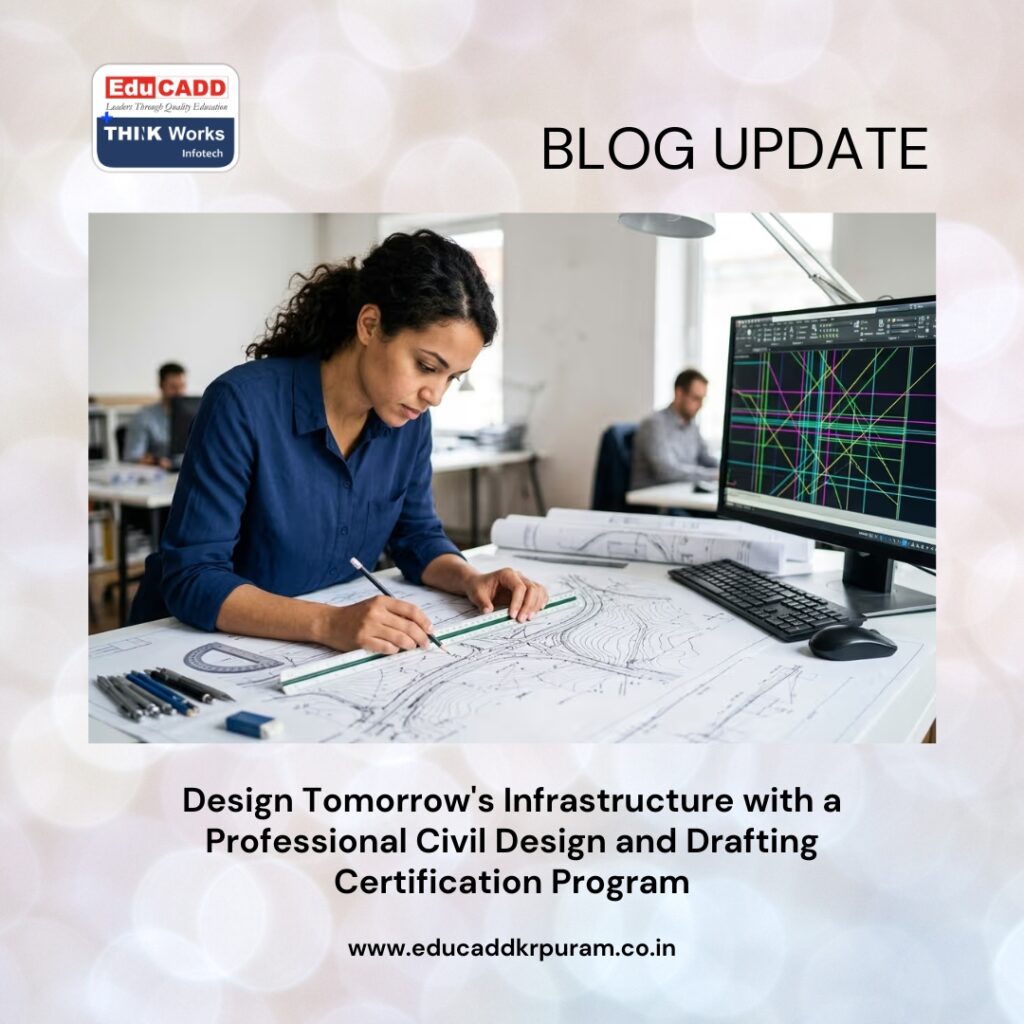
Design Tomorrow’s Infrastructure with a Professional Civil Design and Drafting Certification Program
A Civil Design Drafting Certification Program provides practical knowledge that prepares learners for real engineering challenges. Instead of focusing only on theoretical concepts, the program emphasizes hands-on learning, project-based assignments, and industry-standard software tools. Students gain experience in preparing construction drawings, understanding engineering standards, creating digital models, and coordinating with multidisciplinary project teams. Whether you are a diploma student, civil engineering graduate, site engineer, or working professional looking to upgrade your skills, this certification helps you build technical confidence and improve your career prospects. By combining engineering principles with practical software expertise, the program creates professionals who are ready to contribute to modern construction projects from the very beginning of their careers.
Civil Design Drafting Certification
Why Civil Design Has Become an Essential Engineering Skill
The construction sector has experienced tremendous growth over the last decade. Urban expansion, industrial development, transportation networks, and smart infrastructure projects have increased the need for accurate engineering documentation. Before any construction activity begins, engineers rely on detailed plans to estimate costs, organize resources, coordinate teams, and maintain quality standards. Because every successful project starts with a well-prepared design, civil design professionals play a critical role in the overall construction process.
A Civil Design Drafting Certification helps learners understand how engineering ideas are transformed into practical construction documents. Students develop the ability to prepare floor plans, site layouts, foundation drawings, elevation views, sectional drawings, reinforcement details, and utility layouts with precision. As engineering projects become larger and more technologically advanced, employers continue to seek professionals who understand both engineering concepts and digital drafting techniques. This combination of knowledge makes certified professionals valuable assets in every stage of infrastructure development.
What Makes This Certification Program Different from Traditional Learning
Many students complete engineering degrees with strong theoretical knowledge but limited practical exposure. Employers, however, often expect new recruits to work confidently with engineering software, understand construction documentation, and contribute to live projects immediately. This gap between classroom education and industry expectations is effectively addressed by a Civil Design Drafting Certification.
Every assignment is designed to improve technical accuracy while strengthening analytical thinking. By the end of the course, learners possess practical skills that closely match workplace requirements. This industry-oriented approach increases confidence during interviews and helps graduates transition smoothly into professional engineering environments.
Comprehensive Software Training for Modern Civil Engineering
Technology has transformed the way engineering projects are planned, designed, and executed. Manual drafting has almost disappeared from professional workplaces because digital tools offer greater accuracy, faster revisions, and improved collaboration. Consequently, software expertise has become one of the most important qualifications for engineering professionals. A well-designed Civil Design Drafting Certification provides extensive training in industry-standard software that supports modern infrastructure development.
Instead of teaching software commands in isolation, instructors integrate practical engineering projects into every module. Learners prepare complete construction drawings, structural layouts, grading plans, and digital models that reflect actual project requirements. This practical software knowledge enables graduates to contribute effectively to engineering teams while meeting the expectations of today’s construction industry.
Practical Project Experience That Builds Industry Confidence
Employers consistently value practical experience because it demonstrates the ability to apply technical knowledge in real situations. A Civil Design Drafting Certification therefore emphasizes project-based learning throughout the training period. Students do not simply observe demonstrations; instead, they actively create engineering drawings, solve drafting problems, and complete assignments based on realistic construction scenarios.
This continuous practical exposure develops confidence, improves technical accuracy, and prepares learners to handle workplace responsibilities efficiently. By working on projects that closely resemble industry requirements, students graduate with valuable experience that strengthens both their technical skills and professional credibility.
Career Opportunities That Continue to Expand Every Year
One of the biggest advantages of completing a Civil Design Drafting Certification is the wide variety of career opportunities available after certification. Infrastructure development remains one of the fastest-growing sectors in many countries, creating consistent demand for professionals with practical drafting and design expertise. Since every engineering project requires accurate documentation before construction begins, certified civil drafting professionals enjoy stable employment opportunities across multiple industries.
As professionals gain practical experience, they often progress into senior design positions, project management roles, technical consulting, and engineering leadership. This steady career progression makes the certification an excellent investment for individuals who aspire to build long-term success in the civil engineering industry.
Essential Skills You Gain Throughout the Training Program
A Civil Design and Drafting Certification Program is carefully designed to help students develop a balanced combination of technical knowledge and professional abilities. While mastering engineering software is an important objective, the training extends far beyond digital tools. Employers expect civil design professionals to interpret engineering concepts accurately, prepare detailed construction documents, and collaborate effectively with different project teams. Therefore, the program focuses on building practical competencies that remain valuable throughout a professional career.
These skills enable professionals to work efficiently under deadlines while maintaining drawing accuracy and quality. Continuous practice, instructor feedback, and project-based assignments help students become confident in handling real engineering responsibilities with greater precision and professionalism.
Understanding Industry Standards and Professional Drafting Practices
Engineering drawings serve as the primary communication tool between architects, engineers, contractors, consultants, and clients. Every line, symbol, dimension, and notation must follow accepted industry standards to avoid confusion during construction. A high-quality Civil Design and Drafting Certification Program introduces students to these professional drafting practices, ensuring they produce drawings that meet engineering and construction requirements.
Employers highly value professionals who consistently follow established standards because accurate documentation minimizes costly mistakes and improves overall project quality. Learning these professional practices during certification prepares students to adapt quickly to organizational workflows and engineering quality systems.
Diverse Industries That Recruit Certified Civil Drafting Professionals
The knowledge and practical skills acquired through a Civil Design and Drafting Certification Program are applicable across numerous industries. Since engineering design forms the foundation of every construction project, organizations from different sectors require professionals who can prepare technical drawings with accuracy and efficiency. This broad industry demand creates excellent career stability and long-term employment opportunities.
Renewable energy companies recruit civil designers to support solar power installations, wind farms, and sustainable infrastructure developments. In addition, engineering consultancies, architectural firms, urban planning agencies, government organizations, and multinational engineering corporations continue to seek qualified professionals who possess practical drafting expertise. The diversity of these industries ensures that certified candidates can choose career paths based on their interests and long-term goals.
Benefits of Certification for Students, Graduates, and Working Professionals
A Civil Design and Drafting Certification Program is suitable for learners from different educational and professional backgrounds. Students pursuing diploma or degree programs can enhance their practical skills before graduation, making them more competitive during campus recruitment. Instead of entering the job market with only theoretical knowledge, they develop hands-on expertise that employers immediately recognize.
Individuals planning a career change into civil engineering design also gain a structured learning path that prepares them for rewarding opportunities. The flexibility and practical orientation of the program make it valuable for learners at every stage of their professional journey.
Digital Construction Technologies Are Transforming Civil Engineering
Technology has fundamentally changed how engineering projects are planned, designed, reviewed, and executed. Modern construction companies increasingly rely on digital workflows to improve productivity, reduce errors, and strengthen collaboration among different project teams. A contemporary Civil Design and Drafting Certification Program introduces students to these technological advancements, ensuring they remain prepared for future engineering challenges.
Students learn how digital engineering improves project coordination, supports better decision-making, and enhances construction quality. They also understand how automation simplifies repetitive drafting tasks without compromising engineering accuracy. As organizations continue investing in digital transformation, professionals who possess these modern technical skills enjoy stronger career prospects and greater opportunities for advancement.
How Certification Improves Employability and Career Growth
Employers today seek professionals who can contribute immediately without requiring extensive internal training. Completing a Civil Design and Drafting Certification Program demonstrates that a candidate possesses practical knowledge aligned with current industry requirements. Certification acts as evidence of technical competence while highlighting a commitment to continuous professional development.
A professional portfolio containing engineering drawings, digital models, and completed project assignments often creates a stronger impression than academic qualifications alone. As professionals gain experience, certification also supports promotions, salary growth, leadership opportunities, and specialization in advanced engineering fields. This combination of practical expertise and recognized credentials makes certification a valuable asset throughout an engineer’s career.
Choosing the Right Training Institute for a Successful Career
Selecting the right institute is an important decision because the quality of training directly influences future career opportunities. Although many institutions offer a Civil Design and Drafting Certification Program, learners should carefully evaluate several factors before making a choice. A well-structured training program should provide experienced faculty, modern computer laboratories, updated software versions, industry-oriented curriculum, practical project work, flexible learning schedules, and placement assistance.
Exposure to practical assignments helps students develop confidence while building an impressive technical portfolio. Choosing an institute that regularly updates its curriculum according to industry trends ensures learners remain competitive in the rapidly evolving construction sector. By investing time in selecting a reputed training provider, students create a stronger foundation for long-term career growth and professional success.
The Future Scope of Civil Design and Drafting Careers
The future of the construction industry is filled with exciting possibilities as governments and private organizations continue investing in infrastructure development. New residential communities, commercial complexes, industrial parks, smart cities, transportation corridors, airports, metro rail systems, and renewable energy projects require highly skilled professionals who can prepare accurate engineering designs and construction documentation. As these developments become larger and more technologically advanced, the demand for professionals who have completed a Civil Design and Drafting Certification Program continues to rise across domestic and international markets.
Certified civil drafting professionals therefore enjoy excellent opportunities to specialize in advanced fields such as BIM coordination, infrastructure modeling, structural detailing, project planning, digital construction management, and engineering consultancy. Those who continue upgrading their knowledge can build long-term careers that offer stability, professional recognition, and global employment opportunities. As infrastructure development expands worldwide, the value of specialized civil design expertise will only continue to increase.
Why Investing in This Certification Can Transform Your Career
Every successful career begins with the right combination of knowledge, practical skills, and industry exposure. A Civil Design and Drafting Certification Program provides all three by preparing learners for the real expectations of today’s engineering industry. Instead of limiting students to classroom theory, the program develops practical capabilities that employers recognize immediately. This practical approach enables graduates to become productive team members from the very first day of employment while reducing the learning curve commonly experienced by fresh recruits.
Furthermore, certified professionals frequently receive better career opportunities because organizations value employees who possess updated software knowledge and an understanding of industry standards. As experience grows, professionals can pursue senior design roles, project coordination responsibilities, technical consulting assignments, or managerial positions. The certification therefore becomes more than a qualification—it becomes a stepping stone toward continuous learning, career advancement, and long-term professional success in the engineering industry.
Conclusion
The engineering and construction industry continues to evolve through innovation, digital transformation, and ambitious infrastructure development projects. In this rapidly changing environment, organizations seek professionals who possess practical knowledge, technical accuracy, and the confidence to deliver high-quality engineering documentation. A Civil Design and Drafting Certification Program equips learners with exactly these capabilities by combining engineering fundamentals with modern software training, project-based learning, and industry-standard drafting practices. Students gain valuable experience in preparing construction drawings, coordinating engineering information, understanding professional workflows, and applying technical knowledge to real-world projects.

