
Shape Inspiring Interiors with an Interior Design and Space Planning Course for a Bright Creative Future
Interior spaces influence the way people feel, work, and interact every day. A thoughtfully designed home creates comfort, a well-planned office boosts productivity, and an attractive retail store enhances the customer experience. As modern lifestyles evolve, the need for creative professionals who can combine beauty with functionality continues to grow. An Interior Design Space Planning Course offers the ideal opportunity to develop these valuable skills while building a rewarding career.
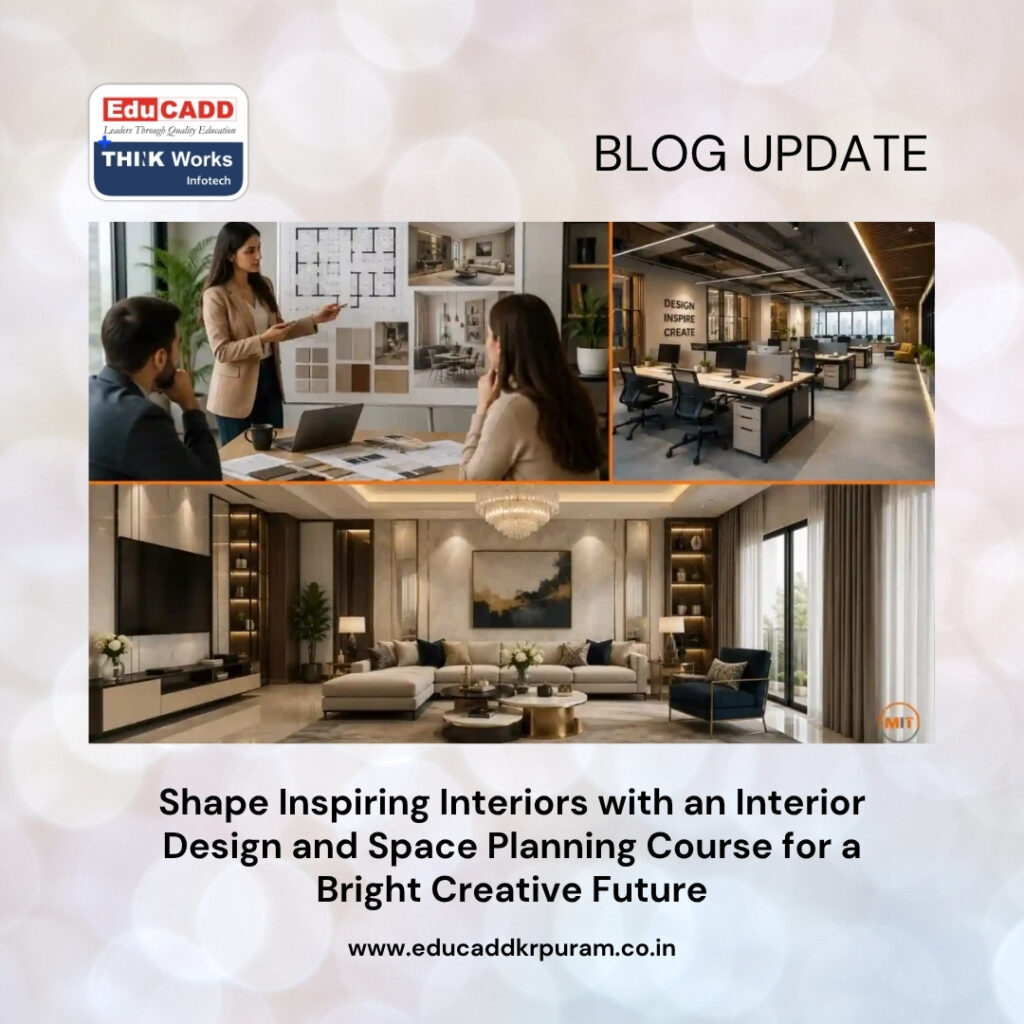
Interior Design Space Planning
The course introduces students to professional design techniques, practical planning methods, and the latest industry tools that help transform empty spaces into elegant and functional environments. Whether your goal is to become an interior designer, start your own design studio, or work with leading architecture firms, gaining professional training is the first step toward long-term success.
The Growing Importance of Interior Design in Today’s World
Interior design has become an essential part of residential, commercial, and hospitality projects because every space must meet both practical and aesthetic expectations. People now seek interiors that improve comfort, support daily activities, and reflect their personal style. Businesses also understand that well-designed workplaces and customer spaces create lasting impressions while increasing efficiency. An Interior Design Space Planning helps students understand how thoughtful design improves lifestyles and business performance. Instead of focusing only on decoration, learners discover how planning, organization, and creativity work together to create spaces that are visually appealing and highly functional.
Understanding the Core Principles of Professional Interior Design
Every successful interior project begins with a strong understanding of design fundamentals. These principles include balance, proportion, harmony, rhythm, emphasis, contrast, and scale. They provide the framework that allows designers to create interiors with consistency and visual appeal. During an Interior Design Space Planning, students learn how to apply these principles to different types of spaces while maintaining functionality and comfort. They also study how textures, patterns, materials, and finishes contribute to an overall design concept. This knowledge enables aspiring designers to confidently develop creative ideas that satisfy both client expectations and industry standards.
Mastering the Art of Efficient Space Planning
Space planning is one of the most valuable aspects of interior design because every room must support movement, convenience, and efficient use of available space. Even luxurious interiors can feel uncomfortable if the layout is poorly planned. An Interior Design Space Planning teaches students how to evaluate floor plans, organize furniture layouts, define activity zones, and improve circulation within interiors. Additionally, learners discover techniques for maximizing compact spaces without making them appear crowded. These planning skills help designers create environments that feel open, organized, and comfortable while making the best possible use of every square foot.
Learning Color Psychology and Material Selection
The right combination of colors and materials can completely transform the atmosphere of any interior. Warm colors create inviting environments, while cooler shades promote calmness and concentration. Likewise, flooring, wall finishes, fabrics, and decorative materials influence both appearance and durability. An Interior Design Space Planning provides detailed knowledge of color theory, texture coordination, material selection, and finishing techniques. Students understand how different combinations affect mood, lighting, and functionality. As a result, they become capable of selecting materials that enhance beauty while meeting practical requirements for maintenance, safety, and long-term performance.
Creating Beautiful Interiors with Effective Lighting Design
Lighting plays a vital role in highlighting architectural features and creating comfortable living or working environments. Proper lighting not only improves visibility but also enhances colors, textures, and spatial perception. Therefore, every successful designer understands how different lighting techniques influence interior spaces. An Interior Design Space Planning introduces students to natural lighting, ambient lighting, task lighting, accent lighting, and decorative illumination. Furthermore, learners explore energy-efficient lighting solutions that reduce electricity consumption while maintaining excellent visual quality. This knowledge enables designers to create interiors that feel welcoming throughout the day and night.
Enhancing Spaces Through Furniture Planning and Interior Styling
Furniture planning requires careful consideration of functionality, ergonomics, proportions, and aesthetics. Every furniture piece should complement the available space while supporting the intended activities of the occupants. Beyond furniture, accessories and decorative elements complete the overall design concept. Through an Interior Design and Space Planning Course, students learn how to prepare professional furniture layouts, coordinate furnishings, and style interiors using artwork, curtains, rugs, decorative lighting, indoor plants, and accessories. They also understand how different design styles can be adapted to suit individual client preferences, creating spaces that are both elegant and highly practical.
Gaining Practical Knowledge of Residential and Commercial Projects
Residential and commercial interiors differ significantly in design objectives, planning requirements, and user expectations. Homes prioritize comfort, relaxation, and personalization, whereas offices, hotels, restaurants, and retail outlets emphasize productivity, branding, and customer engagement. An Interior Design and Space Planning Course exposes students to a variety of project types, allowing them to understand the unique challenges associated with each environment. Moreover, they become familiar with building standards, accessibility guidelines, and space utilization techniques that ensure every project meets professional requirements while delivering outstanding user experiences.
Developing Technical Skills with Industry-Standard Design Software
Digital technology has revolutionized the interior design profession by enabling designers to visualize projects before construction begins. Clients now expect detailed presentations that clearly illustrate design concepts through realistic models and renderings. An Interior Design and Space Planning Course trains students in professional software used for drafting, three-dimensional modeling, rendering, and visualization. Learners prepare floor plans, elevations, furniture layouts, false ceiling designs, and photorealistic presentations that accurately communicate their creative ideas. These technical skills not only improve project quality but also increase employability in competitive design and architectural firms.
Promoting Sustainable and Eco-Conscious Interior Design
Sustainability has become an important consideration in modern interior design because environmentally responsible solutions benefit both clients and the planet. Green interiors reduce energy consumption, improve indoor air quality, and support healthier lifestyles. An Interior Design and Space Planning Course introduces sustainable materials, energy-efficient lighting systems, water-saving fixtures, recyclable resources, and environmentally friendly design practices.
Students also learn how to maximize natural ventilation and daylight while minimizing environmental impact. These valuable skills prepare graduates to meet the growing demand for sustainable interior solutions across residential and commercial sectors.
Strengthening Professional Communication and Project Management Skills
Interior designers regularly collaborate with architects, engineers, contractors, suppliers, and clients throughout every project. Therefore, communication and project management skills are just as important as creativity. An Interior Design and Space Planning Course helps students develop effective presentation techniques, client consultation methods, budgeting skills, scheduling strategies, and project coordination abilities.
They also learn how to prepare professional design proposals, manage revisions, and maintain productive working relationships. These competencies enable graduates to confidently handle projects from initial concept through successful completion while ensuring high levels of client satisfaction.
Preparing for Diverse Career Opportunities in Interior Design
The demand for qualified interior designers continues to increase as construction, real estate, hospitality, healthcare, and retail industries expand. Skilled professionals are required to create functional and visually appealing interiors across multiple sectors. After completing an Interior Design and Space Planning Course, graduates can pursue careers as interior designers, space planners, design consultants, furniture specialists, visual merchandisers, lighting designers, project coordinators, exhibition designers, or freelance consultants.
Many professionals also choose entrepreneurship by establishing independent design studios that serve residential and commercial clients, offering excellent opportunities for career growth and financial success.
Building a Strong Portfolio Through Practical Experience
A professional portfolio plays a significant role in securing employment and attracting clients within the interior design industry. Employers prefer candidates who can demonstrate creativity alongside technical expertise through completed projects. An Interior Design and Space Planning Course emphasizes practical assignments, live projects, design presentations, and portfolio development. Students create residential layouts, commercial concepts, furniture plans, mood boards, three-dimensional visualizations, and complete interior presentations that showcase their capabilities. This hands-on experience not only strengthens technical skills but also builds confidence, enabling graduates to enter the industry with impressive portfolios that highlight their creativity and professionalism.
Conclusion
Interior design is a profession where creativity meets technical precision to create meaningful spaces that enhance everyday living. Every successful project requires thoughtful planning, practical knowledge, artistic vision, and a deep understanding of client needs. An Interior Design Space Planning Course provides comprehensive training in design principles, space planning, lighting, furniture arrangement, software applications, sustainability, and project management.
These valuable skills prepare students for rewarding careers in one of the fastest-growing creative industries. As demand for innovative and functional interiors continues to rise, investing in an Interior Design and Space Planning Course is a smart decision for anyone who wants to build a successful future while transforming ordinary spaces into extraordinary experiences.

