
Shape Tomorrow’s Machines with a Mechanical Design and Drafting Certification Course
Mechanical engineering continues to drive innovation across industries, making skilled design professionals more valuable than ever. Modern companies need engineers who can create accurate technical drawings, develop 3D models, and contribute to efficient product development. A Mechanical Design Drafting Certification Course provides the practical knowledge and technical expertise required to meet these expectations. It combines engineering concepts with hands-on software training, helping learners understand every stage of the design process.
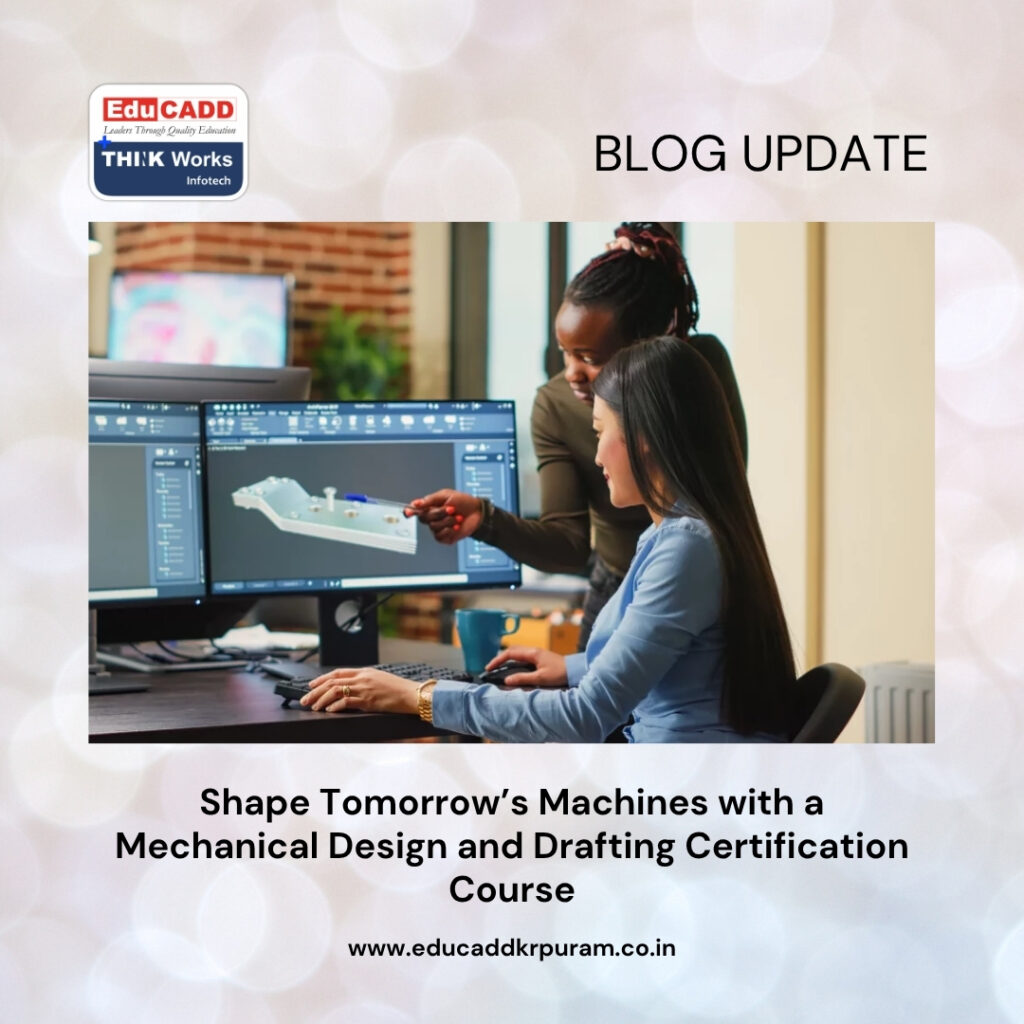
Mechanical Design Drafting Certification
Whether you are a student, a recent graduate, or a working professional, this course prepares you for exciting opportunities in manufacturing, automotive, aerospace, and industrial engineering. With industry-focused training and practical projects, you can confidently build the skills employers seek and establish a successful career in mechanical design.
Build Strong Mechanical Design Fundamentals
A successful engineering career begins with a solid understanding of mechanical design principles. A Mechanical Design Drafting Certification introduces students to engineering drawing standards, projection methods, machine elements, dimensions, tolerances, and drafting conventions. These concepts help learners understand how components fit together and function within mechanical systems. Instead of focusing only on theory, the course encourages practical application, making it easier to solve real engineering problems. A strong foundation improves technical confidence and prepares students for advanced design challenges in professional environments.
Master Industry-Standard CAD Software
Modern engineering companies rely on CAD software to improve design accuracy and productivity. During a Mechanical Design Drafting Certification, students receive practical training in popular software such as AutoCAD, SolidWorks, CATIA, Creo, and Autodesk Inventor. Learners create detailed 2D drawings, realistic 3D models, assemblies, and production-ready documentation. Regular practice helps students become comfortable using professional tools while improving speed and precision. These software skills increase employability because most engineering organizations expect designers to work efficiently with digital design platforms.
Gain Practical Knowledge Through Real Projects
Practical experience bridges the gap between classroom learning and industrial work. A Mechanical Design Drafting Certification includes project-based assignments that reflect real manufacturing and design requirements. Students work on machine components, industrial assemblies, sheet metal parts, and product models while following professional engineering standards. These projects strengthen analytical thinking and improve confidence. Furthermore, learners understand how design decisions affect manufacturing, assembly, and product performance, making them better prepared for workplace responsibilities.
Understand Manufacturing Processes and Materials
An effective mechanical designer must understand how products are manufactured. A Mechanical Design Drafting Certification introduces students to machining, casting, forging, welding, fabrication, and modern production methods. Learners also study material properties and selection techniques to create practical and cost-effective designs. Understanding manufacturing limitations allows designers to reduce production errors and improve efficiency. This knowledge helps students develop designs that balance performance, durability, and manufacturing feasibility, making them valuable contributors to engineering teams.
Develop Precision in Engineering Drawings
Accuracy is essential in every engineering project because even a small mistake can affect product quality and manufacturing costs. A Mechanical Design Drafting Certification teaches students to prepare precise engineering drawings by following international drafting standards. Learners practice dimensioning, geometric dimensioning and tolerancing (GD&T), fits, limits, surface finish symbols, and section views. They also learn how to prepare clear manufacturing documentation that minimizes production errors. These skills improve technical accuracy and ensure that designs communicate every requirement effectively.
Strengthen Problem-Solving and Design Skills
Mechanical designers must evaluate challenges and develop practical solutions that satisfy technical and commercial requirements. A Mechanical Design and Drafting Certification Course encourages students to think analytically while designing components and assemblies. Learners compare different design options, evaluate material performance, reduce unnecessary weight, and improve product efficiency. They also understand how to optimize designs without affecting quality or functionality. This practical approach develops confidence and prepares students to solve engineering problems in dynamic industrial environments.
Create a Professional Design Portfolio
Employers prefer candidates who can demonstrate practical skills through completed projects. Throughout a Mechanical Design Drafting Certification, students develop an impressive portfolio that showcases their technical abilities. The portfolio includes engineering drawings, 3D models, assembly designs, exploded views, and project documentation. Presenting these projects during interviews helps recruiters assess practical knowledge quickly. A strong portfolio also reflects creativity, attention to detail, and software proficiency, making candidates more competitive in today’s engineering job market.
Explore Exciting Career Opportunities
Mechanical design professionals enjoy career opportunities across various industries because almost every manufacturing sector requires skilled designers. After completing a Mechanical Design and Drafting Certification Course, learners can apply for positions such as Mechanical Design Engineer, CAD Engineer, Drafting Engineer, Product Design Engineer, Tool Design Engineer, and Production Design Engineer. These roles exist in automotive companies, aerospace organizations, heavy engineering industries, consumer product manufacturers, energy companies, and industrial automation firms. As industries continue to expand, qualified design professionals remain in consistent demand.
Stay Ready for Modern Engineering Trends
Engineering technology evolves continuously, creating new opportunities for skilled professionals. A Mechanical Design and Drafting Certification Course introduces learners to advanced concepts such as digital prototyping, parametric modeling, design automation, simulation, and collaborative product development. Exposure to modern engineering practices helps students adapt quickly to changing workplace requirements. By understanding current technologies, learners remain competitive and contribute effectively to innovative product development. Continuous learning also supports long-term career growth in an increasingly digital engineering environment.
Improve Communication and Workplace Collaboration
Technical expertise alone does not guarantee career success. Mechanical designers often work with manufacturing engineers, quality teams, project managers, suppliers, and clients. Therefore, effective communication is equally important. A Mechanical Design and Drafting Certification Course helps students explain design concepts, prepare professional documentation, and collaborate efficiently with multidisciplinary teams. Strong communication reduces misunderstandings, improves project coordination, and supports faster decision-making. These professional skills enhance workplace performance and prepare learners for leadership responsibilities in the future.
Conclusion
A Mechanical Design Drafting Certification Course provides the perfect combination of engineering knowledge, practical software training, and industry-focused experience. Students develop expertise in mechanical drawing, CAD applications, manufacturing processes, design analysis, and professional documentation while working on real-world projects. The course also strengthens problem-solving, communication, and teamwork skills, making graduates ready for today’s competitive engineering industry. Whether your goal is to secure your first engineering job, upgrade your technical abilities, or advance into a specialized design role, this certification can open the door to excellent career opportunities. By investing in continuous learning and practical skill development, you can build a rewarding future and become a valuable professional in the fast-growing field of mechanical design and drafting.

