
Future-Proof Your Engineering Career with Expert Mechanical CAD Software Training
The engineering industry is evolving faster than ever, and digital design has become the backbone of modern manufacturing and product development. Every mechanical component, machine, and industrial system begins with an accurate digital model created using advanced Mechanical CAD software. As industries continue to adopt automation, precision manufacturing, and smart engineering practices, the demand for professionals with strong CAD skills continues to grow. Choosing to Learn Expert Mechanical CAD Training is one of the most effective ways to develop practical knowledge, improve design accuracy, and become industry-ready. Unlike self-learning methods, expert-led training combines technical theory with real-world applications, enabling learners to understand the complete product development process.
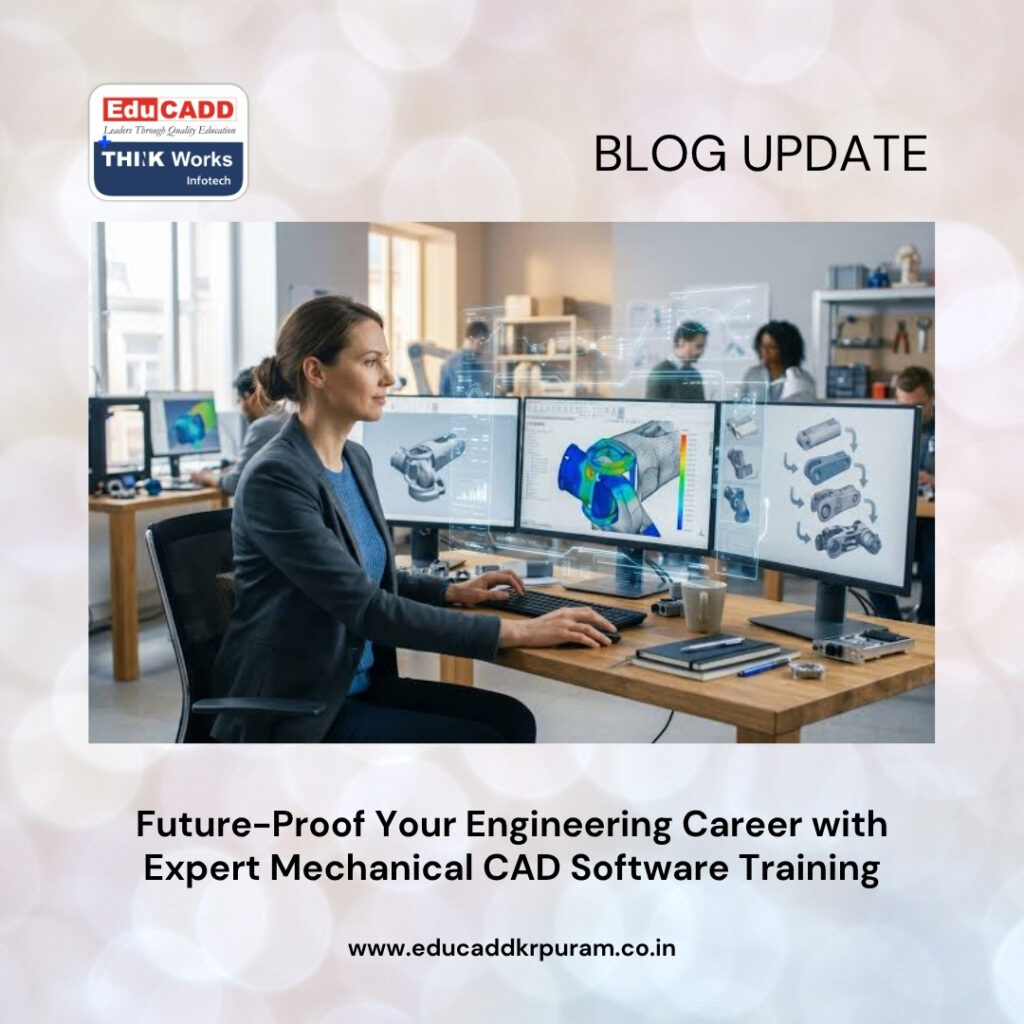
Expert Mechanical CAD Training
Whether you are an engineering student, a diploma holder, a recent graduate, or an experienced professional, expert guidance helps you master the latest Mechanical CAD tools while building the confidence required to succeed in today’s competitive engineering landscape.
Why Mechanical CAD Skills Are Essential in Modern Engineering
Mechanical CAD software has transformed the way engineers design, analyze, and manufacture products. Traditional drafting methods have largely been replaced by intelligent digital design systems that improve accuracy, minimize errors, and accelerate product development. Organizations now depend on Mechanical CAD software to create detailed 2D drawings, realistic 3D models, virtual prototypes, and production documentation before manufacturing begins. When you Learn Expert Mechanical CAD Training, you understand how these technologies support every stage of engineering projects.
Professional trainers explain practical workflows that connect design, manufacturing, quality control, and production planning. This comprehensive understanding enables learners to become productive engineers who contribute effectively from the very beginning of their careers.
Learn from Industry Professionals with Practical Experience
One of the greatest advantages of expert-led Mechanical CAD training is learning directly from professionals who have worked on live engineering projects. Their industrial knowledge helps students understand practical design challenges that cannot be learned through textbooks alone. Experienced instructors demonstrate efficient modeling techniques, explain engineering standards, and introduce workflow strategies that save valuable time during project execution. They also provide personalized feedback that helps learners improve continuously throughout the training program.
Furthermore, students benefit from real-world examples that illustrate how Mechanical CAD software is used across different industries. This practical learning approach makes technical concepts easier to understand while preparing students for actual workplace responsibilities.
Develop Strong Engineering Fundamentals Before Advanced Design
Every successful Mechanical CAD professional begins by mastering the core principles of engineering design. Expert training programs focus on building a solid foundation before introducing advanced software features. Students learn engineering drawing concepts, sketch creation, geometric constraints, dimensions, orthographic projections, section views, and drafting standards. Once these fundamentals become familiar, learners gradually move toward advanced topics such as parametric modeling, assembly creation, sheet metal design, weldments, and detailed manufacturing drawings.
Because each concept builds upon previous knowledge, students develop a complete understanding of digital engineering workflows. This systematic approach improves both technical confidence and long-term learning outcomes.
Gain Hands-On Experience Through Industry-Oriented Projects
Engineering is a practical profession where real experience matters as much as theoretical knowledge. Therefore, expert Mechanical CAD training emphasizes project-based learning that reflects industrial requirements. Instead of completing simple software exercises, learners work on realistic engineering assignments involving machine components, industrial equipment, mechanical assemblies, and manufacturing documentation. These projects simulate actual workplace scenarios, allowing students to apply their technical knowledge while solving practical engineering problems.
Additionally, instructors guide learners through design reviews and project improvements that strengthen their analytical abilities. Practical experience not only improves software proficiency but also prepares graduates to contribute effectively in professional engineering environments.
Understand Engineering Standards and Manufacturing Requirements
Creating an attractive digital model is only one aspect of engineering design. Professional engineers must also ensure that every drawing complies with recognized engineering standards and manufacturing practices. Expert trainers introduce students to international drafting conventions, geometric dimensioning and tolerancing, material specifications, assembly documentation, and production requirements. Learners understand how accurate engineering documentation supports manufacturing efficiency, quality assurance, and product reliability.
Moreover, they discover how design decisions influence production costs, maintenance, and product performance. This industry-focused knowledge helps graduates create professional engineering drawings that meet employer expectations while supporting efficient manufacturing operations.
Improve Design Accuracy and Overall Productivity
Accuracy is essential in engineering because even a minor design error can lead to costly production delays or product failures. Expert instructors teach proven design methodologies that help learners create highly accurate mechanical models while improving productivity. Students discover advanced modeling techniques, intelligent constraints, reusable design libraries, feature automation, and efficient editing methods. These professional workflows reduce repetitive work and simplify complex design modifications.
Furthermore, learners understand how organized project management improves collaboration among engineering teams. By combining accuracy with efficiency, Mechanical CAD professionals become valuable contributors to organizations focused on delivering high-quality engineering solutions within tight deadlines.
Explore Exciting Career Opportunities Across Multiple Industries
Mechanical CAD expertise opens doors to numerous career opportunities because almost every manufacturing industry depends on digital engineering. Professionals skilled in Mechanical CAD software are employed in automotive manufacturing, aerospace engineering, industrial automation, heavy equipment production, robotics, energy, construction, medical device manufacturing, and consumer product development.
When you Learn Expert Mechanical CAD Training, your career options expand significantly because employers seek candidates with practical software knowledge and strong engineering fundamentals. Graduates may pursue roles such as Mechanical Design Engineer, CAD Engineer, Product Design Engineer, Tool Design Engineer, Design Draftsman, Manufacturing Engineer, and Research and Development Engineer. These positions provide excellent opportunities for professional growth and long-term career stability.
Build Strong Problem-Solving and Analytical Skills
Mechanical engineering involves solving complex technical challenges that require logical thinking and careful decision-making. Expert trainers encourage learners to evaluate multiple design solutions before selecting the most efficient approach. Students understand how engineering decisions affect manufacturability, product functionality, maintenance, production costs, and customer satisfaction. Through regular design exercises, learners improve their ability to identify errors, optimize designs, and implement effective engineering solutions.
Additionally, instructors share practical experiences from industrial projects that help students understand real engineering scenarios. As a result, graduates become confident professionals capable of handling increasingly sophisticated design responsibilities with accuracy and efficiency.
Stay Updated with Advanced Mechanical CAD Technologies
Engineering software continues to evolve with the introduction of intelligent design tools, cloud collaboration, simulation capabilities, and digital product lifecycle management. Learning the latest Mechanical CAD technologies ensures that professionals remain competitive in today’s rapidly changing engineering environment. Expert instructors regularly update training content to include modern software features, automation techniques, and emerging industry trends.
Students gain exposure to digital prototyping, design validation, collaborative engineering platforms, and advanced visualization technologies. Consequently, learners develop future-ready skills that remain valuable as engineering industries continue embracing digital transformation. Continuous technological awareness also supports long-term career advancement and professional adaptability.
Enhance Communication and Team Collaboration Skills
Engineering projects require effective communication between designers, production teams, quality engineers, suppliers, and project managers. Therefore, Mechanical CAD professionals must present technical information clearly through engineering drawings, documentation, and digital models. Expert-led training teaches learners how to prepare organized design documentation, maintain revision histories, manage engineering files, and collaborate within multidisciplinary teams.
Students also understand the importance of design reviews, project coordination, and technical presentations. These communication skills improve workplace efficiency while reducing misunderstandings during product development. Employers highly appreciate professionals who combine technical expertise with effective teamwork and communication abilities.
Prepare for Professional Interviews and Career Growth
Technical competence alone is not enough to secure rewarding engineering positions. Employers also evaluate practical knowledge, communication skills, and project experience during recruitment. Expert Mechanical CAD training prepares learners for interviews through technical discussions, portfolio development, mock interview sessions, and project presentations. Students learn how to explain design concepts confidently while demonstrating their software proficiency using completed engineering projects.
Additionally, career guidance from experienced instructors helps learners understand industry expectations and recruitment trends. This comprehensive preparation increases confidence and improves employability, enabling graduates to compete successfully for positions in leading engineering organizations.
Continue Learning and Growing Throughout Your Engineering Journey
The most successful engineering professionals understand that learning never stops. After completing Mechanical CAD training, learners should continue developing their expertise through advanced certifications, industrial workshops, technical seminars, online learning resources, and independent engineering projects. Continuous practice strengthens design skills while expanding technical knowledge across different engineering disciplines.
Furthermore, participating in professional engineering communities provides opportunities to exchange ideas, explore new technologies, and stay informed about industry developments. Lifelong learning enables Mechanical CAD professionals to adapt successfully to technological changes while maintaining long-term career growth in an increasingly competitive engineering environment.
Conclusion
Investing in expert Mechanical CAD training is one of the smartest decisions aspiring engineers can make in today’s technology-driven world. Choosing to Learn Expert Mechanical CAD Training provides much more than software knowledge—it develops practical engineering skills, professional confidence, analytical thinking, and industry readiness. Through structured learning, real-world projects, personalized guidance, and exposure to modern engineering practices, learners become capable of handling complex design challenges with precision and efficiency.
As industries continue adopting digital engineering solutions, qualified Mechanical CAD professionals will remain in high demand across manufacturing, automotive, aerospace, industrial design, and many other sectors. By mastering Mechanical CAD software under expert guidance, you build a strong foundation for career success, continuous professional growth, and long-term opportunities in the dynamic world of engineering and product innovation.

