
Design Smarter, Build Faster: Unlock Your Potential with AutoCAD Mechanical Training
Engineering has entered a new era where speed, precision, and innovation determine the success of every project. From designing industrial machinery to developing automotive components, modern manufacturers rely on advanced CAD software to transform ideas into production-ready solutions. Traditional drafting methods have largely been replaced by intelligent digital tools that improve productivity while minimizing errors. As a result, professionals with specialized CAD expertise are becoming increasingly valuable across manufacturing and engineering industries. This growing demand has made AutoCAD Mechanical Training Course an essential skill-building program for engineering students, diploma graduates, and experienced professionals seeking career advancement.
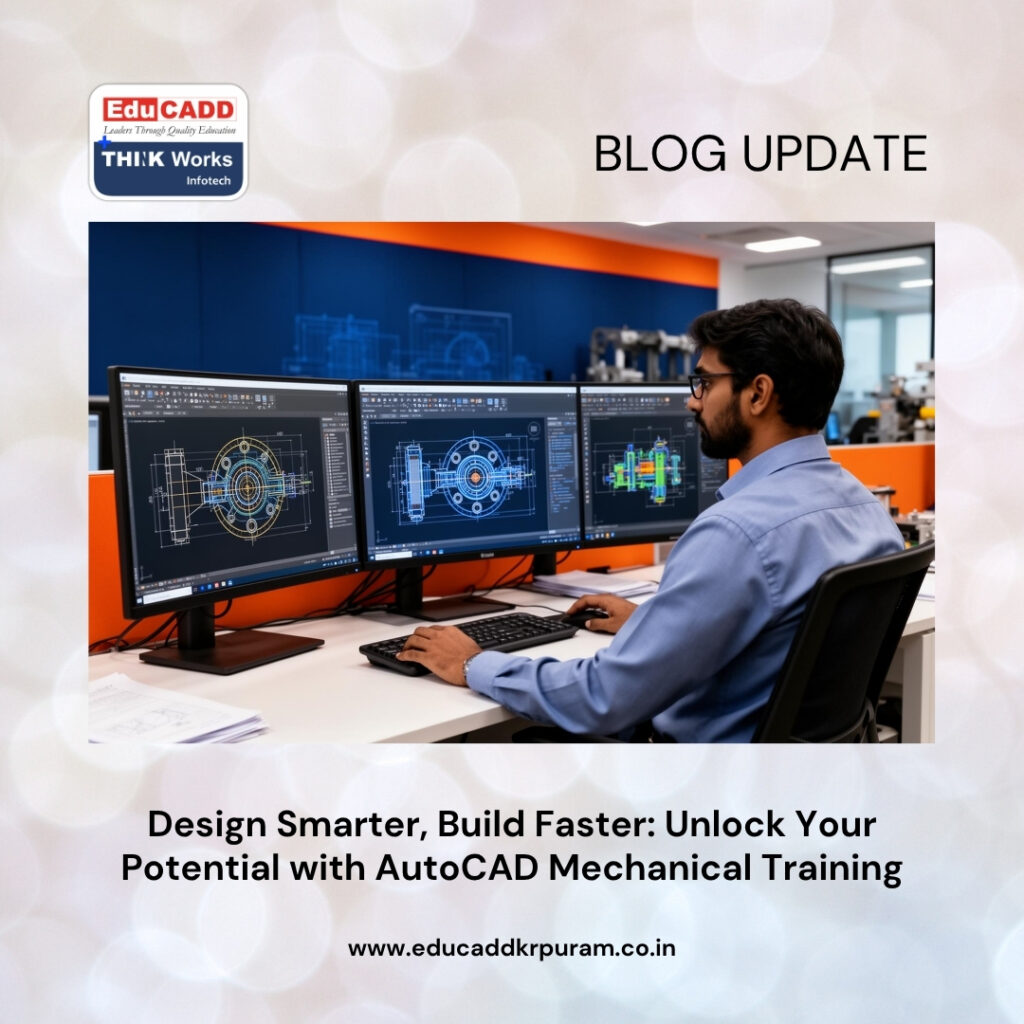
AutoCAD Mechanical Training Course
Unlike standard drafting applications, AutoCAD Mechanical is tailored specifically for mechanical engineering workflows. It offers powerful automation features, extensive component libraries, and standardized drafting tools that simplify even the most complex design tasks. A comprehensive AutoCAD Mechanical Training Course program enables learners to master these capabilities while developing practical engineering knowledge that aligns with current industry expectations. Whether your ambition is to join a leading manufacturing company, work as a mechanical designer, or strengthen your technical profile, acquiring AutoCAD Mechanical expertise is a strategic step toward long-term professional success.
Understand the Importance of Mechanical CAD in Today’s Engineering Industry
Mechanical engineering projects demand exceptional accuracy because every design directly influences manufacturing quality and product performance. AutoCAD Mechanical Training Course introduces learners to specialized drafting techniques that help create precise engineering drawings while maintaining industry standards. Students gain practical knowledge of mechanical layouts, dimensions, tolerances, annotations, and technical documentation required throughout the product development process.
Furthermore, the course explains how intelligent CAD software supports every stage of engineering, from conceptual design to final production. Learners understand how properly prepared drawings improve communication between design teams, production departments, and quality control professionals. This comprehensive understanding creates a strong technical foundation for future engineering careers.
Develop Practical Drafting Skills Through Hands-On Learning
Learning software commands alone is not enough to become an efficient mechanical designer. Professional AutoCAD Mechanical Training Course emphasizes practical learning by allowing students to work on real engineering assignments that reflect industrial requirements. These exercises strengthen drafting accuracy while helping learners understand actual design workflows.
Additionally, practical sessions include machine components, fabrication drawings, assembly layouts, and manufacturing documentation. Students gain confidence by solving engineering problems using industry-standard tools rather than relying solely on theoretical knowledge. This practical exposure significantly improves job readiness and prepares learners for real workplace responsibilities.
Boost Productivity with Intelligent Design Automation
Engineering projects often involve repetitive drafting activities that consume valuable time. AutoCAD Mechanical addresses this challenge through intelligent automation features that simplify complex design tasks. During AutoCAD Mechanical Training Course, learners discover automated dimensioning, standard parts libraries, layer management, hidden line generation, and annotation tools that increase efficiency.
Moreover, these intelligent functions reduce manual effort while ensuring drawing consistency across large engineering projects. Engineers can modify designs quickly without recreating complete drawings, making project revisions much easier. As productivity improves, organizations complete projects faster while maintaining excellent engineering standards and documentation quality.
Learn Engineering Standards That Meet Global Expectations
Engineering drawings serve as universal technical documents that guide manufacturing processes. Therefore, every drawing must comply with internationally accepted drafting standards. AutoCAD Mechanical Training Course familiarizes learners with ISO, ANSI, DIN, and other widely recognized engineering standards used across different industries and countries.
Besides understanding drawing formats, students also learn dimensioning methods, geometric tolerances, welding symbols, surface finish indications, and documentation procedures. Following standardized engineering practices minimizes production errors while improving communication among global engineering teams. Consequently, professionals become better prepared to work in multinational organizations and international projects.
Master Component Design and Assembly Creation
Mechanical products consist of numerous interconnected parts that must function together accurately. AutoCAD Mechanical Training Course teaches learners how to create detailed component drawings before combining them into complete assemblies. Students understand relationships between machine elements while developing organized design workflows.
Furthermore, intelligent component libraries simplify assembly management and future modifications. Engineers can replace or update individual parts without affecting the overall design structure. This organized approach saves time during product revisions while maintaining consistency throughout the engineering documentation process.
Strengthen Manufacturing Knowledge Alongside Design Skills
An effective mechanical designer understands how engineering drawings translate into physical products. Therefore, AutoCAD Mechanical Training Course introduces learners to manufacturing concepts such as machining processes, fabrication techniques, material considerations, and assembly methods. This broader understanding enables engineers to create practical designs suitable for production.
Additionally, manufacturing knowledge helps designers identify potential production challenges before fabrication begins. Engineers develop components that reduce material waste, simplify machining operations, and improve assembly efficiency. Consequently, organizations benefit from lower manufacturing costs and improved product reliability.
Prepare for High-Demand Careers Across Engineering Industries
Mechanical drafting skills remain highly valuable because nearly every manufacturing sector depends on accurate engineering documentation. After completing AutoCAD Mechanical Training Course, learners become qualified for careers in automotive manufacturing, aerospace engineering, industrial machinery, heavy equipment production, fabrication, robotics, and consumer product development.
Furthermore, employers actively seek professionals with specialized CAD expertise because they contribute immediately to ongoing engineering projects. Skilled AutoCAD Mechanical designers often enjoy greater career stability, attractive salary packages, and faster promotions compared to candidates lacking industry-specific software skills.
Reduce Design Errors Through Intelligent Drafting Techniques
Accuracy remains one of the most important qualities in engineering design. Even a minor drafting mistake can lead to production delays, financial losses, or product failures. AutoCAD Mechanical Training teaches learners systematic drafting methods supported by intelligent software features that significantly reduce design errors.
Moreover, automated dimension checks, standardized component libraries, and verification tools improve drawing reliability before production begins. Engineers develop confidence in creating technically correct documentation while minimizing costly revisions during manufacturing. Better accuracy ultimately leads to improved customer satisfaction and stronger organizational performance.
Improve Teamwork with Professional Engineering Documentation
Engineering projects require continuous collaboration between designers, production engineers, quality inspectors, suppliers, and project managers. Clear technical documentation ensures every stakeholder understands project requirements accurately. Through AutoCAD Mechanical Training, learners develop the ability to prepare organized engineering drawings that support effective communication.
Additionally, standardized documentation simplifies project coordination while reducing misunderstandings during manufacturing. Team members can review, modify, and approve drawings more efficiently because technical information follows consistent engineering practices. Better collaboration leads to smoother project execution and improved operational efficiency.
Stay Competitive in the Age of Digital Manufacturing
The manufacturing industry continues adopting advanced technologies such as automation, robotics, digital twins, and Industry 4.0 systems. Professionals with AutoCAD Mechanical Training possess valuable digital design skills that support these technological advancements. Their expertise allows organizations to integrate engineering design with modern manufacturing processes more effectively.
Furthermore, continuous technological evolution increases the need for engineers who can adapt quickly to digital workflows. Learning AutoCAD Mechanical provides a strong platform for exploring additional engineering software and emerging technologies. This adaptability ensures long-term professional relevance in an increasingly competitive industry.
Earn Professional Recognition Through Certification
Employers value candidates who demonstrate verified technical competence. Completing AutoCAD Mechanical Training prepares learners for recognized certification examinations that strengthen professional credibility and improve employment opportunities. Certification validates both software knowledge and practical engineering skills.
In addition, certified professionals often receive greater responsibilities within engineering organizations because they have proven their technical expertise. Whether pursuing domestic employment or international opportunities, recognized certifications enhance career prospects while increasing confidence in handling complex engineering projects.
Choose a Training Program That Supports Career Growth
Selecting the right institute is equally important as choosing the right software course. A comprehensive AutoCAD Mechanical Training program should include experienced instructors, updated software versions, practical workshops, live engineering projects, certification guidance, and placement assistance. These elements create an effective learning environment that supports professional development.
Moreover, students should prioritize institutes that emphasize practical application rather than theoretical instruction alone. Access to industry-oriented projects enables learners to develop workplace skills before entering the job market. Quality education ultimately creates confident professionals capable of meeting modern engineering challenges.
Conclusion
Engineering excellence depends on the ability to transform ideas into accurate, functional, and manufacturable designs. AutoCAD Mechanical Training Course equips aspiring engineers and working professionals with the technical expertise needed to meet these expectations confidently. From mastering intelligent drafting tools and international engineering standards to understanding manufacturing processes and collaborative workflows, the training provides a complete foundation for success in modern mechanical design.
As industries continue embracing digital engineering and smart manufacturing technologies, professionals with advanced CAD skills will remain in high demand across multiple sectors. Investing in AutoCAD Mechanical Training is not simply about learning software—it is about developing practical engineering knowledge, improving productivity, and preparing for a future filled with exciting career opportunities. Whether you are beginning your engineering journey or upgrading your existing skills, this training serves as a powerful stepping stone toward long-term professional achievement, technical excellence, and sustainable career growth.

