
Blueprint Your Engineering Career with an AutoCAD Civil Course for Modern Infrastructure Design
The future of civil engineering depends on professionals who can combine technical knowledge with digital design expertise. As infrastructure projects become more complex, organizations increasingly rely on intelligent design software to improve planning, accuracy, and collaboration. An AutoCAD Civil Design Course prepares aspiring engineers, diploma holders, and working professionals to meet these evolving industry expectations. It provides practical training in drafting, surveying, road design, grading, and infrastructure modeling while helping learners develop job-ready skills.
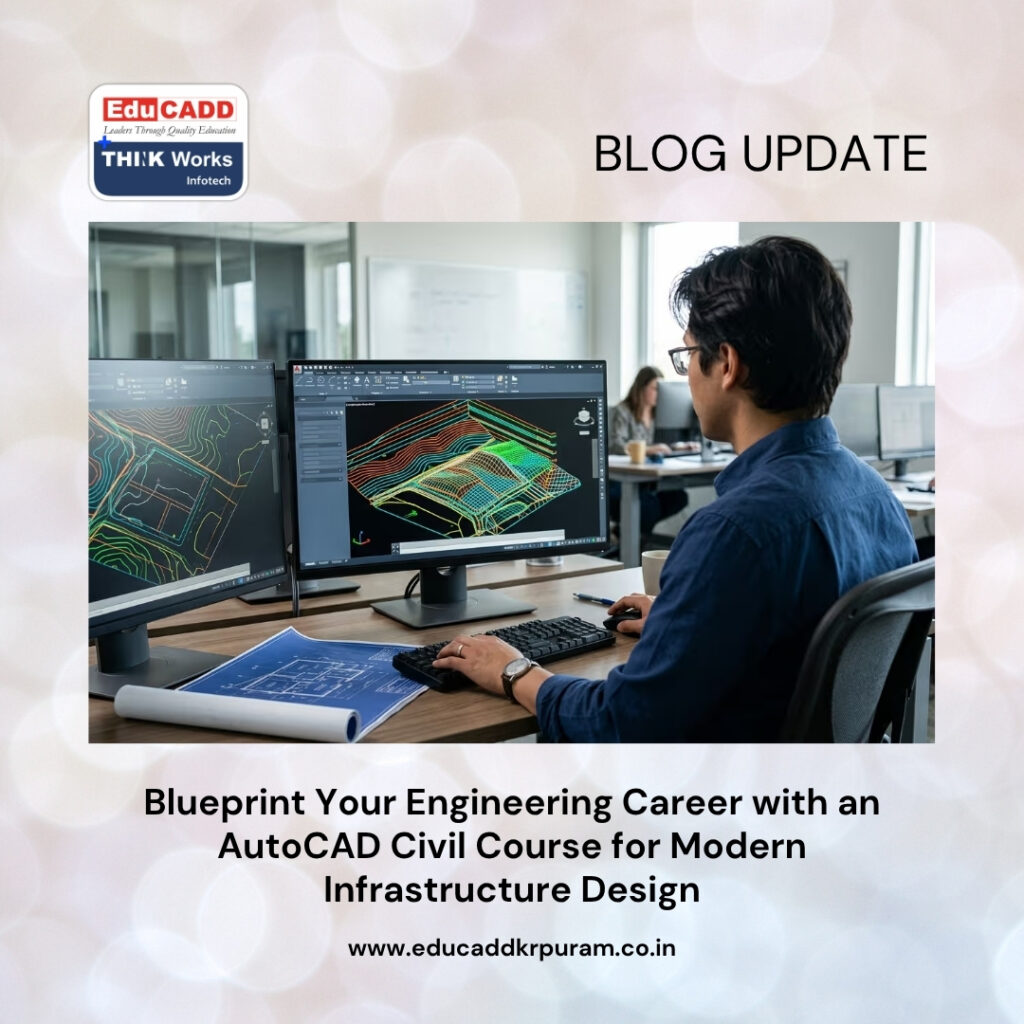
AutoCAD Civil Design Course
Whether your goal is to secure your first engineering position or advance into a specialized civil design role, learning AutoCAD Civil is a smart investment that supports long-term professional growth. With hands-on projects and industry-oriented training, this course creates a strong foundation for success in today’s competitive engineering environment.
Discover the Importance of Digital Civil Engineering
Civil engineering has experienced a significant transformation over the past decade. Traditional manual drafting methods have largely been replaced by advanced computer-aided design solutions that increase productivity and improve project accuracy. An AutoCAD Civil Design Course introduces learners to these modern workflows, enabling them to prepare detailed engineering drawings quickly and efficiently. Students gain a clear understanding of drafting standards, drawing management, and project organization. Furthermore, digital engineering minimizes human error while improving collaboration between different project teams. As technology continues to shape the construction industry, professionals with AutoCAD Civil expertise enjoy better career prospects and greater workplace efficiency.
Build Strong Drafting Skills from the Ground Up
Professional drafting is one of the core skills every civil engineer should master. An AutoCAD Civil Design Course helps learners understand the principles of technical drawing by teaching commands, coordinate systems, layers, object properties, dimensions, annotations, and editing techniques. Every lesson focuses on creating accurate engineering drawings that follow industry standards.
Students also learn efficient drafting practices that reduce repetitive work and improve design quality. By strengthening these essential skills, learners develop the confidence to prepare professional documentation for construction and infrastructure projects. These drafting abilities serve as the foundation for more advanced engineering applications throughout their careers.
Transform Survey Information into Accurate Designs
Survey data provides the essential information required before any construction project begins. An AutoCAD Civil Design Course teaches students how to import field survey data, generate digital terrain models, and create contour maps that accurately represent existing land conditions. Learners analyze elevations, identify site constraints, and prepare detailed surface models for engineering design. In addition, they understand how accurate survey interpretation reduces construction risks and improves planning efficiency. These practical skills enable professionals to create reliable infrastructure designs while minimizing costly errors during project execution.
Master Road Alignment and Transportation Planning
Roads, highways, and transportation corridors require careful engineering to ensure safety and long-term performance. Through an AutoCAD Civil Design Course, learners gain practical experience in designing road alignments, vertical profiles, cross-sections, intersections, and corridor models. They understand how intelligent design tools simplify roadway planning while maintaining engineering precision. Moreover, students learn how to modify designs quickly whenever project specifications change. This flexibility improves project efficiency and helps engineers deliver accurate transportation solutions that meet modern infrastructure requirements.
Learn Land Development and Site Design Techniques
Urban development projects require engineers to maximize available land while complying with planning regulations and environmental standards. An AutoCAD Civil Course provides comprehensive training in site development, subdivision planning, grading design, parcel creation, and layout preparation. Students understand how to evaluate terrain conditions before developing practical site plans for residential, commercial, and industrial projects. Additionally, they learn methods for balancing functionality, sustainability, and construction feasibility. These valuable skills prepare graduates to contribute effectively to land development projects across multiple industries.
Design Reliable Drainage and Utility Networks
Efficient drainage systems protect infrastructure, reduce flooding, and improve environmental sustainability. An AutoCAD Civil Course teaches learners how to design stormwater drainage systems, underground utility layouts, pipelines, culverts, and related infrastructure components. Students understand hydraulic principles alongside practical software tools that simplify drainage planning.
They also learn how proper utility coordination prevents construction conflicts and supports efficient project execution. As governments continue investing in urban infrastructure, professionals with drainage and utility design expertise remain highly sought after across engineering organizations.
Modern engineering projects demand both speed and precision. An AutoCAD Civil Course introduces learners to intelligent design tools that automate repetitive tasks and improve overall efficiency. Students learn to work with dynamic alignments, automated labeling, surface analysis, profile creation, grading tools, and corridor modeling. These features update related project elements automatically whenever design changes occur.
As a result, engineers spend less time correcting drawings and more time improving project quality. This streamlined workflow enhances productivity while reducing the possibility of costly design errors.
Develop Practical Skills Through Real-World Projects
Practical learning is essential for becoming a successful civil engineering professional. Therefore, a comprehensive AutoCAD Civil Course emphasizes hands-on training through industry-based projects. Learners prepare residential layouts, commercial site plans, road networks, drainage systems, and grading designs using realistic engineering scenarios. These assignments help students understand project workflows while improving problem-solving abilities.
Furthermore, working on practical projects builds confidence and enables learners to apply theoretical concepts in professional environments. Employers highly value candidates who possess real project experience alongside strong technical knowledge.
Explore Diverse Career Opportunities
Infrastructure development continues to create exciting career opportunities for skilled civil engineering professionals. Completing an AutoCAD Civil Course opens doors to positions such as Civil CAD Designer, Highway Design Engineer, Land Development Engineer, Survey Drafting Specialist, Site Planning Engineer, Infrastructure Designer, and Civil Design Technician. Government agencies, engineering consultancies, construction companies, transportation authorities, and real estate developers actively recruit professionals with AutoCAD Civil expertise. Since digital engineering has become an industry standard, certified candidates often enjoy faster career progression, better salary packages, and increased job security.
Strengthen Teamwork and Project Coordination
Successful engineering projects require effective communication between multiple disciplines. Architects, structural engineers, surveyors, contractors, and project managers must collaborate throughout every stage of development. An AutoCAD Civil Course teaches learners how to organize project files, manage revisions, maintain drawing consistency, and coordinate design updates efficiently. Digital collaboration reduces misunderstandings and ensures everyone works with accurate project information. Additionally, well-organized workflows improve productivity and help teams complete projects within budget and schedule. These collaboration skills make professionals valuable members of multidisciplinary engineering teams.
Keep Pace with Industry Standards and Technology
The engineering industry constantly evolves with new technologies, design methodologies, and construction standards. Professionals must continue learning to remain competitive in the marketplace. An AutoCAD Civil Course familiarizes students with current drafting standards, digital documentation practices, and modern civil engineering workflows followed by leading organizations. Learners also gain exposure to advanced software capabilities that improve design accuracy and project management. Staying updated with industry trends enhances professional credibility while ensuring engineers remain prepared for future infrastructure challenges.
Select the Right AutoCAD Civil Course for Career Success
Choosing the right training institute plays a vital role in developing practical engineering skills. A high-quality AutoCAD Civil Course should offer experienced trainers, updated software versions, practical laboratory sessions, industry-oriented assignments, certification guidance, and placement support. Students should also receive opportunities to work on live engineering projects that reflect real workplace expectations.
Comprehensive training not only improves technical competence but also builds confidence in handling professional responsibilities. Investing in structured education today creates a strong foundation for long-term success in civil engineering and infrastructure development.
Conclusion
As infrastructure projects become larger and more technologically advanced, the need for skilled civil design professionals continues to grow. An AutoCAD Civil Design Course equips learners with the expertise required to produce accurate engineering drawings, analyze survey data, design transportation systems, develop land layouts, and create efficient drainage networks using industry-standard tools.
More importantly, it develops practical problem-solving abilities through hands-on projects that reflect real engineering challenges. Whether you are a student beginning your professional journey or an experienced engineer looking to upgrade your technical skills, this course provides the knowledge and confidence needed to thrive in today’s competitive construction industry. By mastering modern civil design techniques, you position yourself for rewarding career opportunities while contributing to the development of smarter, safer, and more sustainable infrastructure for the future.

