
Shape Tomorrow’s Innovations with a Creo Parametric Course: Build a Future in Smart Mechanical Design
Innovation begins with intelligent design, and every successful product starts with engineers who possess the right technical skills. From automobiles and aircraft to medical devices and industrial machinery, modern products require accurate digital models before they reach the manufacturing floor. This is where a Creo Parametric Course Training becomes an excellent investment for aspiring engineers and design professionals. Creo Parametric is one of the world’s leading computer-aided design (CAD) software applications, trusted by global manufacturers for creating high-quality mechanical products. Learning this powerful software enables students to design complex components, improve engineering efficiency, and solve real-world manufacturing challenges.
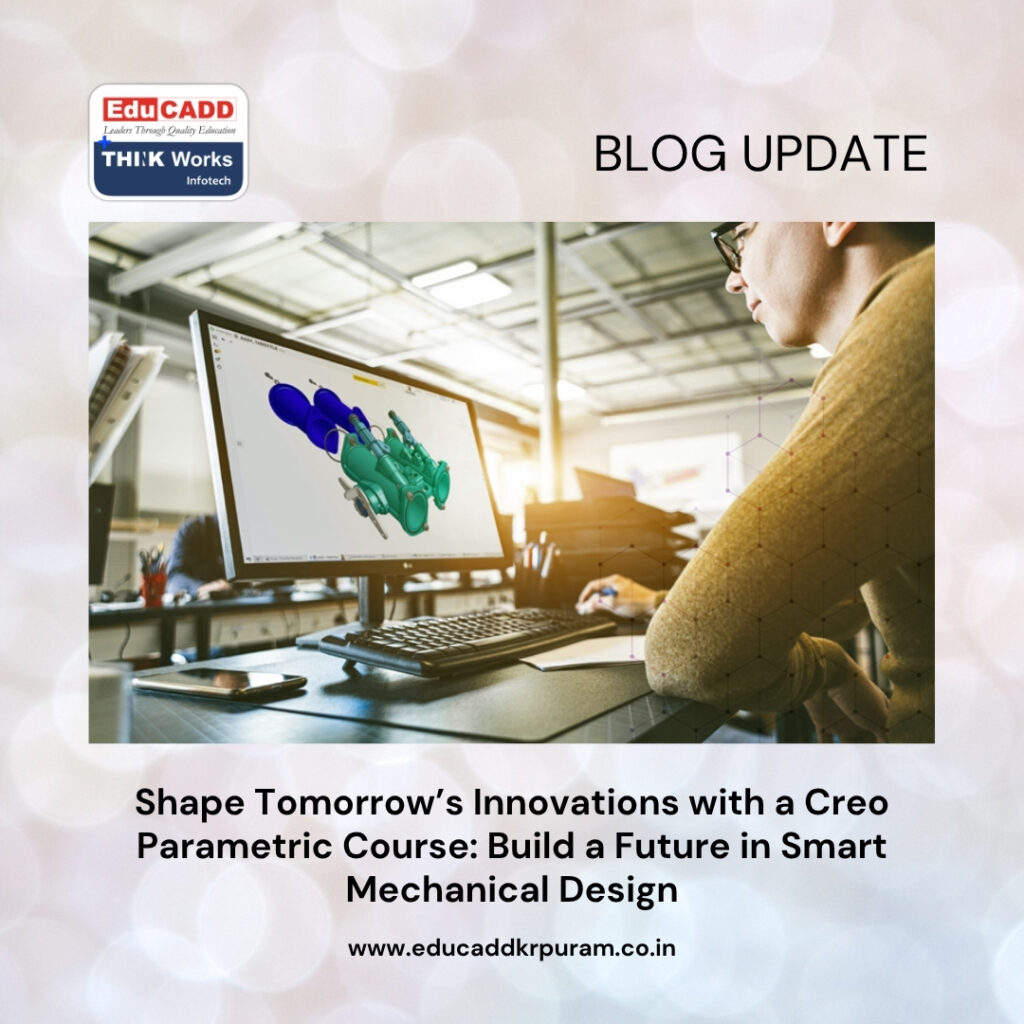
Creo Parametric Course Training
Whether you are a mechanical engineering student, a recent graduate, or an experienced professional looking to upgrade your skills, mastering Creo Parametric can significantly enhance your career opportunities while preparing you for the rapidly evolving engineering industry.
Why a Creo Parametric Course Is a Smart Investment
The demand for skilled CAD professionals continues to grow as industries adopt advanced product development technologies. A Creo Parametric Course Training helps learners develop practical design skills that align with current industrial requirements. Instead of relying on manual drafting methods, engineers now create intelligent digital models that improve productivity and reduce design errors. Creo simplifies complex engineering tasks through feature-based modeling and parametric design capabilities.
As companies strive to shorten product development cycles, professionals with expertise in Creo Parametric become valuable contributors to engineering teams. Consequently, investing in this course not only strengthens technical knowledge but also improves long-term career prospects.
Build a Strong Foundation in 3D Mechanical Modeling
Every engineering design begins with a well-structured model. During a Creo Parametric Course Training, students learn the complete process of creating accurate three-dimensional mechanical components using sketches, constraints, dimensions, and advanced modeling tools. The course gradually introduces feature creation techniques such as extrusion, revolution, sweep, blend, pattern, shell, rib, and hole operations. These practical exercises help learners understand how professional engineers develop products from concept to completion. Furthermore, continuous hands-on practice improves precision while increasing confidence in handling complex engineering projects.
Learn Parametric Modeling for Flexible Product Development
One of the defining strengths of Creo lies in its parametric design environment. A professional Creo Parametric Course Training teaches students how design parameters maintain relationships between features, allowing modifications without rebuilding the entire model. Engineers can simply update dimensions or constraints, and the software automatically adjusts related features throughout the design. This flexibility reduces redesign efforts while improving engineering efficiency.
Moreover, parametric modeling allows companies to respond quickly to changing customer requirements, making product development faster and more cost-effective than traditional design methods.
Master Complex Assembly Design Techniques
Mechanical products rarely consist of a single component. Instead, they include numerous interconnected parts that must fit together perfectly. A comprehensive Creo Parametric Course trains students to create complete assemblies using professional assembly constraints, component positioning methods, interference analysis, exploded views, and motion verification tools. Learners gain valuable experience in managing large assembly structures while maintaining design accuracy. These practical skills prepare students for real industrial environments where precision and coordination are essential for successful product development.
Generate Professional Engineering Drawings with Accuracy
Although digital models have transformed engineering, manufacturing still depends heavily on technical drawings for production. A Creo Parametric Course provides extensive training in creating manufacturing-ready engineering drawings that comply with international drafting standards. Students learn orthographic projections, sectional views, auxiliary views, geometric dimensioning, tolerancing, annotations, surface finish symbols, and bill of materials preparation. Since Creo automatically updates drawings whenever models change, designers maintain consistency throughout the entire development process. This automation saves valuable time while minimizing documentation mistakes.
Gain Practical Experience Through Real Engineering Projects
Theory alone cannot produce skilled engineers. Therefore, an industry-focused Creo Parametric Course emphasizes project-based learning that reflects real manufacturing challenges. Students work on practical assignments involving machine parts, industrial equipment, sheet metal components, consumer products, and mechanical assemblies. Every project strengthens technical understanding while improving creativity and problem-solving abilities.
Additionally, these assignments help learners build an impressive design portfolio that demonstrates their capabilities during campus placements and professional interviews, giving them a competitive advantage in the job market.
Explore Advanced Creo Features Used in Modern Industries
Beyond basic modeling, engineering organizations require professionals who understand advanced product development techniques. A quality Creo Parametric Course introduces students to surface modeling, sheet metal design, family tables, flexible components, top-down design methodology, simplified representations, and design automation tools. Learners also explore simulation-driven engineering concepts that help evaluate product performance before manufacturing begins. These advanced capabilities improve engineering productivity while enabling designers to create innovative products with greater efficiency and accuracy.
Understand Manufacturing-Oriented Product Design
Successful engineering involves more than creating visually appealing models. Designers must also ensure that products can be manufactured economically and efficiently. Throughout a Creo Parametric Course, students learn design for manufacturing principles, material selection, machining considerations, tolerance management, assembly planning, and production optimization techniques. Understanding manufacturing processes enables engineers to make better design decisions while reducing production costs. As a result, graduates become capable of developing practical products that satisfy both engineering requirements and manufacturing constraints.
Unlock Diverse Career Opportunities Across Industries
Mechanical design professionals trained in Creo enjoy strong career prospects across numerous industries. Completing a Creo Parametric Course prepares candidates for roles such as CAD Design Engineer, Mechanical Design Engineer, Product Development Engineer, Tool Design Engineer, Design Analyst, Industrial Product Designer, and Research Engineer.
Industries including automotive, aerospace, defense, consumer electronics, heavy engineering, robotics, energy, and medical equipment actively recruit professionals with advanced CAD expertise. Since digital product development continues expanding worldwide, Creo-certified professionals remain highly sought after by employers seeking skilled engineering talent.
Improve Technical Thinking and Engineering Problem-Solving
Engineering challenges require logical thinking, creativity, and systematic analysis. A Creo Parametric Course develops these qualities through continuous design exercises that encourage learners to identify problems, evaluate alternative solutions, and optimize product performance. Students regularly troubleshoot modeling issues, improve assembly functionality, and refine engineering designs using analytical approaches.
Furthermore, working on progressively challenging projects strengthens confidence while preparing learners to solve practical industrial problems independently. These transferable skills contribute significantly to long-term professional success.
Prepare for Certification and Placement Success
Professional certification demonstrates technical competency and increases employer confidence during recruitment. Many institutions offering a Creo Parametric Course align their curriculum with recognized certification standards while providing placement-focused training. Students receive technical interview preparation, resume development guidance, portfolio creation support, aptitude practice, and mock interview sessions. These additional learning resources improve overall employability while helping candidates present their technical abilities effectively during recruitment processes. Consequently, certified professionals often enjoy improved career opportunities and faster professional growth.
Stay Future-Ready with Modern Engineering Technologies
Engineering technology continues advancing through digital transformation, automation, simulation, additive manufacturing, and smart factory initiatives. A modern Creo Parametric Course introduces students to these emerging trends while explaining how Creo integrates with Product Lifecycle Management (PLM), Computer-Aided Manufacturing (CAM), finite element analysis, and collaborative engineering systems.
Understanding these technologies prepares learners for future engineering environments where digital workflows dominate product development. Therefore, mastering Creo today provides a strong foundation for adapting to tomorrow’s engineering innovations.
Choose the Right Creo Parametric Training Institute
The quality of training directly influences career success. Before enrolling in a Creo Parametric Course, students should evaluate the institute’s curriculum, trainer experience, software infrastructure, practical learning opportunities, certification support, industrial exposure, and placement assistance. Institutes that emphasize project-based learning, real-world case studies, and continuous laboratory practice produce graduates with stronger technical confidence.
Additionally, experienced instructors provide valuable industry insights that bridge the gap between classroom learning and professional engineering practice, ensuring students become job-ready from day one.
Conclusion
A Creo Parametric Course Training offers much more than software training; it builds the technical expertise required for successful careers in mechanical design, product development, and manufacturing engineering. By mastering intelligent 3D modeling, advanced assemblies, engineering documentation, parametric design, and manufacturing principles, learners become capable of contributing to modern engineering projects with confidence and precision. Practical projects, certification preparation, and industry-oriented instruction further strengthen employability while opening opportunities across diverse engineering sectors.
As organizations continue investing in digital product development and smart manufacturing technologies, professionals skilled in Creo Parametric will remain in high demand. Enrolling in a comprehensive training program today is a strategic step toward a rewarding engineering career filled with innovation, continuous learning, and long-term professional growth.

