
No.1 Project Monitoring Course: Unlock the Skills That Keep Every Project on Track
Project success does not happen by chance. Every successful project is supported by proper planning, continuous monitoring, timely reporting, and effective decision-making. In today’s fast-changing industries, organizations expect professionals to manage project progress carefully while ensuring that schedules, budgets, quality standards, and resources remain under control. Companies rely on skilled professionals who can identify delays, track project performance, and recommend improvements before challenges become major obstacles. The No.1 Project Monitoring Training Course is designed to equip learners with practical knowledge and industry-oriented skills required to monitor projects from initiation to completion. The course focuses on real-world applications instead of theoretical concepts alone.
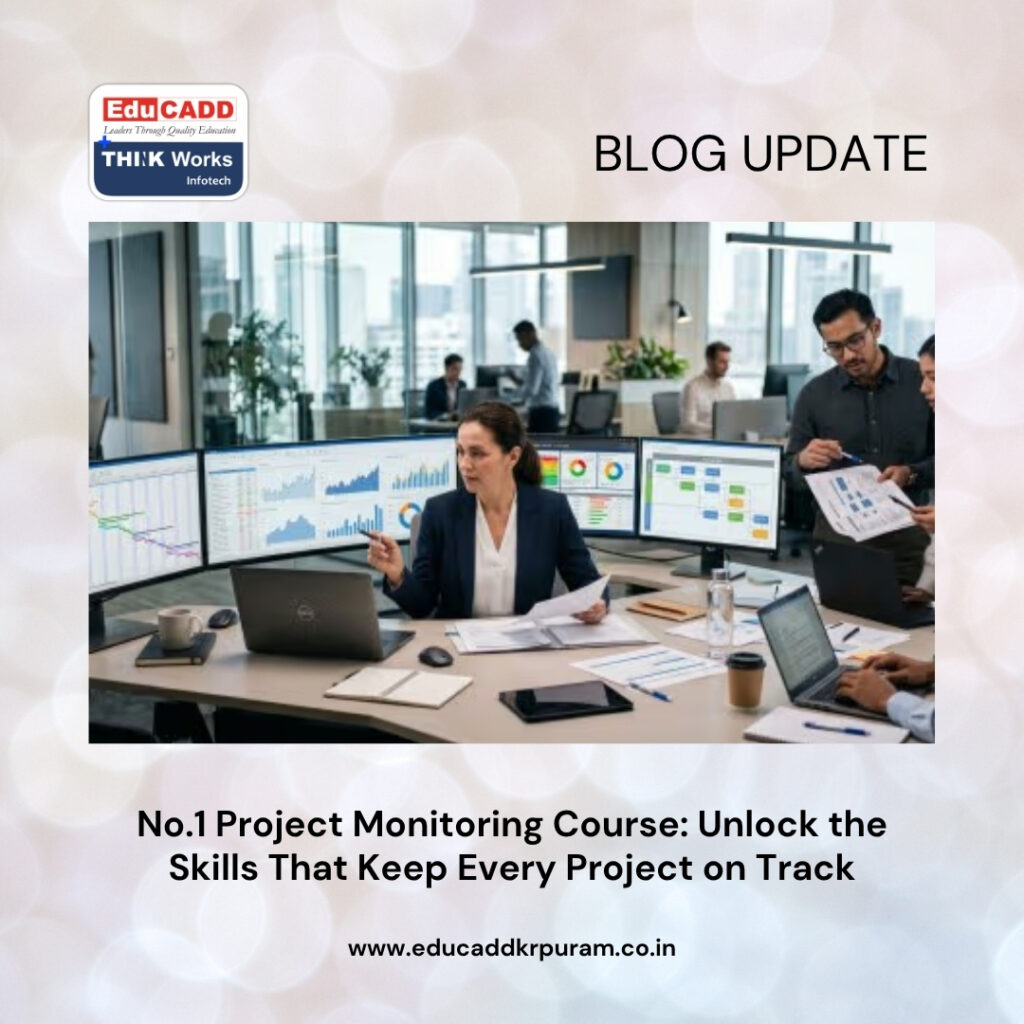
Project Monitoring Training Course
Students learn how to evaluate project performance, prepare professional reports, monitor schedules, manage costs, assess risks, and improve resource utilization using modern project management techniques. As industries continue to embrace digital transformation, professionals with project monitoring expertise enjoy excellent career opportunities across multiple sectors.
Why Project Monitoring Has Become a Critical Business Function
Organizations invest significant time, money, and resources into every project. However, even a well-planned project can face unexpected challenges during execution. Delayed activities, rising costs, poor communication, and inefficient resource allocation often reduce project performance if they remain unnoticed. Continuous monitoring helps project teams identify these issues early and implement corrective actions before they affect overall project delivery.
The No.1 Project Monitoring Training Course helps learners understand the importance of systematic project monitoring in achieving organizational goals. Students gain practical insights into project tracking, performance evaluation, and progress analysis while learning how monitoring supports informed decision-making. These skills improve operational efficiency and contribute to successful project completion regardless of project size or industry.
Understanding the Complete Project Monitoring Lifecycle
Project monitoring begins immediately after project execution starts and continues until successful completion. It involves comparing actual performance with planned objectives while ensuring that every project activity aligns with approved schedules, budgets, quality standards, and organizational expectations. Continuous evaluation enables project managers to make timely adjustments whenever deviations occur.
The No.1 Project Monitoring Course introduces learners to every stage of the monitoring lifecycle. Students understand project baselines, monitoring frameworks, progress measurement techniques, variance analysis, reporting systems, and performance improvement strategies. This comprehensive understanding enables professionals to monitor projects confidently while maintaining complete visibility throughout the project lifecycle.
Building Strong Project Scheduling and Tracking Skills
Maintaining project schedules is one of the most challenging responsibilities for project teams. Every activity depends on proper coordination, timely execution, and effective communication between different departments. Even minor delays can affect project deadlines, increase operational expenses, and reduce customer satisfaction if corrective measures are not taken promptly.
Through the No.1 Project Monitoring Training Course, learners develop practical skills in schedule monitoring, milestone tracking, activity sequencing, delay identification, and progress comparison. They learn how to monitor planned schedules against actual performance while identifying critical activities that require immediate attention. These valuable skills help organizations improve project efficiency and achieve timely project delivery.
Strengthening Cost Control Through Continuous Monitoring
Financial performance determines the overall success of any project. Cost overruns not only reduce profitability but also create operational challenges that affect project quality and client satisfaction. Therefore, organizations prioritize continuous cost monitoring throughout project execution to ensure that financial resources are utilized effectively.
The No.1 Project Monitoring Training Course provides learners with practical knowledge of cost monitoring, budget tracking, expenditure analysis, variance identification, and financial reporting. Students learn how to compare planned budgets with actual expenses while recommending corrective actions that improve financial performance. These competencies enable professionals to support profitable project execution and better financial decision-making.
Improving Resource Management for Maximum Productivity
Resources are the foundation of every successful project. Skilled manpower, machinery, materials, equipment, technology, and financial investments must work together efficiently to achieve project objectives. Poor resource planning often creates unnecessary delays, idle time, and increased operational costs, making continuous monitoring essential for maintaining productivity.
The No.1 Project Monitoring Course teaches learners how to monitor resource utilization throughout the project lifecycle. Students understand workforce planning, equipment allocation, material availability, and productivity measurement while learning strategies to optimize resource performance. Effective resource monitoring helps organizations reduce waste, improve operational efficiency, and complete projects within planned schedules and budgets.
Managing Risks Before They Affect Project Performance
Every project encounters uncertainties that may influence timelines, budgets, quality standards, or overall performance. Risks can arise from technical issues, supply chain disruptions, weather conditions, labor shortages, design modifications, or changing client requirements. Successful organizations continuously monitor these risks instead of waiting until problems become difficult to manage.
The No.1 Project Monitoring Course equips learners with practical techniques for identifying, evaluating, monitoring, and controlling project risks. Students learn how to recognize warning signs, assess potential impacts, develop mitigation strategies, and monitor changing project conditions throughout execution. By adopting a proactive approach to risk management, professionals help organizations minimize disruptions, maintain project stability, and achieve successful project outcomes even in challenging environments.
Monitoring Project Performance Through Meaningful KPIs
Every successful project depends on measurable performance rather than assumptions. Key Performance Indicators (KPIs) provide valuable insights into project health by measuring schedule performance, cost efficiency, productivity, quality, and resource utilization. These indicators help project managers evaluate whether the project is progressing according to the approved plan while identifying areas that require immediate improvement.
The No.1 Project Monitoring Course teaches learners how to establish, monitor, and interpret industry-standard KPIs that support effective project management. Students understand how to analyze project data, compare planned results with actual performance, and generate meaningful insights for stakeholders. By using performance metrics effectively, professionals improve project visibility, enhance operational efficiency, and contribute to informed business decisions that lead to successful project completion.
Creating Professional Reports That Drive Better Decisions
Project reports serve as the communication bridge between project teams, clients, contractors, consultants, and senior management. Clear, accurate, and timely reporting ensures that everyone understands project status, completed milestones, upcoming activities, potential risks, and corrective actions. Effective reports reduce misunderstandings while improving collaboration across departments.
The No.1 Project Monitoring Training Course trains learners to prepare professional progress reports using practical industry standards. Students learn how to create dashboards, executive summaries, graphical reports, variance analyses, and project status updates that communicate complex information in a simple and structured manner. These reporting skills improve professional credibility and enable faster decision-making throughout the project lifecycle.
Using Modern Digital Tools for Smarter Project Monitoring
Technology has transformed project monitoring by making project information available in real time. Digital tools enable organizations to automate reporting, monitor schedules, manage resources, analyze costs, and improve communication between project teams working at different locations. As industries continue embracing digital transformation, software knowledge has become an essential skill for project monitoring professionals.
The No.1 Project Monitoring Course introduces learners to modern project monitoring software and digital project management platforms used across industries. Students gain practical exposure to schedule tracking, document management, performance dashboards, cost analysis, and collaborative reporting systems. Understanding these digital tools increases productivity, minimizes manual errors, and prepares learners for technology-driven workplaces.
Career Opportunities in Project Monitoring Across Industries
Project monitoring professionals are needed in almost every industry that manages projects. Construction companies, infrastructure developers, engineering consultancies, manufacturing organizations, renewable energy firms, oil and gas companies, telecommunications businesses, and information technology organizations all require experts who can monitor project performance efficiently.
After completing the No.1 Project Monitoring Course, learners become eligible for rewarding positions such as Project Monitoring Engineer, Planning Engineer, Project Control Engineer, Project Coordinator, Cost Control Engineer, Scheduler, Site Engineer, Project Analyst, and Assistant Project Manager. These career opportunities offer excellent professional growth, competitive salaries, and exposure to large-scale national and international projects. As organizations continue expanding their operations, the demand for skilled project monitoring professionals will remain strong.
The Importance of Practical Learning and Industry Exposure
Practical experience is one of the biggest advantages when entering the project management profession. Employers prefer candidates who can confidently apply technical knowledge to real project situations rather than relying only on classroom theory. Industry-focused training helps learners understand actual project challenges while developing practical solutions for effective monitoring and control.
The No.1 Project Monitoring Course emphasizes hands-on learning through live case studies, project simulations, software exercises, reporting assignments, and performance evaluation activities. Students gain confidence by working on realistic project scenarios that strengthen their analytical thinking, communication, and problem-solving abilities. This practical approach ensures they are well prepared to contribute effectively from the very beginning of their professional careers.
Choosing the Right Course for Long-Term Career Growth
Selecting the right training institute is an important step toward building a successful career in project monitoring. A quality program should offer experienced trainers, an updated curriculum, practical software training, industry-recognized certification, placement assistance, and opportunities to work on real-world projects. These features help learners develop both technical expertise and professional confidence.
When enrolling in the No.1 Project Monitoring Training Course, students should evaluate the institute’s reputation, faculty expertise, infrastructure, learning methodology, and industry partnerships. A comprehensive learning environment not only improves technical knowledge but also enhances leadership, teamwork, communication, and decision-making skills. These qualities enable professionals to adapt to changing industry demands while building a successful and sustainable career.
Conclusion
Project monitoring is one of the most valuable competencies in today’s project-driven industries. Organizations depend on skilled professionals to track schedules, monitor budgets, optimize resources, evaluate risks, prepare accurate reports, and maintain project quality throughout the execution process. Effective monitoring improves productivity, strengthens decision-making, reduces project delays, and increases the likelihood of delivering projects successfully. As industries continue investing in complex engineering, construction, manufacturing, and technology projects, the demand for qualified monitoring professionals continues to grow rapidly.
The No.1 Project Monitoring Training Course provides the perfect platform for developing these essential skills through practical learning, industry-oriented training, and modern project management techniques. By mastering project scheduling, cost control, performance analysis, digital tools, risk management, and professional reporting, learners become valuable contributors to organizational success. Whether you are a student planning your career, a working professional seeking advancement, or an engineer looking to expand your expertise, this course offers the knowledge and confidence needed to excel in project monitoring and build a rewarding long-term career in today’s competitive global marketplace.

