
Shape the Future of Engineering with Advanced CATIA Design Training
In today’s engineering landscape, innovation begins with intelligent design. Industries no longer rely on traditional drafting methods alone because digital product development has become the backbone of manufacturing success. Companies expect engineers to create highly accurate models, optimize product performance, and reduce production costs before manufacturing even begins. This shift has significantly increased the demand for professionals skilled in CATIA, one of the world’s most advanced computer-aided design platforms. Advanced CATIA Design Training equips aspiring engineers, designers, and working professionals with practical expertise in 3D modeling, product development, assembly creation, surface design, and engineering documentation.
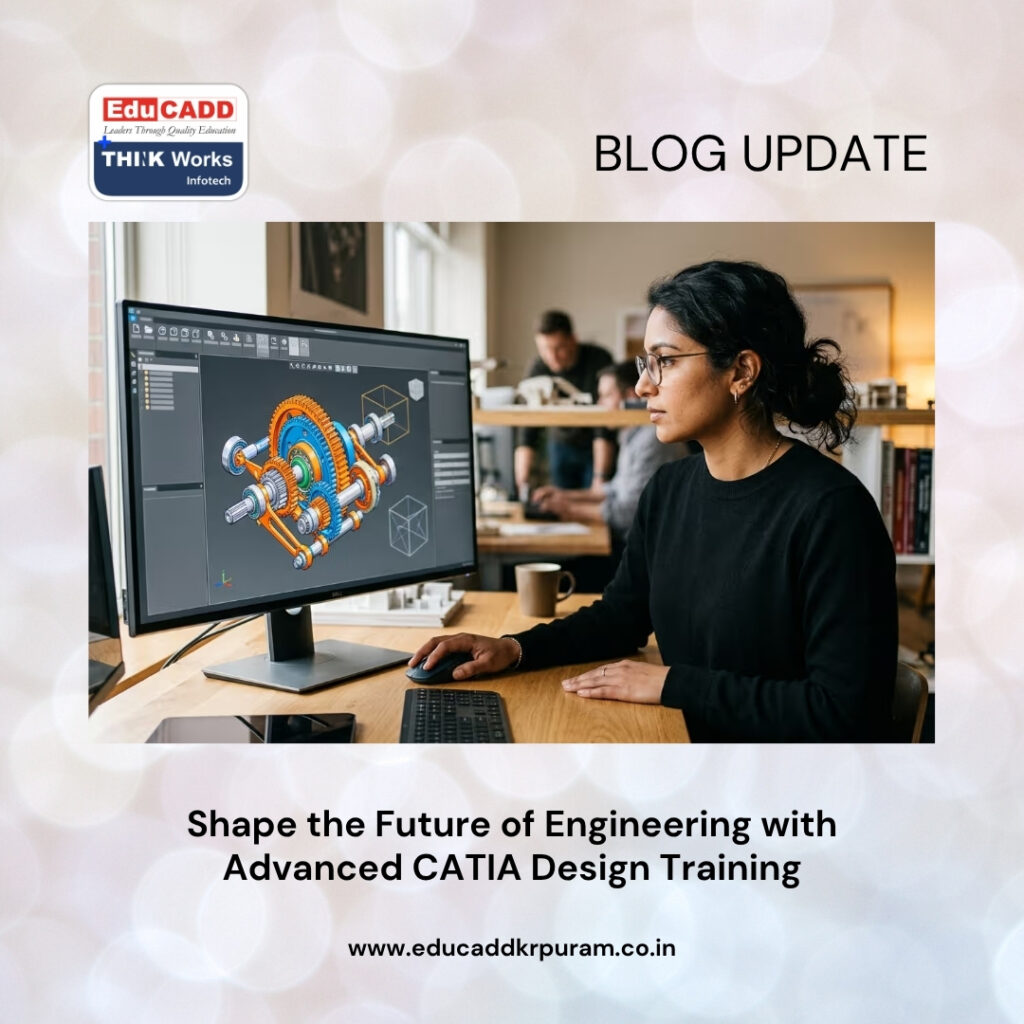
Advanced CATIA Design Training
Whether you want to enter the automotive industry, aerospace sector, industrial manufacturing, or product design, learning CATIA provides the technical foundation needed to build a successful and future-ready engineering career.
Why CATIA Design Training Is a Smart Career Investment
Engineering companies constantly search for professionals who possess practical design skills rather than only theoretical knowledge. Advanced CATIA Design Training bridges this gap by helping learners understand how products are conceptualized, designed, analyzed, and prepared for manufacturing using industry-standard workflows. Instead of simply teaching software commands, the training develops engineering thinking that allows students to solve real-world design challenges efficiently.
As manufacturing technologies continue evolving, organizations prefer candidates who can adapt to modern engineering environments with confidence. CATIA expertise enhances employability while enabling professionals to contribute to product innovation from the very beginning of their careers. Consequently, investing in CATIA training becomes a valuable step toward long-term professional growth.
Understanding the Role of CATIA in Modern Product Development
CATIA is much more than a traditional CAD application because it supports the complete product development lifecycle. Engineers use the software to create conceptual models, detailed mechanical components, large assemblies, technical drawings, and sophisticated surface designs within a single integrated platform. This comprehensive capability makes CATIA one of the most trusted engineering tools across global industries.
Professional Advanced CATIA Design Training introduces learners to this integrated design environment while explaining how every stage of product development is interconnected. Students gain practical exposure to workflows that improve productivity, reduce engineering errors, and support collaboration between multiple departments throughout the design process.
Comprehensive Learning Modules Build Strong Technical Skills
A well-designed CATIA course includes multiple specialized modules that gradually develop engineering competence. Learners begin with sketch creation, feature-based modeling, and solid part development before progressing toward assembly design and engineering drafting. Every topic is supported by practical exercises that reinforce theoretical concepts through real design applications.
As learners become more comfortable with the software, advanced modules introduce surface modeling, sheet metal design, generative shape design, and product structure management. These specialized areas expand technical knowledge while preparing students for complex engineering projects handled by leading manufacturing companies.
Practical Projects Transform Learning into Professional Experience
Hands-on practice is one of the defining strengths of effective Advanced CATIA Design Training. Students work on real engineering components and industrial case studies that simulate actual workplace challenges. These practical assignments encourage learners to apply design principles while improving modeling accuracy, creativity, and technical decision-making.
Working with realistic engineering projects also helps students understand manufacturing limitations, assembly relationships, design modifications, and production requirements. Therefore, they graduate with practical confidence that significantly improves their readiness for professional engineering roles.
Industries That Value CATIA Design Professionals
CATIA has become an industry-leading software solution because of its ability to handle highly sophisticated engineering projects. Automotive manufacturers use CATIA for vehicle body design, engine components, transmission systems, and safety structures. Aerospace organizations rely on the software to develop lightweight aircraft assemblies, structural frameworks, and precision-engineered mechanical systems.
Beyond these sectors, CATIA is widely adopted in industrial machinery, heavy equipment manufacturing, shipbuilding, consumer electronics, renewable energy, medical device development, and defense engineering. This widespread adoption ensures that professionals with CATIA Design Training have access to diverse employment opportunities across multiple industries.
Career Paths After Completing CATIA Design Training
The demand for skilled CATIA professionals continues to grow because companies require engineers who can accelerate product development while maintaining design accuracy. Graduates often begin their careers as CAD Engineers, Mechanical Design Engineers, Product Designers, Design Analysts, Tool Designers, or Junior Product Development Engineers.
With professional experience, these roles can progress into senior design engineering, engineering consultancy, project management, research and development, or technical leadership positions. Since advanced manufacturing continues expanding worldwide, CATIA professionals often enjoy excellent career stability, continuous learning opportunities, and attractive salary growth.
Parametric Design Improves Engineering Efficiency
One of CATIA’s greatest strengths is its intelligent parametric modeling capability. Engineers can establish relationships between design features so that modifications automatically update throughout the model. This feature reduces repetitive work while maintaining complete design consistency across complex engineering projects.
Professional CATIA Design Training teaches learners how to build flexible product models that simplify future design revisions. Consequently, engineering teams can respond quickly to customer requirements, product improvements, and manufacturing changes without recreating entire assemblies from the beginning.
Advanced Surface Modeling Supports Innovative Product Design
Many modern products require smooth curves, aerodynamic forms, and visually appealing surfaces that cannot be created using simple solid modeling techniques alone. CATIA offers advanced surface modeling tools that enable engineers to develop complex shapes while maintaining high levels of precision and manufacturability.
Students learn how to generate, modify, blend, trim, and analyze sophisticated surfaces used extensively in automotive styling, aerospace engineering, industrial products, and consumer electronics. These specialized skills enhance creativity while increasing professional value within advanced design organizations.
Engineering Drafting Ensures Manufacturing Accuracy
Even in highly digital engineering environments, technical drawings remain essential for production and quality assurance. CATIA Drafting enables engineers to generate accurate manufacturing documentation directly from three-dimensional models, ensuring complete consistency between digital designs and production drawings.
During CATIA Design Training, learners master dimensioning techniques, geometric tolerances, sectional views, exploded assemblies, annotation standards, and bill of materials preparation. These drafting skills improve communication between design, manufacturing, inspection, and assembly teams while reducing production errors.
Industry-Focused Training Creates Job-Ready Professionals
Modern employers expect graduates to understand industrial engineering practices in addition to software functionality. High-quality CATIA Design Training incorporates professional workflows, engineering standards, collaborative product development, and project-based learning to prepare students for real workplace environments.
Many institutes further enhance career readiness through mock interviews, technical workshops, portfolio development, resume preparation, and placement support. This comprehensive learning approach enables students to transition smoothly into professional engineering careers with greater confidence.
Professional Certification Strengthens Career Prospects
Earning a recognized CATIA certification demonstrates technical competence and dedication to professional development. Recruiters often prioritize certified candidates because certification confirms practical software knowledge and industry-relevant engineering skills. It also provides greater confidence during recruitment and technical evaluations.
Furthermore, certified professionals are frequently selected for specialized product development projects involving advanced manufacturing technologies. Continuous certification and skill enhancement therefore contribute significantly to long-term engineering career advancement.
Choosing the Right Institute for CATIA Design Training
Selecting a reputed training institute plays a crucial role in achieving successful learning outcomes. A quality institute should provide experienced instructors, updated software versions, industry-oriented curriculum, modern laboratory facilities, live engineering projects, and strong placement assistance. These elements create a learning environment that supports both technical excellence and career growth.
Prospective learners should also evaluate training methodologies, student success stories, alumni achievements, and certification credibility before making their decision. An institute that emphasizes practical exposure alongside theoretical understanding prepares students to meet evolving industry expectations with confidence.
Future Technologies Will Expand CATIA Career Opportunities
Engineering continues to evolve with the adoption of Industry 4.0, smart manufacturing, digital twins, cloud-based collaboration, artificial intelligence, and sustainable product development. These technological advancements require engineers who can develop intelligent digital models that integrate seamlessly with manufacturing and simulation platforms. CATIA Design Training equips professionals with the skills needed to thrive in this rapidly changing engineering ecosystem.
As industries continue investing in digital transformation, the demand for highly skilled CATIA professionals will continue rising across global markets. Engineers who continuously update their knowledge and embrace emerging technologies will remain competitive while contributing to innovative products that shape the future of engineering.
Conclusion
Success in modern engineering depends on the ability to combine creativity, technical knowledge, and practical design expertise. Advanced CATIA Design Training empowers learners with comprehensive skills in 3D modeling, assembly design, surface development, drafting, and product engineering using one of the world’s most advanced CAD platforms. More importantly, it develops problem-solving abilities, engineering accuracy, and industry-oriented thinking that employers actively value.
Whether you are an engineering student seeking your first opportunity or a professional aiming to advance your career, CATIA provides the tools needed to excel in today’s competitive engineering landscape. By investing in professional CATIA Design Training, you build a strong foundation for lifelong career growth while becoming part of the next generation of innovative engineers driving global technological progress.

