
Master Modern Electrical Design: Why an Advanced Electrical CADD Course in India Is the Smartest Career Investment
Technology is reshaping every sector of engineering, and electrical design is no exception. From commercial skyscrapers and residential townships to manufacturing plants and renewable energy facilities, every modern project relies on accurate electrical planning and digital drafting. As industries embrace automation and smart infrastructure, professionals with advanced design skills have become indispensable. This is why enrolling in an Advanced Electrical CADD Course in India has become one of the most practical decisions for engineering students, diploma holders, ITI graduates, and working professionals. The course equips learners with technical expertise, software proficiency, and practical project experience that employers actively seek.
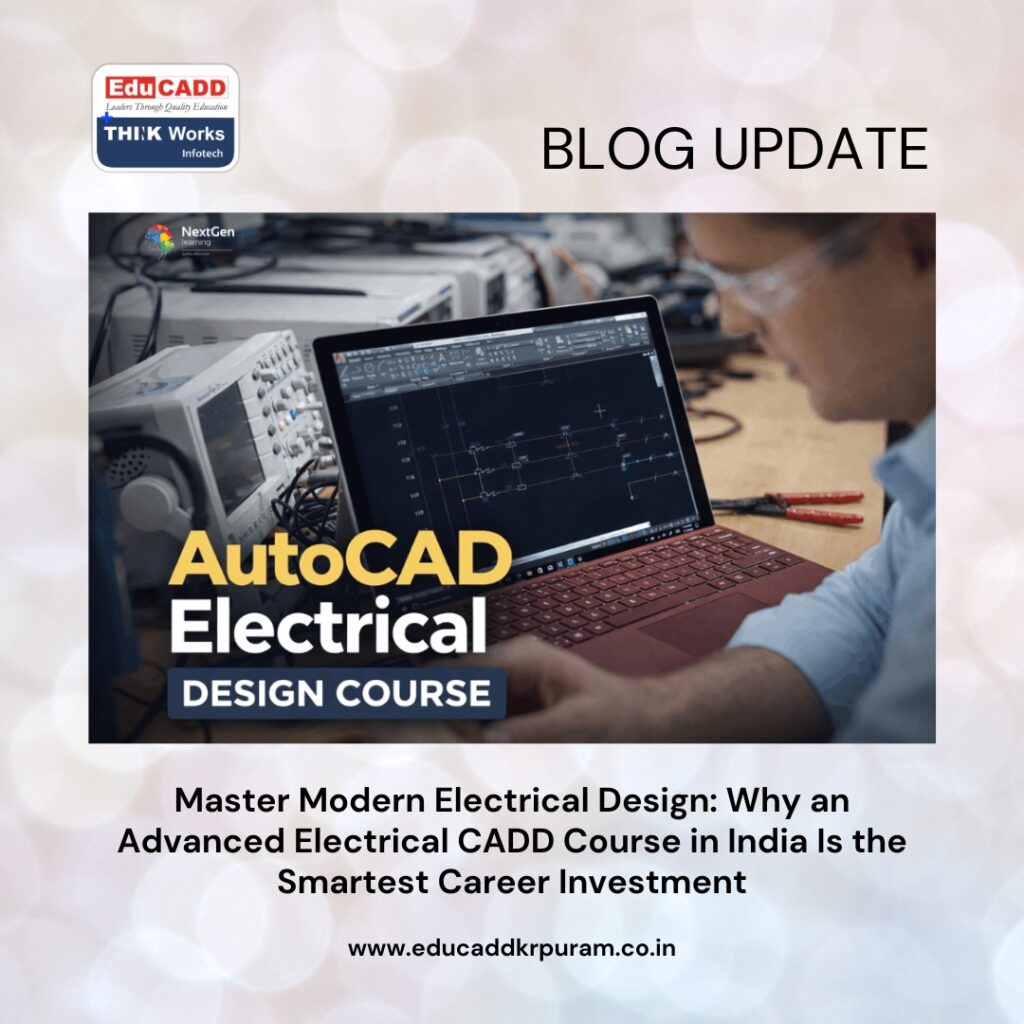
Advanced Electrical CADD Course
Unlike conventional academic programs, this specialized course emphasizes real-world applications instead of theoretical learning alone. Students gain hands-on exposure to industry-standard software while developing a clear understanding of electrical systems, drafting standards, and project documentation. They learn to prepare professional electrical drawings that comply with industry regulations and client requirements. As businesses continue adopting digital engineering workflows, professionals trained through an Advanced Electrical CADD Course enjoy stronger career prospects, higher employability, and opportunities to work on large-scale engineering projects across various industries.
1. The Growing Importance of Electrical CADD in Today’s Engineering Industry
Electrical systems form the backbone of every infrastructure project. Whether it is a residential apartment, corporate office, shopping mall, airport, metro station, hospital, or industrial facility, efficient electrical design ensures safety, reliability, and uninterrupted performance. Traditionally, engineers relied on manual drafting techniques that required considerable time and effort. Today, advanced CADD software has completely transformed this process by making electrical design faster, more accurate, and highly efficient.
An Advanced Electrical CADD Course teaches students how to convert engineering concepts into professional digital drawings. They learn to prepare circuit diagrams, power distribution layouts, lighting plans, cable schedules, switchgear arrangements, and equipment layouts with precision. Additionally, digital drafting allows engineers to detect errors before construction begins, reducing project costs and minimizing delays. As a result, organizations increasingly prefer candidates who possess Electrical CADD expertise because they can contribute immediately to ongoing engineering projects.
2. Why an Advanced Electrical CADD Course Is the Right Career Choice
The engineering job market has become highly competitive, making specialized technical skills more valuable than ever. Companies no longer recruit candidates based solely on academic qualifications. Instead, they look for professionals who can apply engineering knowledge using modern software and industry practices. An Advanced Electrical CADD Course in India bridges this gap by preparing students for real workplace responsibilities.
The course combines electrical engineering fundamentals with practical design assignments. Students gain confidence through continuous software practice and live project exposure. They understand how electrical drawings are created, modified, reviewed, and approved during different project stages. Moreover, they become familiar with engineering documentation standards followed by leading construction companies and design consultancies.
Another advantage is career flexibility. The knowledge acquired during the course remains applicable across multiple industries, including construction, manufacturing, power generation, renewable energy, automation, telecommunications, and infrastructure development. Therefore, graduates enjoy diverse employment opportunities instead of being limited to a single sector.
3. Comprehensive Software Training That Meets Industry Expectations
Software proficiency is one of the biggest advantages offered by an Advanced Electrical CADD Course in India. Modern engineering organizations rely heavily on digital design tools to improve productivity, reduce errors, and enhance collaboration between different engineering disciplines.
Students receive extensive training in professional applications that help them create accurate electrical designs. These software platforms enable engineers to prepare electrical schematics, wiring diagrams, lighting layouts, cable routing plans, panel board drawings, and power distribution systems efficiently.
Common software covered during the program includes:
- AutoCAD Electrical for electrical drafting and schematic design.
- Revit MEP for Building Information Modeling and integrated electrical systems.
Many institutes also introduce students to electrical calculation tools, panel design software, lighting analysis applications, and documentation management techniques. By mastering these applications, learners become capable of handling real engineering assignments while meeting professional quality standards.
4. Practical Learning That Builds Technical Confidence
One of the primary reasons employers value Electrical CADD professionals is their ability to solve practical engineering problems. This practical capability develops only through continuous hands-on learning. Therefore, an Advanced Electrical CADD Course emphasizes laboratory sessions, design exercises, and project-based assignments throughout the training period.
Students prepare complete electrical layouts for commercial buildings, residential complexes, hospitals, factories, educational institutions, and industrial facilities. They calculate electrical loads, prepare cable schedules, design panel boards, create lighting layouts, and coordinate electrical systems with architectural and mechanical drawings.
Practical training also improves decision-making abilities. Students learn how to identify design conflicts, optimize electrical layouts, and prepare professional documentation suitable for project execution. Every assignment strengthens technical understanding while improving confidence to work independently in professional engineering environments.
5. Core Topics Covered During the Advanced Electrical CADD Course
A well-structured Advanced Electrical CADD Course provides comprehensive training across every major aspect of electrical design. Instead of limiting students to software operations, the curriculum develops strong engineering fundamentals that support long-term career growth.
The course generally covers topics such as electrical drafting principles, schematic preparation, lighting system design, power distribution planning, cable sizing, cable tray layouts, earthing systems, transformer installations, panel board design, single-line diagrams, switchgear selection, electrical estimation, project documentation, and engineering standards.
Furthermore, students understand how different electrical components interact within complex engineering systems. They gain knowledge about safety regulations, design optimization, energy efficiency, and documentation procedures followed by leading engineering organizations. This balanced approach ensures graduates possess both theoretical understanding and practical competence.
6. Industries That Need Skilled Electrical CADD Professionals
Electrical CADD professionals play an important role in numerous industries because electrical systems are essential for every infrastructure project. As engineering activities continue expanding, organizations actively recruit qualified electrical designers who can prepare accurate drawings while maintaining project quality.
Major employment sectors include commercial construction, industrial manufacturing, renewable energy, electrical consulting, building services engineering, oil and gas, infrastructure development, smart city projects, metro rail systems, healthcare facilities, airports, educational institutions, power transmission, and automation industries.
These sectors regularly invest in modern engineering technologies to improve efficiency and reduce operational costs. Consequently, professionals trained through an Advanced Electrical CADD Course in India remain in demand throughout their careers. The versatility of Electrical CADD skills also allows engineers to explore opportunities in domestic as well as international markets.
7. Exciting Career Opportunities After Completing the Course
An Advanced Electrical CADD Course prepares students for numerous rewarding career paths within the engineering industry. Since electrical design forms an integral part of every infrastructure project, qualified professionals enjoy excellent employment opportunities across multiple sectors.
Popular job roles include:
- Electrical Design Engineer
- Electrical CADD Engineer
- Electrical Draftsman
- MEP Electrical Engineer
- BIM Electrical Modeler
- Project Engineer
- Electrical Estimation Engineer
- Panel Design Engineer
- Site Coordination Engineer
- Technical Support Engineer
- Electrical CAD Technician
- Engineering Consultant
Each role offers valuable industry exposure and opportunities for continuous professional development. With experience, professionals can advance into senior design positions, project management, engineering consultancy, quality assurance, or technical leadership. Many experienced Electrical CADD engineers also establish independent consulting firms, allowing them to work on diverse projects while building successful entrepreneurial careers.
8. Project-Based Training Bridges the Gap Between Learning and Employment
One of the greatest advantages of an Advanced Electrical CADD Course in India is its focus on project-based learning. Engineering companies expect new employees to understand practical workflows rather than only theoretical concepts. Therefore, quality training programs include real-time design projects that simulate the challenges engineers encounter in professional workplaces.
Students work on electrical layouts for residential apartments, corporate offices, hospitals, hotels, shopping complexes, industrial plants, educational campuses, and commercial buildings. They prepare lighting layouts, power distribution drawings, cable tray routing, panel schedules, earthing plans, and emergency power systems while following engineering standards.
Every assignment strengthens technical knowledge and improves confidence. Moreover, project-based learning develops logical thinking, accuracy, and attention to detail. Students also become familiar with revision management, drawing coordination, client documentation, and quality control procedures. As a result, they require less training after recruitment and can contribute productively from the very beginning of their careers.
9. Professional Certification Enhances Career Opportunities
A recognized certification significantly improves a candidate’s credibility in today’s competitive job market. Completing an Advanced Electrical CADD Course in India demonstrates that a learner possesses specialized technical knowledge and practical software skills beyond academic education.
Recruiters often receive hundreds of applications for engineering positions. Certified candidates stand out because they have invested time in developing industry-relevant expertise. Certification reflects dedication, continuous learning, and professional commitment, all of which are qualities employers value.
In addition, certification helps professionals during promotions and career transitions. Whether applying for a new role, pursuing opportunities abroad, or seeking internal career advancement, a professional Electrical CADD certification strengthens the resume and increases employer confidence. Therefore, earning certification is not merely an academic achievement but also a strategic career asset.
10. Skills That Employers Look for in Electrical Design Professionals
Technical knowledge alone does not guarantee career success. Modern engineering organizations seek professionals who possess a combination of software expertise, analytical thinking, communication skills, and teamwork. Fortunately, an Advanced Electrical CADD Course in India helps students develop these competencies through continuous practical exposure.
Important professional skills developed during the course include:
- Electrical drafting precision
- Drawing interpretation
- Load calculation and analysis
- Problem-solving ability
- Project coordination
- Documentation management
- Time management
- Communication skills
- Team collaboration
- Quality assurance awareness
- Attention to detail
- Professional ethics
These competencies improve workplace efficiency and help professionals collaborate effectively with architects, civil engineers, mechanical engineers, consultants, contractors, and clients. Consequently, employers highly value candidates who possess both technical expertise and strong interpersonal skills.
11. Salary Prospects and Long-Term Professional Growth
One of the major reasons learners enroll in an Advanced Electrical CADD Course is the excellent career growth potential it offers. As infrastructure projects continue expanding across India and internationally, the demand for skilled electrical designers continues to increase. Organizations are willing to offer competitive salaries to professionals who can produce accurate electrical designs while maintaining project quality.
Fresh graduates typically begin their careers with attractive entry-level positions that provide valuable practical experience. As professionals gain expertise in electrical drafting, Building Information Modeling, industrial design, and multidisciplinary project coordination, they become eligible for higher-paying positions and leadership responsibilities.
Career growth is not limited to salary increases alone. Professionals may progress into design management, engineering consultancy, project coordination, quality assurance, or technical leadership roles. Some individuals eventually establish independent engineering consultancy firms, creating additional opportunities for financial growth and professional independence.
12. Future Scope of Electrical CADD in Smart Infrastructure
The future of engineering is closely connected to digital transformation, sustainable development, and intelligent infrastructure. Governments and private organizations continue investing in smart buildings, renewable energy projects, electric vehicle charging infrastructure, automated manufacturing facilities, and energy-efficient commercial spaces. These developments have increased the importance of accurate electrical design more than ever before.
An Advanced Electrical CADD Course in India prepares students for these emerging opportunities by introducing modern engineering practices and digital design technologies. Electrical CADD software supports intelligent planning, design coordination, and project visualization, helping engineers reduce construction errors and improve overall efficiency.
Furthermore, technologies such as Building Information Modeling (BIM), Artificial Intelligence, cloud-based collaboration, and digital twins are revolutionizing engineering workflows. Professionals who continuously update their technical skills remain well-positioned to work on innovative projects and contribute to the next generation of engineering solutions. Therefore, Electrical CADD is expected to remain one of the most valuable engineering specializations for years to come.
13. Choosing the Best Institute for Advanced Electrical CADD Training
Selecting the right institute is one of the most important decisions when planning a technical career. Although many institutions offer engineering software courses, students should carefully evaluate the quality of training before enrolling in an Advanced Electrical CADD Course in India.
A reputed training institute provides experienced faculty, modern computer laboratories, updated software versions, project-based learning, industry-oriented curriculum, flexible class schedules, placement assistance, internship opportunities, and recognized certification. Practical exposure should always receive greater importance than classroom lectures because employers value hands-on experience.
Students should also consider placement records, student reviews, technical workshops, industry collaborations, and career guidance services. Institutes that regularly organize guest lectures, industrial visits, and mock interviews prepare students more effectively for professional careers. Investing in quality training creates a strong foundation for long-term success and improves confidence during recruitment.
14. Why Advanced Electrical CADD Is a Future-Proof Career Choice
Engineering technologies continue to evolve, but the need for skilled electrical designers remains constant. Every new residential community, industrial facility, commercial complex, healthcare center, educational institution, airport, metro station, and renewable energy project requires detailed electrical planning before construction begins. Consequently, professionals trained through an Advanced Electrical CADD Course in India enjoy consistent demand across multiple industries.
The course provides much more than software training. It develops engineering knowledge, practical design skills, project coordination abilities, analytical thinking, documentation expertise, and professional confidence. These competencies help graduates adapt quickly to changing technologies while maintaining high standards of engineering quality.
Additionally, continuous infrastructure development, digital engineering practices, and increasing investments in sustainable energy ensure that Electrical CADD professionals will remain valuable contributors to future projects. By combining technical excellence with practical experience and continuous learning, graduates can build rewarding careers that offer stability, growth, and opportunities to work on nationally and internationally significant engineering projects.
Conclusion
The engineering industry is undergoing rapid transformation, creating exceptional opportunities for professionals with specialized design expertise. An Advanced Electrical CADD Course in India equips students with the technical knowledge, software proficiency, and practical project experience required to succeed in today’s highly competitive engineering environment. From preparing electrical layouts and lighting systems to designing power distribution networks and engineering documentation, learners develop job-ready skills that meet current industry expectations.
Beyond technical capabilities, the course nurtures analytical thinking, problem-solving, communication, and teamwork, enabling graduates to perform effectively in multidisciplinary engineering projects. Professional certification, project-based learning, and exposure to industry-standard software further enhance employability and career growth. Whether you are a student beginning your engineering journey, a diploma holder looking to specialize, or a working professional seeking career advancement, this course provides a clear pathway toward long-term success.
Choosing an Advanced Electrical CADD Course in India is more than an educational decision—it is a strategic investment in a future-ready career. With the right training, practical experience, and commitment to continuous improvement, you can become a skilled electrical design professional capable of contributing to innovative infrastructure projects, supporting technological progress, and achieving lasting professional success in one of the fastest-growing sectors of the engineering industry.

