
Build a Future in Industrial Automation with the Best PLC and SCADA Course
Industrial automation has become the backbone of modern manufacturing and production. From automotive plants to food processing units, every industry depends on advanced automation systems to improve productivity, reduce downtime, and maintain consistent quality. As industries continue to embrace smart technologies, the demand for skilled automation professionals grows rapidly. This trend creates excellent career opportunities for students, engineers, and working professionals who want to build a successful future. Choosing the Best PLC SCADA Course is the first step toward mastering industrial automation.
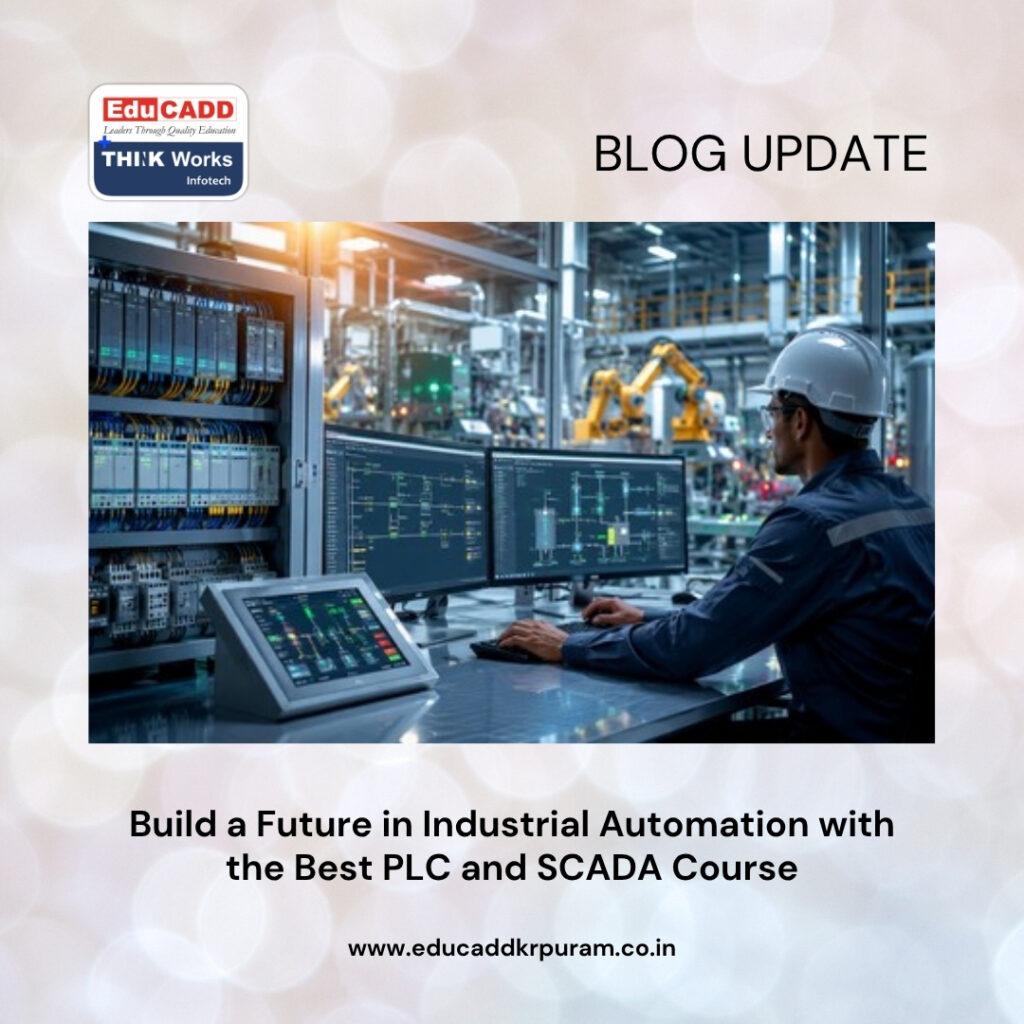
Best PLC SCADA Course
A well-designed training program equips learners with practical knowledge, industry-standard software, and real-time project experience. Moreover, it helps students understand how automated systems control machines, monitor industrial processes, and improve operational efficiency. Whether you are starting your career or upgrading your technical skills, the Best PLC SCADA Course provides the expertise needed to succeed in today’s competitive engineering industry.
Why Industrial Automation Is the Future
Industrial automation has transformed the way companies manufacture products and manage operations. Modern industries rely on automated systems to achieve higher production rates while maintaining excellent quality standards. Automation also reduces human errors and enhances workplace safety. Therefore, organizations invest heavily in advanced control systems to remain competitive in the global market.
As technology evolves, industries continue adopting intelligent manufacturing solutions that require trained automation professionals. This increasing demand makes industrial automation one of the most promising career fields. Consequently, enrolling in the Best PLC SCADA Course enables learners to gain the knowledge and confidence required to excel in this growing industry.
Understanding PLC and SCADA Systems
Programmable Logic Controllers, commonly known as PLCs, are industrial computers that control machines and automated processes. They receive input signals, process programmed instructions, and generate outputs to operate equipment efficiently. SCADA, or Supervisory Control and Data Acquisition, works alongside PLCs to monitor, control, and analyze industrial operations from a centralized location.
Together, these technologies create highly efficient automation systems used across multiple industries. Learning both concepts helps students understand complete industrial control architecture. The Best PLC SCADA Course explains these technologies through practical demonstrations, making complex concepts simple and easy to understand.
Essential Skills You Gain Through Professional Training
A comprehensive automation program focuses on developing practical and technical skills. Students learn PLC programming, ladder logic, digital and analog input configuration, timers, counters, memory instructions, and troubleshooting techniques. They also understand SCADA screen development, alarm management, data logging, and industrial communication protocols. Furthermore, learners gain experience with sensors, actuators, motors, relays, and Human Machine Interface systems. These skills prepare candidates for real industrial environments where accuracy and efficiency are essential. The Best PLC SCADA Course combines theoretical concepts with extensive hands-on practice, allowing students to become confident automation professionals.
Importance of Hands-On Practical Learning
Practical knowledge plays a crucial role in industrial automation training. Reading about PLC programming alone cannot develop the confidence needed for real industrial applications. Students must work with industrial controllers, simulation software, and live automation panels to understand system behavior. Hands-on exercises improve problem-solving abilities and strengthen technical knowledge.
Additionally, practical sessions expose learners to real production scenarios where they diagnose faults and optimize machine performance. The Best PLC and SCADA Course emphasizes laboratory-based learning because employers prefer candidates who can contribute immediately without requiring extensive additional training.
Industries That Hire PLC and SCADA Professionals
Automation professionals enjoy excellent employment opportunities across diverse industries. Manufacturing companies, automobile plants, pharmaceutical organizations, power generation facilities, oil and gas companies, food processing industries, packaging businesses, textile manufacturers, and water treatment plants all require skilled PLC and SCADA engineers. Even renewable energy projects increasingly depend on industrial automation systems for efficient operations.
Since automation supports almost every production sector, career stability remains strong. Completing the Best PLC and SCADA Course significantly improves employability by providing industry-relevant skills that organizations actively seek during recruitment.
Modern Technologies Included in PLC and SCADA Training
Today’s automation systems integrate advanced technologies beyond traditional programming. Modern industries use Industrial Internet of Things solutions, smart sensors, cloud-based monitoring, data analytics, and remote diagnostics to improve productivity. Therefore, quality training programs introduce students to these emerging technologies alongside conventional PLC and SCADA concepts.
Learners also explore industrial networking, communication protocols, and integration techniques that connect multiple automation devices. Understanding these innovations prepares candidates for Industry 4.0 environments where digital transformation continues to reshape manufacturing. The Best PLC and SCADA Course ensures students stay updated with the latest technological developments instead of learning outdated methods.
Choosing the Right Training Institute
Selecting the right training institute greatly influences learning outcomes and career success. Students should evaluate the institute’s infrastructure, experienced trainers, practical laboratory facilities, updated curriculum, placement assistance, certification value, and industry collaborations before enrolling. A quality institute provides real-time projects, personalized guidance, interview preparation, and continuous technical support throughout the learning journey.
Furthermore, experienced faculty members explain complex automation concepts using practical examples that improve understanding. Choosing the Best PLC and SCADA Course from a reputed training institute ensures learners receive industry-oriented education that aligns with current employer expectations.

