
Building the Future Digitally: How BIM Implementation Empowers Modern Construction Companies
The construction industry is evolving rapidly as technology continues to reshape the way projects are designed, planned, and executed. Companies that once depended entirely on paper drawings and isolated workflows are now embracing digital solutions to improve productivity and project outcomes. Among these innovations, Building Information Modeling (BIM) has emerged as a game-changing methodology that enables seamless collaboration across every stage of construction. BIM Implementation Construction Companies is no longer viewed as an optional upgrade but as a strategic investment that enhances efficiency, minimizes risks, and improves profitability. By creating intelligent digital models enriched with project information, BIM allows architects, engineers, contractors, and project owners to work together using accurate and synchronized data.
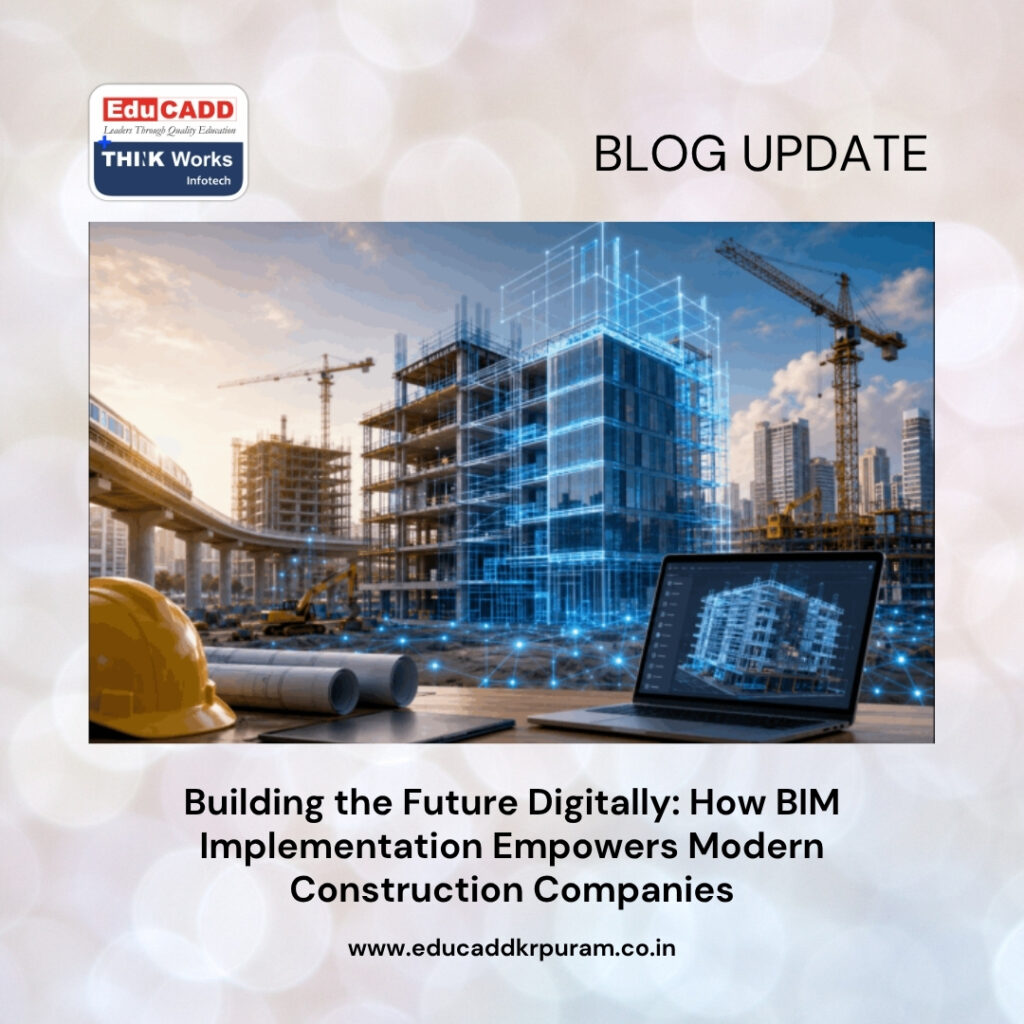
BIM Implementation Construction Companies
This collaborative environment helps eliminate communication barriers, supports informed decision-making, and delivers higher-quality buildings. As construction projects become increasingly complex, organizations that successfully implement BIM gain a significant competitive advantage while preparing themselves for the future of digital construction.
Understanding the Core Concept of Building Information Modeling
Building Information Modeling represents a comprehensive digital process rather than simply a three-dimensional design tool. It creates intelligent models that contain valuable information about every component of a building, including dimensions, materials, quantities, schedules, costs, and maintenance requirements. Unlike conventional drafting methods, BIM enables project teams to access a centralized database where every modification updates automatically across all related disciplines.
This level of integration ensures that architects, structural engineers, MEP consultants, and contractors always work with the latest project information. As a result, misunderstandings decrease considerably, and project coordination becomes more accurate. BIM Implementation Construction Companies establishes a strong digital foundation that improves communication while supporting better planning throughout the entire project lifecycle.
Reasons Behind the Growing Adoption of BIM in Construction
Construction companies operate in an environment where clients demand faster project delivery, tighter budgets, and superior quality. Meeting these expectations requires more efficient workflows and better collaboration than traditional methods can provide. BIM addresses these challenges by enabling accurate planning, improved visualization, and seamless coordination among multidisciplinary teams.
Organizations also recognize that digital project management reduces unnecessary delays and improves overall project transparency. Furthermore, public infrastructure authorities and private developers increasingly encourage BIM adoption to ensure consistency, accountability, and long-term asset management. Consequently, companies implementing BIM strengthen their market reputation while positioning themselves as innovative leaders capable of delivering complex projects successfully.
Creating an Effective BIM Implementation Roadmap
Every successful digital transformation begins with a well-defined implementation strategy. Construction companies should first evaluate their existing workflows, identify operational challenges, and establish measurable objectives before introducing BIM into daily operations. Senior management must actively support this transformation because organizational commitment encourages employees to embrace new technologies with confidence.
A detailed BIM Implementation Construction Companies roadmap should define project standards, communication protocols, file management procedures, collaboration guidelines, and quality assurance processes. Companies often achieve better results by introducing BIM through carefully selected pilot projects before expanding its use across multiple departments. This structured approach allows organizations to refine their workflows while minimizing implementation risks.
Selecting the Best BIM Technologies for Business Growth
Technology plays a vital role in maximizing the benefits of BIM implementation in construction companies. Organizations should carefully assess software platforms based on usability, interoperability, scalability, cloud integration, and compatibility with existing systems. Choosing the right BIM solution ensures that project teams can exchange information efficiently without technical barriers.
However, software alone does not guarantee success. Companies also require powerful computers, secure cloud environments, high-speed networking infrastructure, and effective data management systems to support large digital models. Investing in a complete technology ecosystem enables smooth collaboration while maintaining data accuracy throughout project execution.
Empowering Employees Through BIM Education and Skill Development
A successful BIM Implementation Construction Companies strategy depends heavily on skilled professionals who understand digital workflows and collaborative project delivery. Construction companies should invest in continuous education programs that help architects, engineers, quantity surveyors, project managers, and site supervisors develop practical BIM expertise. Professional certifications, software training sessions, technical workshops, and hands-on project experience improve employee confidence while strengthening organizational capabilities. Ongoing learning also enables teams to adapt quickly as BIM technologies continue to evolve.
Organizations benefit from skilled BIM professionals because they:
- Produce more accurate and coordinated project models.
- Improve communication between different engineering disciplines.
- Increase productivity through efficient digital workflows.
- Deliver higher-quality projects with fewer construction errors.
Continuous skill development transforms BIM from a software investment into a long-term business advantage.
Improving Project Collaboration Through a Unified Digital Environment
Construction projects require close coordination between multiple teams working simultaneously across different locations. Traditional communication methods often create inconsistencies because project information becomes fragmented across various documents and drawings. BIM eliminates this challenge by providing a centralized digital platform where every stakeholder accesses identical project information in real time.
Architects, structural engineers, MEP designers, contractors, consultants, and clients collaborate more effectively because updates become instantly available throughout the project model. This transparent workflow encourages faster decision-making, reduces misunderstandings, and strengthens teamwork from project initiation to final completion.
Detecting Design Issues Before Construction Begins
Design coordination has traditionally been one of the most difficult aspects of construction management. Separate engineering disciplines frequently develop independent designs that unintentionally conflict during construction. BIM Implementation Construction Companies solves this problem through automated clash detection, allowing project teams to identify and resolve design conflicts long before site work begins. Engineers can detect overlapping structural members, mechanical systems, electrical conduits, and plumbing networks within the digital environment. Resolving these issues early prevents expensive on-site modifications, reduces project delays, and improves construction efficiency. Consequently, BIM implementation in construction companies significantly enhances project reliability while reducing avoidable risks.
Strengthening Cost Control and Financial Planning
Accurate financial management remains essential for successful construction projects. BIM supports precise cost estimation by automatically generating quantity take-offs directly from intelligent project models. Every design revision instantly updates material quantities, helping estimators maintain accurate budgets throughout project development. Project managers can compare estimated expenses with actual project costs while monitoring procurement activities and resource utilization. This improved financial visibility supports better investment decisions and minimizes budget overruns. Additionally, contractors reduce unnecessary material purchases because digital models provide highly reliable quantity information that improves procurement accuracy.
Enhancing Scheduling Efficiency and Construction Productivity
Completing projects within agreed timelines requires detailed planning and effective resource management. BIM integrates project schedules with digital models to create four-dimensional construction simulations that visualize every stage of the building process. Project managers analyze sequencing strategies, identify potential scheduling conflicts, and optimize labor allocation before construction begins. Equipment utilization, material deliveries, and subcontractor activities become easier to coordinate because every task aligns with the digital construction plan. Better scheduling increases productivity while minimizing delays caused by poor coordination or unexpected site issues.
Driving Sustainable Construction Through Intelligent Planning
Environmental responsibility has become a defining objective within the global construction industry. BIM contributes significantly to sustainable development by allowing designers to evaluate building performance before construction starts. Energy simulations, daylight analysis, ventilation studies, and material optimization help teams create environmentally responsible buildings that consume fewer natural resources. Accurate digital planning also reduces material waste by minimizing construction errors and unnecessary redesigns. After project completion, facility managers continue using BIM models to improve maintenance planning, energy management, and operational efficiency throughout the building’s lifespan.
Managing Risks While Improving Construction Quality
Every construction project faces uncertainties related to design, execution, budgeting, safety, and operational performance. BIM enables project teams to identify potential risks early through digital simulations, model validation, and comprehensive project analysis. Managers evaluate construction methods before implementation, ensuring that activities follow approved standards and project specifications. Continuous monitoring using BIM improves quality assurance because completed work can be compared directly with digital models.
This proactive management approach minimizes unexpected disruptions while increasing client confidence and overall project success. Organizations implementing BIM consistently deliver projects with higher quality, better compliance, and improved operational reliability.
The Future of BIM and Digital Construction Innovation
The capabilities of BIM continue expanding through integration with emerging digital technologies that redefine construction practices. Artificial Intelligence supports automated design optimization, while Digital Twins enable real-time monitoring of completed facilities. Cloud computing improves collaboration across geographically distributed teams, and drone technology provides accurate site progress monitoring.
Laser scanning enhances existing building documentation, whereas Virtual Reality and Augmented Reality improve project visualization and stakeholder engagement. These technological advancements strengthen BIM implementation in construction companies by creating smarter workflows, better analytics, and data-driven project management. Organizations embracing these innovations will remain competitive as the construction industry continues its digital evolution.
Conclusion
BIM Implementation Construction Companies has become the cornerstone of modern project delivery, offering substantial improvements in collaboration, design coordination, cost management, scheduling, quality control, and sustainability. By replacing disconnected workflows with intelligent digital processes, BIM enables organizations to complete projects more efficiently while reducing risks and maximizing profitability. Successful implementation depends on strategic planning, advanced technology, skilled professionals, and a culture that embraces continuous innovation.
As digital transformation accelerates across the global construction sector, BIM will continue shaping the future of infrastructure development and facility management. Construction companies that invest in BIM today not only improve current project performance but also build a stronger foundation for sustainable growth, enhanced customer satisfaction, and long-term industry leadership.

