
Build Your Career with a BIM Course in Bangalore
The modern construction industry is evolving fast. Today, global infrastructure developers demand smart digital workflows instead of outdated manual blueprints. Enrolling in a specialized BIM course at a recognized Skill development institute equips civil engineers and architects with essential 3D modeling skills. Furthermore, mastering this technology opens doors to lucrative design roles across India and international construction hubs.
Building Information Modeling changes how teams plan, design, and construct massive buildings. Rather than drawing flat lines on paper, professionals build intelligent virtual twins of real structures. Consequently, leading construction companies near Whitefield, Kammanahalli, and KR Puram actively seek trained digital specialists. Joining a structured CADD training program bridges the gap between academic theory and modern industry execution.
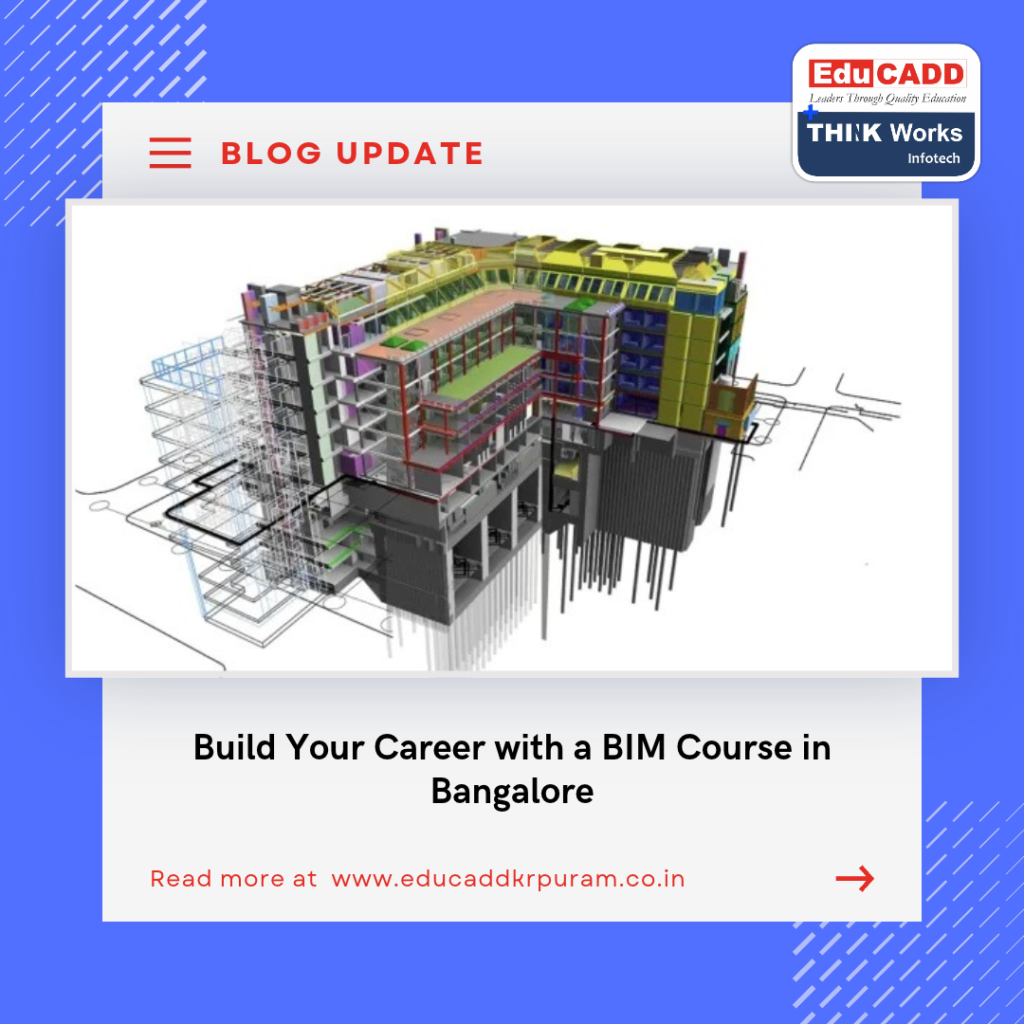
Why Building Information Modeling Shapes Modern Construction
Traditional construction methods often create communication gaps between architects, structural engineers, and site contractors. These misunderstandings lead to expensive material waste, schedule delays, and frustrating site rework. However, smart 3D modeling unites every project team inside one shared digital environment. When an engineer updates a structural column, every floor plan, section view, and material schedule updates automatically.
Choosing Job oriented courses prepares graduates for the exact workflows top employers expect. Real estate developers and global engineering consultancies want candidates who understand digital coordination. Moreover, these companies offer higher starting salaries to engineers who can prevent construction errors before workers even break ground.
-
Zero-Clash Site Execution: Engineers detect spatial collisions between structural beams, plumbing pipes, and electrical ducts inside the virtual model early.
-
Accurate Material Estimation: Teams generate instant quantity takeoffs for concrete, steel, and finishing materials directly from intelligent building elements.
-
Seamless Team Collaboration: Architects, structural designers, and MEP specialists work together smoothly on a single central project file.
-
Global Career Mobility: Professionals gain skills aligned with strict international building mandates across the Middle East, Europe, and North America.
Essential Technical Modules Inside a Comprehensive Curriculum
A strong digital construction curriculum delivered by a premier CADD training institute covers every phase of the building lifecycle. Students start with basic parametric modeling and progress toward complex multi-disciplinary project coordination. Therefore, learners graduate with complete confidence in handling real-world building projects.
Parametric authoring forms the foundation of any successful digital twin. Learners master intelligent design by completing a core Revit course module. During these sessions, students construct structural column grids, RCC foundations, exterior curtain walls, roofs, and custom building families. Additionally, maintaining compatibility with legacy workflows remains vital, so integrating an AutoCAD course ensures smooth 2D detail exports.
Clash detection and timeline simulation elevate a basic modeler into a high-value coordinator. Students learn how to merge architectural, structural, and utility models inside Navisworks Manage. Furthermore, linking 3D building geometry with construction timelines learned through a Primavera P6 course creates dynamic 4D construction simulations.
Expanding Your Engineering Stack Across Multiple Disciplines
Modern construction projects require versatile professionals who understand how different engineering systems interact. Relying on a single software tool limits your career growth in competitive urban markets. Consequently, ambitious engineers expand their technical expertise across complementary design and analysis platforms.
Combining building modeling with a Civil CADD course and an Architectural CADD course builds total fluency across site layouts and spatial planning. For structural load validation and high-rise frame analysis, completing a STAAD Pro course alongside an ETABS course prepares engineers for structural leadership. Similarly, mastering aesthetic space planning through an Interior design course enhances your overall architectural presentation skills.
Building services require tight coordination between mechanical, electrical, and plumbing systems. Engineers managing commercial HVAC networks and industrial plants often pursue a Mechanical CADD course alongside an Electrical CADD course. Adding 3D product modeling tools like a SolidWorks course, CATIA training, and Creo training helps specialists design custom equipment brackets. Moreover, exploring HyperMesh training and GD&T training builds deep precision engineering knowledge.
Integrating Software Automation and Digital Business Skills
Technology continues to reshape how engineering firms operate and attract new clients. Forward-thinking construction professionals increasingly blend core engineering skills with software automation and digital marketing strategies.
Learning modern programming through a Full Stack Web Development course, Java Full Stack course, and Python Full Stack course empowers technologists to write custom Dynamo scripts. These custom scripts automate repetitive modeling tasks and connect building data to interactive web dashboards. As a result, automation specialists save engineering firms hundreds of working hours every month.
Independent consultants and architectural studio owners also need strong client acquisition skills to grow their businesses. Enrolling in a Digital marketing course at a reputable Digital marketing institute builds powerful online visibility. Specialized programs like a Job oriented digital marketing course, Professional digital marketing course, and Online digital marketing course cover essential skills including an SEO course, Google Ads course, Social media marketing course, and AI digital marketing course. Choosing a Masters in digital marketing course alongside a Digital marketing course with placement that offers Digital marketing live project training and a Digital marketing internship helps consultants launch a rewarding Digital marketing career backed by professional Digital marketing training.
High-Demand Career Opportunities in Digital Construction
Completing hands-on digital construction training at a trusted Technical training institute unlocks diverse job roles across real estate, infrastructure, and global outsourcing firms. Employers value practical modeling competence far above theoretical textbook knowledge.
-
BIM Modeler: Specialists construct detailed LOD 300 and LOD 400 parametric 3D models, create custom building families, and release accurate construction sheets.
-
BIM Coordinator: Leaders merge multi-disciplinary models, run weekly clash detection audits, lead coordination meetings, and enforce strict project execution plans.
-
BIM Manager: Executives establish company-wide digital standards, manage Common Data Environments, mentor modeling teams, and oversee digital project delivery.
-
4D and 5D Planning Specialist: Analysts link 3D building geometry with construction schedules and cost databases to simulate site progress and control budgets.
How to Select the Right Technical Training Center
Choosing the right learning environment directly shapes your technical confidence and future job prospects. Ambitious students and working engineers must evaluate several critical factors before enrolling in any program.
First, examine the course syllabus carefully to ensure it prioritizes live project execution over simple tool memorization. Second, verify that instructors possess real-world international building delivery experience rather than purely academic backgrounds. Third, check that the facility provides high-performance workstations capable of running heavy 3D building models smoothly. Finally, confirm that the center offers flexible batch timings alongside dedicated portfolio reviews and placement support. Receiving mentorship at an established Professional training institute ensures your modeling habits match strict corporate standards.
Practical Steps to Launch Your Digital Construction Career
Transitioning from a traditional site engineer into a sought-after digital modeling specialist requires consistent daily effort. Following a clear roadmap accelerates your learning curve and impresses technical interviewers.
Begin by selecting your primary engineering focus across architectural design, structural framing, or MEP building services. Next, practice setting up shared project coordinates, modeling parametric walls, and building custom families every single day. Afterward, compile your best 3D cutaway renders, clash detection reports, and bar bending schedules into a clean digital portfolio. Finally, review Level of Development definitions and worksharing protocols so you pass technical modeling tests effortlessly.
Conclusion and Your Next Step Forward
Mastering Building Information Modeling represents one of the smartest career investments for modern engineers and architects. The global construction sector continues to adopt digital twin workflows at an accelerating pace. By completing practical CADD training at a top-rated Skill development institute, you gain the exact modeling precision, coordination skills, and portfolio proof that leading employers demand.
Take charge of your professional future today. Build job-ready digital construction expertise, stand out in competitive interviews, and unlock high-paying international opportunities through Job oriented courses.

