
Where Vision Meets Execution: Build Your Future with a Construction Management Course
Introduction
A construction project begins with an idea, but turning that idea into a completed structure requires much more than drawings and materials. It requires planning, coordination, budgeting, scheduling, supervision, communication, and continuous decision-making. From small residential developments to major infrastructure projects, effective management plays a vital role in keeping construction work organized and productive. A Construction Management Course can provide learners with the knowledge and practical understanding needed to enter this dynamic field. It can help students explore construction planning, project controls, cost management, safety, scheduling, resource utilization, and modern construction technologies.
As the construction sector continues to adopt new technologies and more structured project practices, skilled management professionals are becoming increasingly valuable. Companies need people who can understand project requirements, coordinate different teams, control resources, and respond to challenges without losing sight of deadlines and quality.
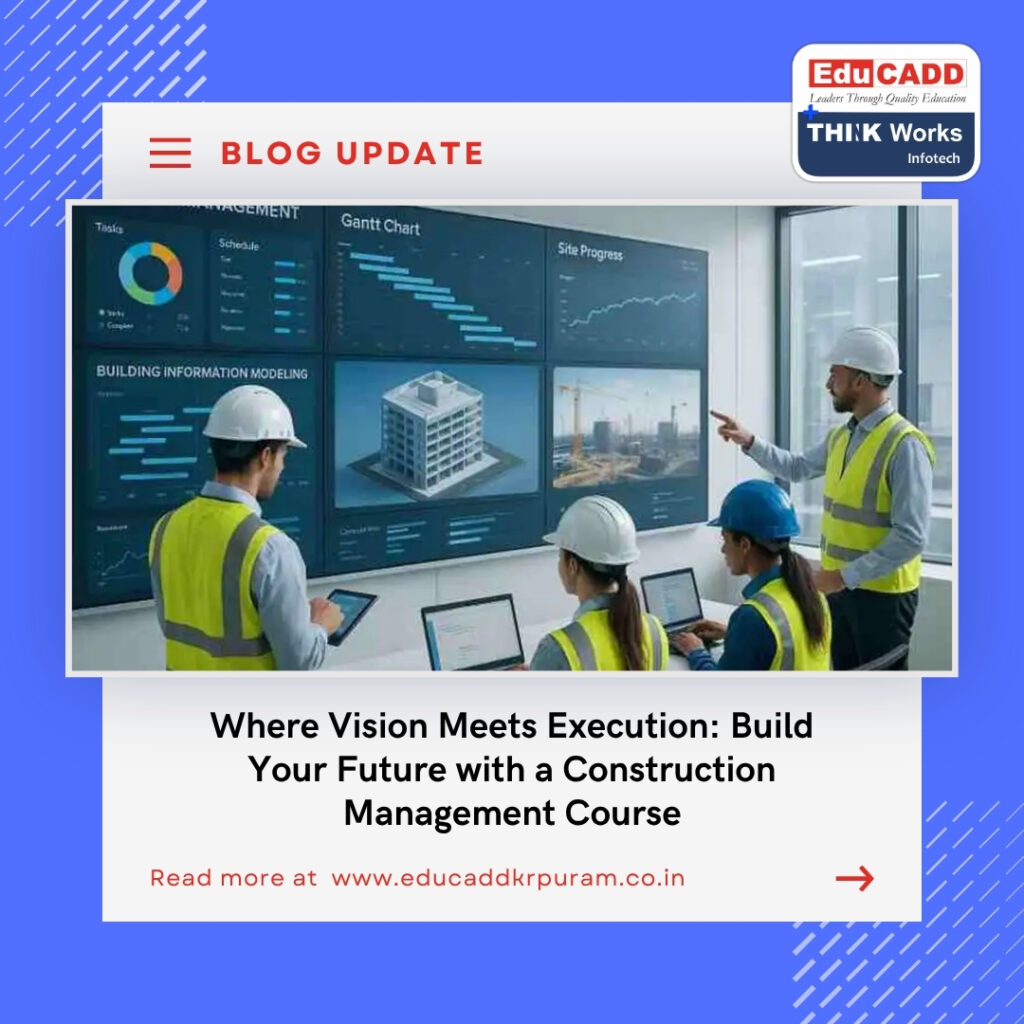
Construction Management Course
For students and professionals who want to build a career connected to construction and project management, gaining these skills can create a strong foundation for future growth.
What Construction Management Really Means
Construction management involves overseeing the different activities required to deliver a construction project successfully. It starts during the planning stage and continues through execution, monitoring, and completion.
A construction manager must understand how different parts of a project interact. Materials must arrive on time. Workers and equipment must be available when required. Project activities need to follow a schedule. Costs must remain under control. Quality standards must be maintained, and safety requirements must be followed.
At the same time, construction professionals must communicate with multiple stakeholders. Architects, engineers, contractors, suppliers, clients, and site teams may all have different responsibilities.
This makes construction management a combination of technical understanding, organizational ability, leadership, and problem-solving.
A Construction Management Course introduces learners to these interconnected responsibilities and helps them understand the complete project lifecycle.
Why Professional Construction Management Is Important
Construction projects can involve significant investments and tight completion schedules. Even a minor planning mistake can create delays or additional expenses.
For example, a shortage of materials can slow down site activities. A change in design can affect the schedule. Poor coordination between contractors can create workflow problems. Unplanned equipment downtime can reduce productivity.
Professional management helps identify and control these challenges.
Construction managers monitor project progress and coordinate teams to keep activities aligned with project objectives. They also help ensure that resources are used efficiently.
As projects become more sophisticated, companies increasingly require professionals who can combine construction knowledge with modern management practices. This is one reason structured construction management education has become relevant for today’s learners.
Build a Strong Foundation in Construction Planning
Planning is one of the earliest and most important stages of construction management. A detailed plan provides direction for the project and helps teams understand their responsibilities.
Construction planning can include defining activities, establishing timelines, identifying resources, setting milestones, and considering possible risks.
Without proper planning, teams may struggle to coordinate their work. Delays can occur, resources may be wasted, and project costs can increase.
Through a Construction Management Course, students can learn how construction activities are organized before execution begins. They can understand how individual tasks fit into a larger project schedule.
Good planning also makes monitoring easier. Once project targets are established, managers can compare actual progress with planned progress and take corrective action when necessary.
Learn the Fundamentals of Project Scheduling
Time management is essential in construction. Every project has deadlines, milestones, and activities that need to be completed in a particular sequence.
Project scheduling helps construction teams understand the order and timing of activities. It can also help managers identify tasks that may have a major impact on project completion.
Modern construction organizations use software to create, monitor, and update project schedules. Primavera P6 and Microsoft Project are examples of tools associated with construction and project planning.
A Construction Management Course can introduce students to scheduling concepts and help them understand how digital tools support project management.
Learners can explore activity sequencing, work breakdown structures, dependencies, milestones, resource allocation, and progress tracking.
These skills can be useful for professionals interested in planning and project coordination roles.
Understand the Importance of Cost Control
Managing construction costs requires careful planning and regular monitoring. Projects involve expenses related to materials, labor, machinery, transportation, subcontractors, and other operational requirements.
A project can face financial pressure when costs are not monitored properly. Changes in material prices, design modifications, delays, or inefficient resource use can affect the overall budget.
Construction management education can help learners understand the principles behind cost estimation and financial monitoring.
Students can learn how project budgets are developed and how expenses are tracked during execution. They can also understand the relationship between project time, resources, and costs.
Effective cost management does not simply mean reducing expenses. It means using available resources wisely while maintaining project quality and meeting requirements.
Improve Resource Management Skills
Every construction project depends on the right resources being available at the right time. These resources can include workers, materials, machinery, equipment, money, and time.
Managing them efficiently is an important part of construction management.
Consider a project where materials arrive several days late. Workers may not be able to complete planned activities. Equipment may remain unused, while the project schedule begins to shift.
Good resource planning can reduce such disruptions.
During a Construction Management Course, students can understand how resources are allocated to project activities. They can also explore how managers monitor resource usage and respond when requirements change.
This knowledge can improve their understanding of day-to-day project operations.
Make Construction Safety a Management Priority
Safety is a fundamental responsibility on every construction site. Construction activities can involve heavy machinery, electrical equipment, elevated work, excavation, moving materials, and other hazards.
A construction manager must understand the importance of identifying risks and encouraging safe working practices.
Safety management involves more than responding to accidents. It requires preventive planning and regular awareness.
Students studying construction management can learn about basic safety principles, hazard identification, risk management, and site safety procedures.
When safety becomes part of project planning from the beginning, teams can work with greater awareness and organization.
A strong safety culture can also support better productivity by reducing avoidable disruptions.
Discover the Role of BIM in Construction
Technology has changed how construction projects are designed and managed. Building Information Modeling, commonly known as BIM, is an important example.
BIM allows project teams to work with coordinated digital information related to a building or infrastructure project. It can improve communication between disciplines and support better decision-making.
Construction professionals can use digital tools for more than design. Technology can also support scheduling, documentation, progress monitoring, cost tracking, coordination, and reporting.
For this reason, learners should consider programs that expose them to digital construction practices.
A modern Construction Management Course can help students understand how management principles connect with technologies such as BIM and project management software.
This can make their skill set more relevant to technology-driven construction environments.
Develop Leadership and Communication Abilities
Construction managers rarely work alone. Their responsibilities involve constant interaction with different teams and stakeholders.
They may need to discuss project requirements with engineers, coordinate contractors, communicate with suppliers, update clients, and guide site teams.
Effective communication can reduce confusion and improve coordination.
Leadership is equally important. A manager must be able to make decisions, delegate responsibilities, resolve conflicts, and keep teams focused on project goals.
A good course can help learners develop these soft skills through group projects, presentations, discussions, and practical activities.
Technical knowledge combined with communication and leadership can make professionals more effective in real construction environments.
Turn Theory Into Practical Knowledge
Construction is a practical industry. Therefore, learning should ideally go beyond classroom theory.
Students can benefit from case studies, simulations, project assignments, and software-based exercises. These activities allow learners to apply concepts instead of simply memorizing them.
For instance, a learner may be asked to prepare a project schedule, allocate resources, identify risks, or evaluate a construction scenario.
Such exercises encourage critical thinking.
They also help students understand how project decisions can influence cost, time, quality, and productivity.
When selecting a Construction Management Course, learners should therefore examine the amount of practical exposure included in the program.
Career Paths After Construction Management Training
Construction management knowledge can support several professional roles. Career opportunities may vary depending on qualifications, experience, technical skills, and specialization.
Some possible career directions include:
- Construction Project Coordinator
- Site Management Executive
- Project Planning Executive
- Construction Supervisor
- Project Controls Professional
- Planning Coordinator
- Cost Control Executive
- Construction Management Professional
- BIM Coordination Professional
- Project Management Executive
These professionals can find opportunities across construction companies, infrastructure firms, engineering consultancies, real estate organizations, contractors, and project management companies.
With experience, professionals can specialize in areas such as project planning, scheduling, cost control, site management, BIM coordination, or project controls.
Who Should Study Construction Management?
Construction management training can benefit learners at different stages of their careers.
Civil engineering graduates may use it to add management knowledge to their technical education. Diploma holders can strengthen their understanding of construction operations. Working professionals can also use additional training to prepare for greater project responsibilities.
The field may be suitable for:
- Civil engineering graduates
- Civil diploma holders
- Site engineers
- Construction professionals
- Project coordinators
- Planning professionals
- Architecture-related professionals
- Aspiring project managers
The most suitable course depends on the learner’s career objectives. Someone interested in scheduling may look for strong project planning content, while another learner may prefer a program with greater emphasis on site management or BIM.
Choosing the Right Construction Management Course
Not every course provides the same learning experience. Therefore, students should evaluate a program carefully before enrolling.
The curriculum is one of the first things to examine. It should cover essential construction management concepts while also reflecting current industry practices.
Practical training is equally important. Students should check whether they will work on projects, case studies, scheduling exercises, or software applications.
Other factors worth considering include:
- Course structure and duration
- Practical learning opportunities
- Software exposure
- Project-based assignments
- Trainer expertise
- Certification
- Industry relevance
- Learning format
- Career guidance
A balanced program can help learners develop both knowledge and practical confidence.
Prepare for a Changing Construction Industry
The construction industry is moving toward greater digitalization and improved project controls. BIM, data-driven planning, sustainable construction, automation, and digital collaboration are influencing how projects are delivered.
This transformation creates opportunities for professionals who are willing to keep learning.
A Construction Management Course can provide an initial foundation, but professional development should continue beyond the classroom.
Learners can build on their knowledge through practical experience, additional certifications, advanced software training, and exposure to different types of construction projects.
The ability to adapt can become an important advantage as construction practices continue to evolve.
Conclusion
Construction is more than the process of creating physical structures. It is a coordinated effort involving people, technology, materials, money, time, and expertise. Managing these elements effectively requires professionals who can plan carefully, communicate clearly, solve problems, and make informed decisions.
A Construction Management Course can help aspiring professionals develop these abilities in a structured way. From planning and scheduling to cost control, resource management, safety, BIM, and leadership, the knowledge gained can support a wide range of construction-related career paths.
For students beginning their professional journey and experienced individuals looking to expand their responsibilities, construction management education can provide valuable career direction.
As the industry continues to embrace technology and more sophisticated project practices, skilled construction managers will remain important. Building the right combination of technical understanding, management ability, digital awareness, and practical experience can help professionals move confidently from project plans to successful project outcomes.

