
Master Electrical Drafting Skills Today: Your Gateway to a Future-Proof Engineering Career
Modern infrastructure depends on reliable electrical systems that power residential buildings, commercial complexes, industries, hospitals, transportation networks, and smart cities. Every successful electrical installation begins with a precise technical drawing that guides engineers and technicians throughout the project lifecycle. This is why an Electrical Drafting Skills Training has become one of the most valuable training programs for aspiring engineering professionals. The course combines technical knowledge, drafting standards, and software expertise to help learners create accurate electrical drawings for real-world applications.
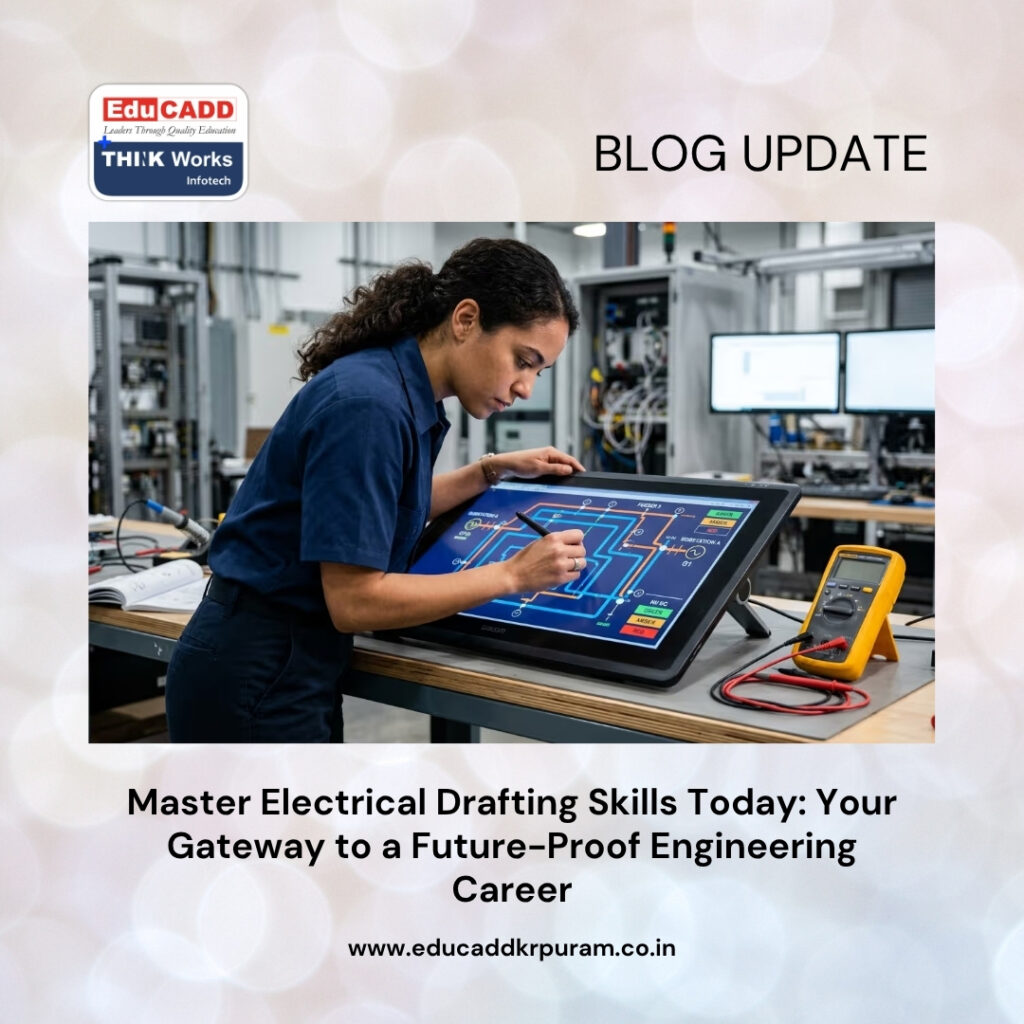
Electrical Drafting Skills Training
Whether you are a student planning your career, a diploma holder seeking specialized skills, or a working professional aiming for career advancement, this course provides the practical foundation required to succeed. As engineering companies increasingly rely on digital design solutions, qualified electrical drafters are becoming indispensable across multiple industries. Learning these specialized skills today can open doors to excellent career opportunities both in India and abroad.
Gain a Solid Understanding of Electrical Drafting Principles
Every professional electrical drafter begins with a strong understanding of engineering fundamentals. An Electrical Drafting Skills Training introduces students to electrical symbols, drafting conventions, wiring diagrams, power distribution layouts, panel schedules, circuit representations, and documentation standards. Instead of simply learning software commands, students understand the engineering logic behind every drawing they create.
Furthermore, experienced trainers explain how technical drawings support installation, maintenance, and project coordination. This strong conceptual foundation enables learners to produce accurate drawings while minimizing design errors. As they continue practicing, students develop confidence in interpreting and preparing electrical documentation that meets professional industry standards.
Learn Professional CAD Software Used Across Industries
Software proficiency has become an essential requirement for modern engineering careers. A comprehensive Electrical Drafting Skills Training provides practical training using advanced CAD software widely adopted by engineering firms. Students learn how to prepare electrical layouts, modify existing drawings, organize design libraries, generate reports, and manage project documentation efficiently.
Additionally, instructors demonstrate industry workflows that help learners understand how electrical drawings are created within professional organizations. Regular hands-on practice improves drafting speed without compromising accuracy. By mastering industry-standard software, graduates become well-prepared to contribute effectively from their very first day in the workplace.
Build Real-World Experience Through Practical Assignments
Practical knowledge always creates a stronger impact than theoretical learning alone. Therefore, an Electrical Drafting Skills Training focuses heavily on project-based learning that mirrors actual engineering environments. Students prepare lighting layouts, electrical wiring plans, cable routing diagrams, single-line diagrams, control panel drawings, and power distribution systems for different types of buildings.
Moreover, they learn how architectural, civil, mechanical, and electrical teams coordinate throughout project execution. Working on real-world assignments improves technical understanding while helping learners develop problem-solving abilities. Consequently, graduates complete the course with valuable practical experience that employers actively appreciate during recruitment.
Understand Electrical Standards and Documentation Practices
Professional engineering projects demand consistency, accuracy, and compliance with established standards. An Electrical Drafting Skills Training teaches learners the importance of following recognized drafting practices, electrical codes, documentation procedures, and engineering guidelines. Students become familiar with standard symbols, drawing formats, labeling methods, dimensioning techniques, and quality control processes.
They also understand why proper documentation reduces construction errors and supports efficient project management. As a result, graduates gain the ability to prepare organized electrical drawings that simplify installation, inspection, maintenance, and future system upgrades across various engineering projects.
Improve Technical Accuracy and Design Efficiency
Precision remains one of the most valuable qualities for every electrical drafting professional. Small mistakes in technical drawings can lead to expensive project delays and installation challenges. An Electrical Drafting Skills Training helps students improve drawing accuracy through continuous practice, drawing verification techniques, and systematic drafting procedures. Learners develop analytical thinking while identifying design inconsistencies and optimizing electrical layouts.
Additionally, instructors emphasize attention to detail during every project assignment. These habits gradually improve productivity while ensuring consistent drafting quality. Strong technical accuracy not only builds confidence but also increases professional credibility within engineering organizations.
Explore Exciting Career Opportunities Across Engineering Industries
The growing demand for infrastructure development has created abundant opportunities for trained electrical drafting professionals. Completing an Electrical Drafting Course allows graduates to pursue careers in electrical consulting firms, construction companies, manufacturing industries, renewable energy organizations, engineering design services, industrial automation companies, facility management firms, and government infrastructure projects.
Common job roles include Electrical Draftsman, CAD Designer, Electrical Design Engineer, Documentation Engineer, Technical Coordinator, and Project Support Engineer. Furthermore, experienced professionals often move into senior engineering, project coordination, and design management positions, ensuring excellent long-term career growth and financial stability.
Strengthen Coordination and Communication Skills
Successful engineering projects depend on effective collaboration between multiple departments. An Electrical Drafting Course helps students understand how electrical designers communicate with architects, civil engineers, mechanical engineers, contractors, and project managers. Learners practice preparing organized drawing sets, maintaining revision records, creating equipment schedules, and presenting technical information clearly. Good communication minimizes misunderstandings and improves project efficiency.
Moreover, proper coordination reduces delays while ensuring that every engineering discipline works together seamlessly. These valuable workplace skills make graduates more effective team members and increase their professional value within engineering organizations.
Learn Modern Electrical Systems Used in Smart Buildings
Today’s construction projects include sophisticated electrical systems that demand specialized drafting expertise. During an Electrical Drafting Course, students study lighting systems, electrical distribution networks, emergency power arrangements, fire alarm systems, communication infrastructure, access control solutions, and building automation technologies.
They also explore how these systems integrate within modern residential, commercial, healthcare, educational, and industrial facilities. Understanding contemporary electrical infrastructure enables learners to contribute confidently to advanced engineering projects. Consequently, graduates remain well-prepared for careers involving smart buildings and future-ready infrastructure development.
Stay Updated with Emerging Engineering Technologies
Engineering continues evolving through digital transformation, automation, and sustainable design practices. A forward-looking Electrical Drafting Course introduces students to emerging technologies that are reshaping the electrical engineering industry. Learners understand digital documentation workflows, intelligent drafting systems, renewable energy integration, energy-efficient electrical planning, and advanced project coordination techniques.
Additionally, instructors explain how technological innovations improve accuracy, reduce project costs, and enhance productivity. Staying informed about current industry developments helps graduates remain competitive while adapting successfully to changing workplace requirements throughout their professional careers.
Create a Professional Portfolio That Impresses Employers
A strong portfolio demonstrates technical capability far better than a simple resume. Throughout an Electrical Drafting Course, students complete numerous practical projects that showcase their drafting expertise and software proficiency. These projects typically include electrical layouts, power distribution drawings, wiring diagrams, panel schedules, cable routing plans, and installation documentation. Organizing these assignments into a professional portfolio provides tangible evidence of practical skills. Furthermore, presenting completed projects during interviews allows candidates to highlight their problem-solving abilities and technical knowledge, significantly improving their chances of securing desirable engineering positions.
Earn Industry-Recognized Certification for Better Career Growth
Professional certification validates your technical competence and demonstrates your commitment to continuous learning. After completing an Electrical Drafting Course, students receive certification that highlights their expertise in electrical drafting principles, CAD software, and engineering documentation. Employers often prefer certified candidates because they possess verified technical knowledge and practical training. Additionally, certification strengthens resumes, enhances professional credibility, and creates better opportunities for career advancement. Whether applying for local engineering firms or international organizations, recognized certification gives candidates an important competitive advantage in today’s dynamic job market.
Choose Quality Training to Maximize Your Potential
Selecting the right training institute is one of the most important decisions for your career. A reputed Electrical Drafting Course should provide experienced faculty, modern computer laboratories, updated software, industry-oriented curriculum, practical workshops, live project exposure, and placement assistance. Regular assessments, personalized mentoring, and career guidance further enhance the overall learning experience. Moreover, institutes with strong industry partnerships often offer internship opportunities that bridge the gap between classroom learning and professional employment. Choosing quality education ensures that students develop both technical excellence and workplace confidence.
Conclusion
An Electrical Drafting Skills Training provides far more than software training—it builds a complete professional skill set that prepares learners for successful engineering careers. From mastering drafting principles and CAD applications to understanding electrical systems, documentation standards, and industry practices, the course develops competencies that employers highly value. As infrastructure development, renewable energy projects, industrial automation, and smart building technologies continue expanding worldwide, skilled electrical drafting professionals will remain in strong demand.
By enrolling in a quality Electrical Drafting Course, gaining practical experience, and continuously upgrading your technical knowledge, you can build a rewarding career with excellent growth opportunities. The right training today becomes the foundation for tomorrow’s professional success, making electrical drafting an ideal career path for ambitious engineering aspirants.

