
Master the Digital Blueprint of Tomorrow with Online BIM Certification in India
The architecture, engineering, and construction industry is moving quickly toward smarter digital workflows. Traditional drawings and disconnected project processes are gradually being supported by integrated technologies that improve accuracy and collaboration. Building Information Modeling, or BIM, has emerged as a major part of this transformation. It enables professionals to develop intelligent digital models and connect important project information within a coordinated environment. Because of this shift, BIM expertise has become increasingly valuable for students, architects, engineers, designers, and construction professionals. An Online BIM Certification India can provide a practical pathway for learners who want to understand modern construction technology while enjoying the flexibility of online education.
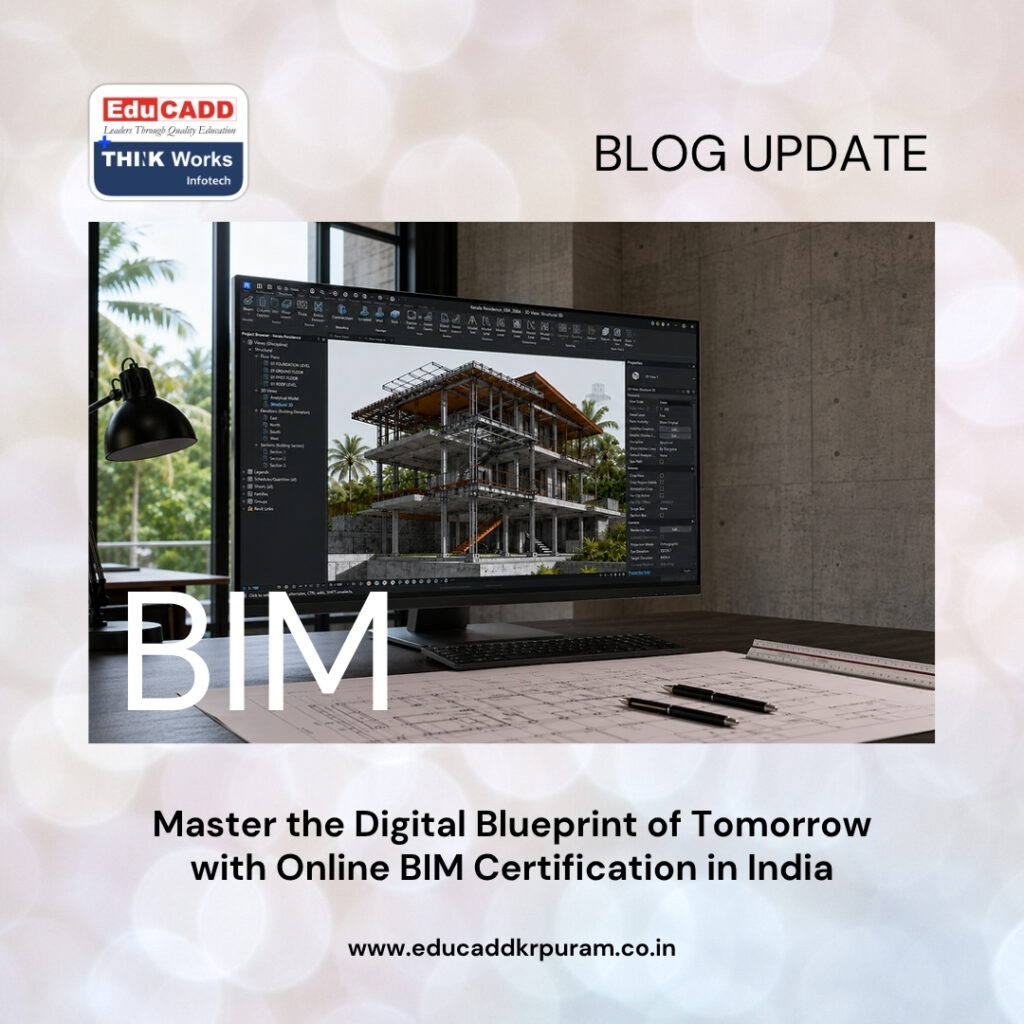
Online BIM Certification India
Step Into the New Era of Digital Construction
BIM has changed the way professionals approach building projects. Instead of treating drawings as separate files, BIM creates a connected digital representation of a project. Professionals can visualize building components, study relationships between different systems, and make informed changes during the design process. This approach can improve coordination before construction begins. As projects become more complex, such digital methods can help teams manage information more efficiently. Therefore, learning BIM can give aspiring professionals an important foundation for working within modern architecture, engineering, and construction environments.
The influence of BIM extends beyond three-dimensional modeling. It can support documentation, coordination, planning, quantity information, visualization, and project communication. Different professionals can contribute information while maintaining a clearer view of the overall project. This connected approach can reduce misunderstandings between disciplines. It can also make design changes easier to evaluate before they create costly issues on-site. Consequently, BIM knowledge is becoming an increasingly useful skill for professionals who want to stay aligned with the changing expectations of the construction industry.
Discover What Makes BIM Certification Valuable
A BIM certification program can help learners develop structured knowledge instead of learning software features randomly. A well-planned curriculum can introduce fundamental BIM concepts before progressing toward practical modeling and coordination tasks. Students can learn how digital building information is organized and how different disciplines contribute to a shared project environment. This structured approach makes it easier to understand the purpose behind BIM processes. Rather than simply learning commands, students can begin to understand how those commands support professional project requirements.
Certification can also provide learners with a defined learning pathway. Students know what topics they need to study and can track their progress through assignments and projects. For working professionals, structured training can help identify gaps in existing technical knowledge. An Online BIM Certification India can therefore support both beginners and experienced professionals who want to expand their digital capabilities. However, the real value comes when certification is combined with practical application, regular practice, and a willingness to continue learning.
Build Practical BIM Skills Through Project-Based Learning
Practical training is essential when learning a technical discipline such as BIM. Watching demonstrations alone may not provide enough experience to handle real project situations. Learners should have opportunities to create models, organize components, develop drawings, review project information, and solve common coordination challenges. Project-based exercises can turn theoretical concepts into practical skills. They can also help students become more comfortable with professional software and digital workflows.
Realistic assignments can further improve problem-solving ability. Learners may encounter incorrect elements, coordination issues, documentation requirements, or design changes during their projects. Working through these challenges can teach them how to approach problems systematically. This experience can become especially useful when they enter professional environments. A strong BIM program should therefore balance explanations with hands-on activities. With repeated practice, students can gradually move from basic software familiarity toward greater technical confidence.
Learn BIM Without Limiting Your Location
One of the biggest advantages of online education is accessibility. Learners do not necessarily need to relocate or travel every day to access specialized technical training. They can participate in classes from a suitable location and organize their learning around existing commitments. This flexibility can benefit students, working professionals, and individuals planning a career transition. An Online BIM Certification India can make specialized education more accessible to learners across different cities and regions.
Online learning can also provide useful opportunities for revision. Digital resources, recorded sessions, assignments, and course materials can allow learners to revisit challenging topics. This becomes valuable when students need additional practice with complex modeling or coordination concepts. However, flexibility works best when learners maintain a consistent study routine. Regular practice is important because BIM skills develop through application. Therefore, students should combine the convenience of online education with disciplined learning habits.
Explore BIM Applications Across Multiple Disciplines
BIM is not restricted to a single profession. Architects can use it to develop detailed building models and produce coordinated documentation. Structural professionals can represent structural systems and work alongside architectural information. MEP specialists can model building services and examine relationships between different systems. Construction teams can use model information for coordination and planning. This wide application makes BIM relevant to professionals with different educational backgrounds.
Understanding multidisciplinary workflows can also improve professional collaboration. Construction projects often require several teams to work together while making frequent changes. A modification in one discipline may affect another part of the project. BIM can provide a clearer environment for identifying these relationships. Learners who understand how architectural, structural, and MEP information connects can contribute more effectively to coordinated projects. This broader awareness can become a valuable advantage as professionals progress in their careers.
Strengthen Your Knowledge of Professional BIM Tools
Software plays an important role in BIM workflows. Different applications support different requirements, including modeling, documentation, visualization, structural design, MEP services, coordination, and project management. The software taught in a training program should ideally match the learner’s intended career direction. Before enrolling, students should therefore examine the curriculum and understand which tools they will practice. Choosing relevant software can help learners develop skills that support their professional objectives.
At the same time, effective BIM education should not focus entirely on software commands. Professionals need to understand the workflow behind the technology. They should know why a particular modeling approach is used and how the resulting information supports the project. Trainers can make this process easier by connecting software functions with realistic examples. When learners understand both the technology and its purpose, they can apply their knowledge more effectively to professional situations.
Turn Your Training Into a Powerful Portfolio
A portfolio can provide tangible evidence of technical ability. Instead of relying only on a certificate, learners can showcase projects that demonstrate what they have actually created. BIM students can include selected models, drawings, documentation, coordination examples, and visualization work. These projects can help potential employers understand a candidate’s strengths. A carefully presented portfolio can also give learners greater confidence when discussing their skills during interviews.
Quality should remain the main priority when developing a portfolio. Students do not need to include every classroom exercise. Instead, they can select projects that demonstrate different aspects of their abilities. Each project can briefly explain the objective, software used, responsibilities handled, and final outcome. This approach creates a more professional presentation. By developing a portfolio alongside an Online BIM Certification India, learners can connect their certification with practical evidence of their capabilities.
Prepare for Growing BIM Career Opportunities
BIM expertise can support several career directions within the construction industry. Depending on qualifications and specialization, learners may explore opportunities as BIM Modelers, BIM Coordinators, BIM Engineers, Architectural BIM Specialists, Structural BIM Professionals, or MEP BIM Specialists. Each position may require different technical abilities and levels of experience. Certification can provide foundational knowledge, while project exposure can help learners move toward greater responsibility.
Career progression also depends on skills beyond software. Professionals need to communicate clearly, interpret project requirements, manage information, identify issues, and collaborate with other team members. Employers often value individuals who can apply technical knowledge to solve practical problems. Therefore, learners should use their training period to develop both technical and professional abilities. This balanced preparation can make them better equipped to approach future opportunities with confidence.
Improve Coordination Before Problems Reach the Site
Coordination is one of the most important areas where BIM can create value. Construction projects contain many interconnected elements. If architectural, structural, and MEP components are not coordinated properly, conflicts can appear during construction. These issues may cause delays, additional costs, or rework. BIM allows teams to examine digital models and identify potential conflicts earlier in the project lifecycle.
Learning coordination processes can therefore strengthen a professional’s problem-solving skills. Students can practice reviewing models, identifying inconsistencies, and understanding how changes affect different disciplines. This experience can help them develop a more systematic approach to project challenges. As their knowledge improves, they can become more comfortable participating in multidisciplinary discussions. Such capabilities can be particularly valuable for professionals who aim to progress into BIM coordination and management roles.
Balance Professional Responsibilities With Online Learning
Many professionals want to upgrade their technical skills but cannot leave their existing jobs to attend full-time programs. Online BIM education can provide greater flexibility in such situations. Learners can attend remote sessions and complete practice work around their professional schedules. This can make it easier to pursue career development without completely disrupting existing responsibilities.
Students can also benefit by learning BIM alongside their academic studies. Early exposure to professional tools can help them understand how classroom concepts translate into actual project workflows. It can also give them time to build a portfolio before entering the job market. However, learners should maintain a regular schedule and dedicate enough time to practice. Consistency can make online education much more effective and can help students retain complex technical concepts.
Choose Training Based on Skills, Not Just Certification
Selecting a BIM program requires more than checking whether it provides a certificate. Learners should examine the course structure, practical assignments, software modules, project exposure, trainer expertise, and learner support. A useful program should provide a logical progression from fundamentals to more advanced applications. It should also give students opportunities to ask questions and receive feedback on their work.
The right course should align with individual career goals. Someone interested in architectural BIM may need a different learning pathway from a professional targeting structural or MEP specialization. Students should identify their intended career direction before choosing a program. They should also consider whether the course offers sufficient practical exposure. By evaluating these factors carefully, learners can select an Online BIM Certification India that provides meaningful technical development rather than focusing only on certification.
Keep Your BIM Knowledge Ready for Future Technologies
Construction technology will continue to evolve. BIM itself is becoming connected with broader digital processes, including advanced visualization, data-driven decision-making, automation, cloud collaboration, and other emerging technologies. Professionals who develop a strong BIM foundation can be better prepared to adapt to these developments. Learning should therefore continue even after completing a certification program.
Continuous improvement can help professionals remain competitive. They can explore advanced workflows, practice new software features, study industry standards, and work on increasingly complex projects. They can also improve communication and project management skills. A certification can open the door to BIM learning, but long-term growth requires curiosity and consistent development. Professionals who continue upgrading their knowledge can respond more confidently to changing industry expectations.
Transform BIM Learning Into a Future-Ready Career
BIM education can provide much more than knowledge of digital modeling. It can introduce learners to a different way of thinking about construction projects. Instead of viewing drawings and systems separately, professionals can understand how information connects across different project stages. This perspective can improve coordination, communication, and decision-making. It can also help learners understand why digital construction workflows are becoming increasingly important.
To gain maximum value from training, students should remain actively involved throughout the learning process. They should complete projects, practice software regularly, review their mistakes, and seek feedback from trainers. They should also maintain a professional portfolio that reflects their strongest work. An Online BIM Certification India can provide the structure, but individual effort determines how far the learner progresses. Combining structured education with practical experience can create a strong foundation for long-term career development.
Take Your First Step Toward Digital Construction Excellence
The growing use of BIM is reshaping professional expectations throughout the architecture, engineering, and construction sectors. Companies need people who can understand digital models, coordinate information, communicate across disciplines, and contribute to technology-driven project workflows. Developing these skills can help students and professionals prepare for a changing employment landscape. Online education provides an accessible way to begin this journey while offering flexibility for different learning needs.
Choosing an Online BIM Certification India can be a strategic step for anyone interested in developing construction technology skills. However, learners should look beyond the certificate and focus on practical knowledge, project experience, software proficiency, and portfolio development. With regular practice and continuous improvement, BIM skills can become a valuable professional asset. Whether you are starting your career or upgrading your existing expertise, learning BIM today can help you move toward a more digitally capable and future-ready professional path.
Conclusion
BIM is becoming an important part of modern construction because it brings design, information, coordination, and collaboration into a more connected digital environment. Its applications extend across architecture, structural engineering, MEP services, construction, and project management. As organizations continue adopting digital workflows, professionals with practical BIM knowledge can position themselves for evolving opportunities.
An Online BIM Certification India can offer a flexible starting point for developing these capabilities. The strongest results come when certification is supported by practical projects, portfolio development, continuous learning, and genuine interest in technology. By building these skills today, learners can prepare themselves to contribute confidently to the digital construction projects of tomorrow.

