
From Circuits to Smart Systems: The Ultimate PLC SCADA Course Journey in Bangalore
Automation has become the driving force behind modern industries, reshaping how processes are designed, monitored, and controlled. From manufacturing units to energy plants, organizations are increasingly relying on intelligent systems to achieve precision, safety, and efficiency. In this evolving landscape, PLC (Programmable Logic Controller) and SCADA (Supervisory Control and Data Acquisition) technologies have emerged as essential tools for automation. For individuals aiming to build a strong and future-ready career, enrolling in a PLC SCADA Course Bangalore offers a strategic advantage.
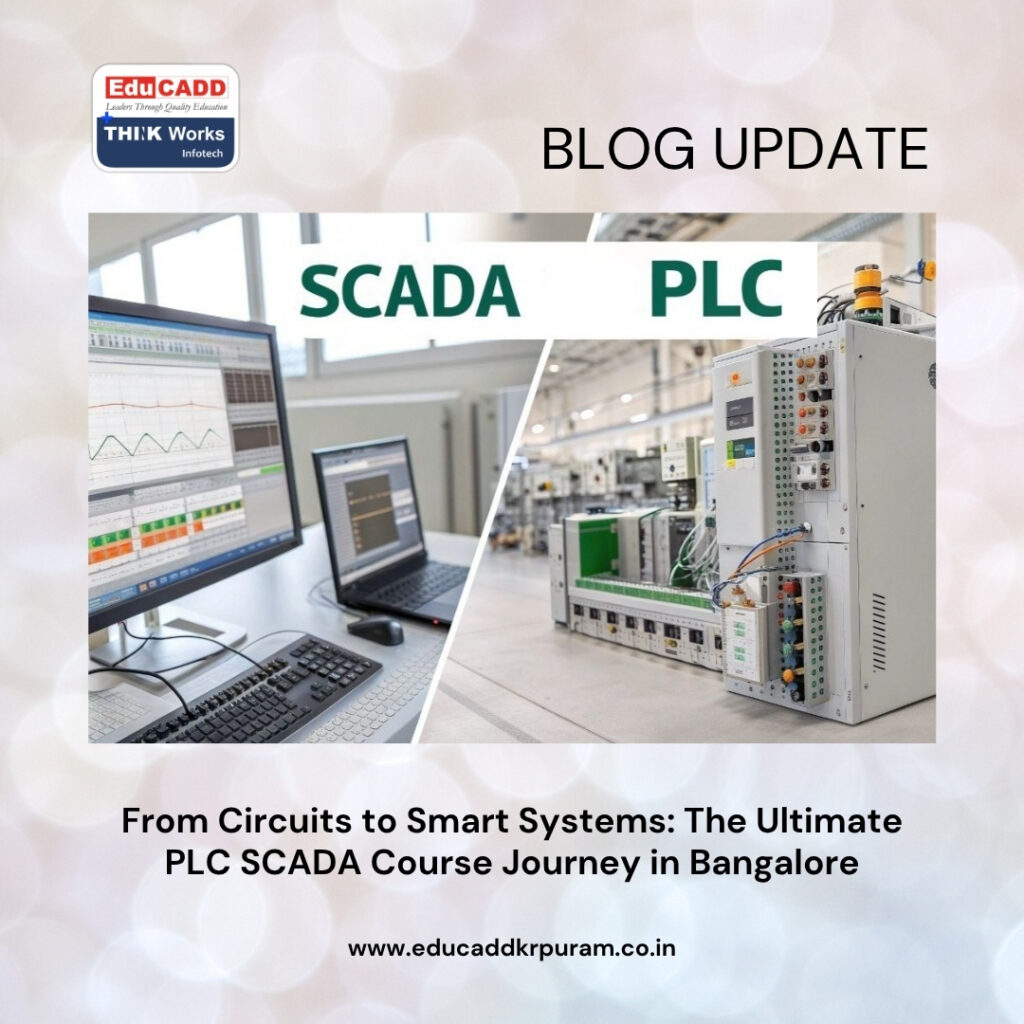
PLC SCADA Course Bangalore
Bangalore is widely recognized for its technological innovation and educational excellence. The city provides a perfect ecosystem where aspiring professionals can gain both theoretical knowledge and practical exposure. With access to advanced training institutes, experienced mentors, and industry connections, learners can develop the skills required to thrive in the automation sector. This blog presents a detailed exploration of PLC SCADA Course Bangalore, covering every important aspect to guide your career decision.
The Growing Importance of Automation in Industries
Industries across the globe are undergoing a transformation driven by automation and digital technologies. Companies are constantly seeking ways to improve productivity while reducing operational costs. Automation systems enable businesses to achieve these goals by minimizing human intervention and ensuring consistent performance.
PLC and SCADA systems are at the core of this transformation. They allow industries to control complex processes with accuracy and reliability. As a result, professionals with expertise in these technologies are highly valued. The increasing adoption of smart manufacturing practices has further amplified the demand for skilled automation engineers.
What Makes PLC a Backbone of Automation?
A Programmable Logic Controller is a robust industrial computer designed to control machines and processes. It operates by continuously scanning inputs, executing logic, and updating outputs. This cycle ensures that industrial operations run smoothly and efficiently.
PLCs are known for their durability and adaptability. They can function in harsh environments where traditional computers might fail. Additionally, PLCs can be programmed and reprogrammed easily, making them suitable for a wide range of applications. Their reliability has made them a fundamental component of automation systems in various industries.
Understanding SCADA and Its Real-World Applications
SCADA systems play a crucial role in monitoring and controlling industrial operations. They gather real-time data from PLCs and other devices, providing operators with valuable insights. This data is displayed through intuitive interfaces, allowing quick decision-making.
SCADA is widely used in sectors such as power generation, water management, and oil and gas. It helps in identifying issues before they escalate, reducing downtime and maintenance costs. With the integration of advanced technologies, SCADA systems are becoming more efficient and user-friendly.
Why Bangalore is a Preferred Hub for PLC SCADA Training
Bangalore has established itself as a leading center for education and innovation. The city is home to numerous industries and training institutes that offer high-quality PLC SCADA courses. This makes it an ideal destination for aspiring automation professionals.
Students benefit from exposure to real-time industrial environments and cutting-edge technologies. The presence of multinational companies also creates opportunities for internships and placements. This combination of academic excellence and industry exposure makes Bangalore a top choice for automation training.
Essential Elements of a Comprehensive PLC SCADA Course
A well-designed PLC SCADA course provides a balanced mix of theory and practical training. It covers fundamental concepts such as PLC architecture, programming languages, and system design. These topics form the foundation for understanding automation systems.
The course also includes advanced topics like SCADA configuration, data acquisition, and system integration. This ensures that learners are equipped to handle real-world challenges. A strong emphasis on troubleshooting and maintenance further enhances the learning experience.
The Role of Practical Training in Skill Development
Hands-on experience is a critical component of any technical course. In a PLC SCADA program, practical training allows students to work with real equipment and software. This helps them understand how automation systems operate in real-life scenarios.
Training institutes in Bangalore provide well-equipped labs where students can practice programming and system configuration. This exposure not only builds technical skills but also boosts confidence. As a result, learners are better prepared to meet industry expectations.
Curriculum Highlights and Learning Outcomes
The curriculum of a PLC SCADA course is designed to provide comprehensive knowledge of automation technologies. It includes topics such as ladder logic programming, industrial communication protocols, and system diagnostics. These subjects are essential for understanding complex automation systems.
By completing the course, students gain the ability to design, implement, and maintain automated processes. They also develop problem-solving skills and technical expertise. These competencies are highly valued by employers, making graduates job-ready.
Key Benefits of Pursuing a PLC SCADA Course
Enrolling in a PLC SCADA course offers numerous advantages for career growth. The demand for automation professionals continues to rise, creating a wide range of opportunities in different industries.
- Access to high-demand technical skills
- Opportunities to work on innovative industrial projects
In addition to job opportunities, the course provides a platform for continuous learning. Professionals can upgrade their skills and stay relevant in a rapidly changing industry.
Career Paths After Completing PLC SCADA Training
A PLC SCADA course opens up various career options in the automation sector. Graduates can work as PLC programmers, SCADA engineers, automation specialists, or control system engineers. These roles involve designing and managing automated systems.
Industries such as manufacturing, energy, and infrastructure actively recruit skilled professionals. With experience, individuals can progress to senior roles and leadership positions. This career path offers both stability and growth.
Salary Expectations in the Automation Field
The automation industry offers attractive salary packages for skilled professionals. Entry-level candidates can expect competitive salaries, which increase significantly with experience. Specialized skills and certifications further enhance earning potential.
Experienced professionals are often rewarded with higher compensation due to their expertise. Global opportunities also provide lucrative salary packages, making this field highly appealing for career growth.
How to Select the Best PLC SCADA Training Institute
Choosing the right training institute is crucial for achieving your career goals. A good institute should offer a well-structured curriculum, experienced faculty, and modern facilities. These factors play a significant role in the learning process.
It is also important to consider placement support and industry connections. Institutes that provide real-time project experience and job assistance can help students secure better opportunities. Careful evaluation of these aspects ensures a successful learning journey.
Importance of Certification in Automation Careers
Certification adds significant value to your professional profile. It serves as proof of your skills and knowledge in PLC and SCADA technologies. Employers often prefer candidates with recognized certifications.
These certifications enhance credibility and increase job prospects. They also demonstrate your commitment to continuous learning. Staying updated with industry trends and earning advanced certifications can further boost career growth.
Future Opportunities in PLC SCADA Technology
The future of PLC SCADA technology is closely linked to advancements in smart manufacturing and Industry 4.0. Technologies such as IoT, artificial intelligence, and cloud computing are transforming automation systems.
These innovations are creating new opportunities for professionals in the field. As industries continue to adopt advanced technologies, the demand for skilled automation engineers will increase. Staying updated with these trends is essential for long-term success.
Conclusion
A PLC SCADA Course Bangalore provides a strong foundation for a successful career in the automation industry. With its focus on practical training, industry exposure, and skill development, the course prepares learners for real-world challenges. The growing demand for automation professionals ensures a wide range of career opportunities and attractive salary packages.
By selecting the right training institute and continuously upgrading your skills, you can achieve long-term success in this field. Whether you are a student or a working professional, investing in a PLC SCADA course is a step toward a rewarding and future-ready career in automation.

