
Design the Homes of Tomorrow: Begin Your Journey with a Residential Interior Design Course Near Me
A well-designed home can improve comfort, organisation, functionality, and everyday living. It can also reflect the personality and lifestyle of the people who live there. As modern homeowners become more interested in personalised interiors, the demand for skilled residential interior designers continues to grow. This creates an exciting opportunity for students and creative professionals who want to build a career in the design industry. Searching for a Residential Interior Design Course Near Me can be an excellent starting point for developing the right combination of creative and technical skills.
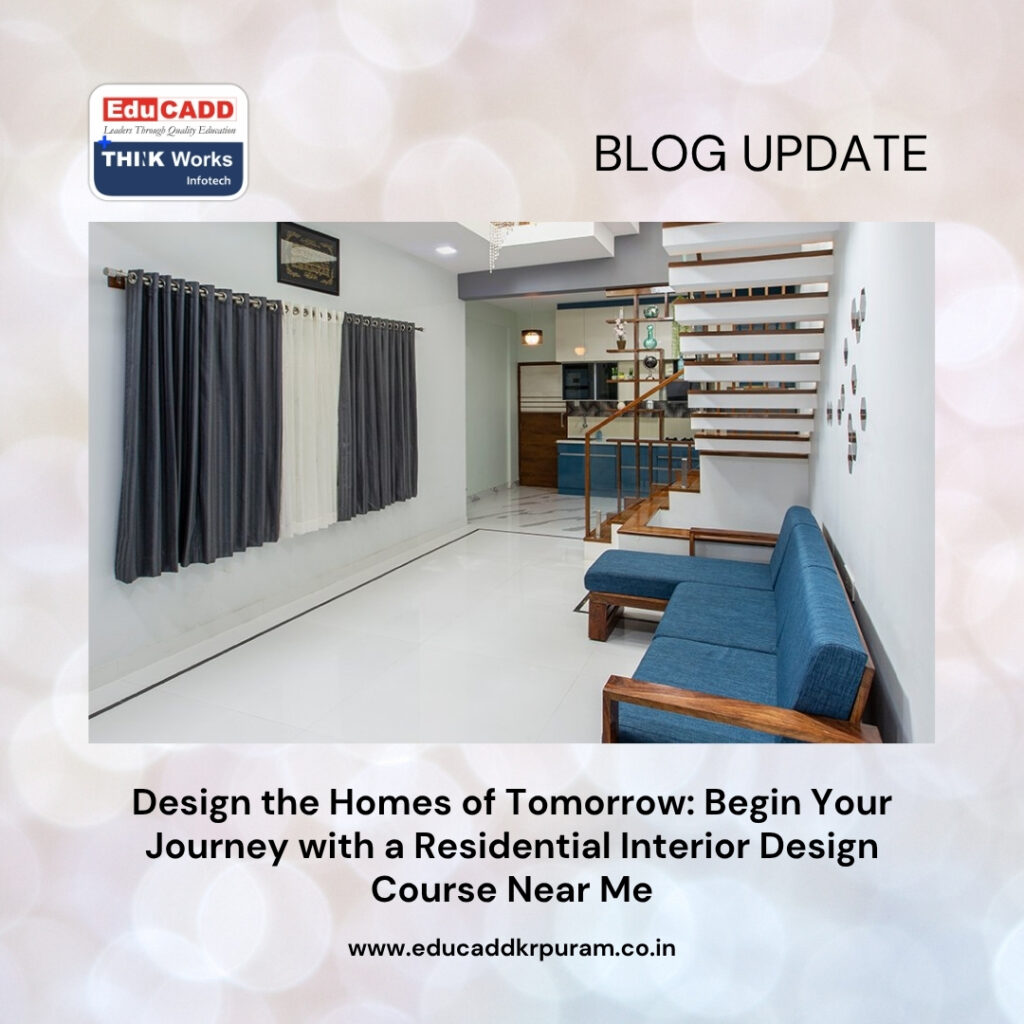
Residential Interior Design Course
Professional training can introduce learners to space planning, furniture arrangement, colour selection, materials, lighting, drafting, digital design tools, and client requirements. More importantly, structured learning allows students to practise these skills through realistic projects. With consistent practice and professional guidance, an interest in beautiful spaces can gradually become a practical and rewarding career.
Discover What Makes Residential Interior Design Different
Residential interior design focuses on creating spaces that support people’s everyday lives. Unlike purely decorative work, it requires designers to consider comfort, movement, storage, safety, functionality, and personal preferences. A successful residential designer understands how families use different rooms and develops solutions around their routines. For example, a family kitchen may require generous storage and efficient circulation, while a bedroom may need a peaceful atmosphere and appropriate furniture placement. Therefore, interior design involves both creative thinking and practical planning.
During professional training, students can explore design principles such as balance, proportion, harmony, contrast, scale, and rhythm. These concepts help learners understand how individual elements work together. As a result, students can move beyond simply decorating rooms and begin developing complete design concepts that respond to real residential requirements.
Learn to Plan Every Inch of Available Space
Good space planning can make a major difference in how a home looks and functions. Designers need to understand the dimensions of a property before deciding where furniture, storage, fixtures, and other elements should be positioned. A professional Residential Interior Design Course Near Me can teach students how to analyse floor plans and develop practical layouts. They can learn to identify circulation paths, functional zones, openings, and activity areas. This knowledge becomes especially important when designing compact apartments where available space is limited. However, larger homes also require careful planning to prevent empty or disconnected areas. By studying different layouts, students can learn how to create interiors that feel organised and comfortable. They can also experiment with furniture arrangements and zoning techniques. Over time, these exercises strengthen their ability to make intelligent use of every part of a residential property.
Build Confidence with Professional Design Software
Digital technology has transformed the way interior designers create and communicate their ideas. Today, professionals use software for drafting, modelling, rendering, documentation, and presentation. Therefore, software training should be an important part of any professional interior design program. Students can learn how to convert measurements and concepts into accurate digital drawings. They can also create three-dimensional representations that help clients visualise the proposed interior. This can make design presentations more engaging and easier to understand.
Furthermore, digital tools can help designers modify layouts quickly when clients request changes. Regular practice is essential because software proficiency develops through repeated use. By combining creative knowledge with digital skills, students can become better prepared for contemporary design workplaces. These abilities can also strengthen portfolios and improve employment opportunities after completing their training.
Understand the Psychology of Colours and Textures
Colour has a powerful influence on the atmosphere of a residential space. Different shades can make rooms appear warmer, brighter, calmer, larger, or more dramatic. However, successful colour selection requires more than choosing attractive combinations. Designers must consider room size, natural light, furniture, materials, client preferences, and the desired mood. Professional training can introduce students to colour relationships, palettes, contrasts, and coordinated schemes.
Along with colour, textures add depth and character to interiors. Wood, stone, glass, metal, fabric, leather, laminates, and textured wall finishes can create different visual experiences. Students can learn how to combine these elements without making a room appear visually overwhelming. Consequently, understanding colours and textures enables designers to create interiors that feel balanced, personalised, and visually appealing.
Master the Fundamentals of Residential Lighting
Lighting is often one of the most underestimated aspects of interior design. Yet it can influence the mood, usability, and visual quality of almost every room. A professional course can help students understand different lighting categories, including ambient, task, accent, and decorative lighting. They can also learn how natural daylight affects the appearance of interior surfaces and colours. For example, a reading area may need focused lighting, while a dining area may benefit from carefully positioned decorative fixtures.
Bedrooms often require flexible lighting that supports both relaxation and daily activities. Moreover, designers need to consider fixture placement, brightness, energy efficiency, and overall coordination. Learning these principles helps students create more comfortable spaces. When lighting is planned alongside furniture, colour, and materials, the final interior can achieve a much more cohesive appearance.
Turn Classroom Knowledge into Real Design Projects
Practical assignments are essential for developing professional confidence. Students may understand design principles theoretically, but applying those principles to a complete project provides a different learning experience. A quality Residential Interior Design Course Near Me can provide assignments based on realistic residential scenarios. Students might be asked to develop concepts for bedrooms, kitchens, living rooms, dining areas, home offices, or complete apartments. Each project can introduce unique challenges involving space, budget, functionality, and aesthetics.
Through these exercises, students learn how different design elements must work together. They also gain experience in researching materials, preparing layouts, developing concepts, and presenting their ideas. Furthermore, project-based learning encourages students to identify problems and find creative solutions. These experiences can become valuable evidence of their abilities when they begin applying for professional opportunities.
Learn How to Translate Client Ideas into Designs
Interior designers must understand that every client has different expectations. Some homeowners may prefer minimalist interiors, while others may want traditional, luxurious, contemporary, or eclectic spaces. A designer’s responsibility is to understand these preferences and translate them into practical concepts. During professional training, students can learn the importance of client discussions and requirement gathering. They can practise identifying lifestyle needs, functional priorities, aesthetic preferences, and budget limitations. Effective communication also helps designers explain their recommendations clearly.
When clients request changes, designers need to respond professionally while protecting the functionality of the design. Therefore, client management becomes an important skill alongside technical knowledge. Learning how to listen, question, explain, and present ideas can help aspiring designers establish stronger professional relationships.
Develop a Portfolio That Opens Career Opportunities
A portfolio is an important tool for anyone entering the interior design industry. It allows employers and potential clients to see how a designer approaches different projects. During a Residential Interior Design Course Near Me, learners can develop portfolio pieces from their practical assignments. These can include floor plans, furniture layouts, mood boards, colour schemes, material selections, elevations, three-dimensional views, and complete room concepts. A strong portfolio should demonstrate variety while maintaining clear presentation. It should also explain the thinking behind each project.
For instance, students can show how they solved a space limitation or created a specific atmosphere through colour and lighting. As learners complete more assignments, they can select their strongest work and organise it professionally. This portfolio can support interviews, internships, freelance proposals, and future business opportunities.
Explore Multiple Career Paths in Interior Design
Interior design training can lead to several professional opportunities. Graduates may work as junior interior designers, design assistants, CAD professionals, 3D visualisers, space planners, or residential design consultants. They can also explore opportunities with architecture practices, construction companies, furniture businesses, real estate organisations, and interior design studios. With experience, some professionals choose to work independently and build their own client base.
However, career growth depends on more than completing a course. Designers need to develop strong communication, technical accuracy, software skills, creativity, and project experience. They should also remain updated with changing materials, technologies, and design preferences. Therefore, a course should be viewed as a foundation for continuous development. The stronger the skill set and portfolio, the more confidently professionals can explore different career directions.
Learn to Design Within Realistic Budgets
Creative ideas must often fit within financial limitations. Residential clients usually have a specific budget, and designers need to create suitable solutions without compromising essential requirements. Learning basic budgeting and material planning can help students make practical recommendations. They can compare materials, consider durability, evaluate alternatives, and prioritise important design elements. For example, a designer may use premium finishes selectively instead of applying them throughout the entire home. Similarly, smart furniture choices can provide functionality without excessive costs.
This ability to balance visual appeal, quality, functionality, and affordability is valuable in professional projects. Furthermore, transparent budget discussions can help build client trust. When students understand the financial side of design, they become better prepared to handle real projects and make decisions that are both creative and commercially practical.
Strengthen Technical Drawing and Project Documentation
Interior designers need strong documentation skills to communicate their ideas during project execution. Technical drawings provide important information about dimensions, furniture placement, elevations, ceiling designs, finishes, and other details. Students should therefore learn how to create clear and accurate drawings. A professional training program can introduce them to different types of interior documentation and help them understand how each drawing supports implementation. Accuracy matters because contractors and other professionals depend on these details while executing the design.
In addition, well-organised documentation can reduce confusion and improve coordination between different project teams. Students who practise technical drawing regularly can develop greater precision and confidence. This technical foundation complements their creative abilities and prepares them for the practical demands of residential design work.
Explore Sustainable and Technology-Driven Home Design
Residential interiors are increasingly influenced by sustainability and smart technology. Homeowners are becoming more conscious of energy use, material durability, natural lighting, ventilation, and efficient space utilisation. At the same time, smart lighting, automated systems, multifunctional furniture, and connected home features are becoming more common. Interior designers need to understand these developments to create relevant solutions. A modern Residential Interior Design Course Near Me can help students explore these emerging concepts alongside traditional design principles. Sustainable design does not always mean expensive materials or complex technology.
Sometimes, simple planning decisions can improve natural light, ventilation, storage, and energy efficiency. Therefore, students should learn to evaluate technology and sustainability according to the needs of each project. This approach helps them create interiors that are contemporary, responsible, and practical.
Select Training That Matches Your Professional Ambitions
Choosing the right interior design course requires careful consideration. Location is useful, but it should not be the only deciding factor. Students should examine the curriculum, practical training, software exposure, project assignments, portfolio guidance, faculty expertise, and overall learning approach. A strong course should encourage students to practise their skills instead of relying only on theoretical lessons. It should also provide opportunities to work through realistic design problems. Furthermore, learners should consider their own career goals before enrolling.
Beginners may need comprehensive foundational training, while experienced learners may seek specialised skills. Comparing these factors can help students choose a program that supports their long-term ambitions. The right training environment can provide valuable guidance, encourage experimentation, and help learners gradually develop professional confidence.
Conclusion
A career in residential interior design offers an exciting combination of creativity, technology, planning, and problem-solving. For anyone searching for a Residential Interior Design Course Near Me, professional training can provide the structured foundation needed to enter this dynamic field. Students can learn space planning, colour coordination, material selection, lighting, technical drawing, digital tools, client communication, budgeting, and presentation techniques.
However, learning does not stop after completing a course. Successful designers continue observing spaces, studying new trends, practising software, experimenting with concepts, and improving their portfolios. With the right education and consistent effort, creative ideas can become professional design solutions. Whether your goal is to work with a design company, join an architectural practice, explore freelance opportunities, or eventually establish your own business, developing strong fundamentals is the first step. Your journey can begin with a course that helps transform your passion for beautiful homes into practical professional expertise

