
Mastering Precision: Navigating Accuracy Challenges in Reverse Engineering for Better Engineering Outcomes
Reverse engineering has transformed the way industries analyze, replicate, improve, and modernize existing products and systems. From manufacturing and aerospace to automotive, healthcare, and industrial design, organizations rely on reverse engineering to recreate digital models from physical objects and gain valuable insights into product functionality. However, one issue continues to influence the effectiveness of these projects: accuracy. The subject of Reverse Engineering Accuracy Challenges is becoming increasingly important because even the smallest discrepancy can affect design quality, production efficiency, and operational performance.
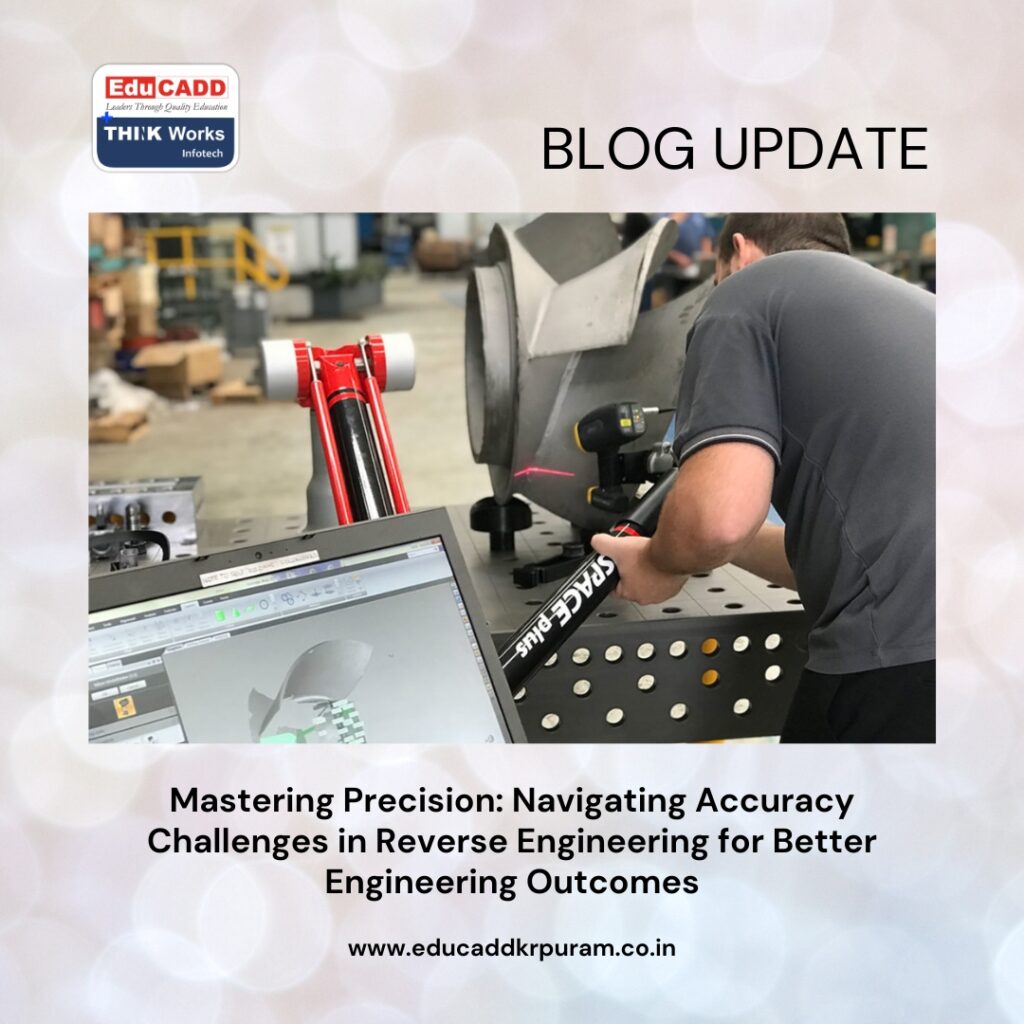
Reverse Engineering Accuracy Challenges
A component that deviates from its original dimensions may fail to fit correctly, while an inaccurate digital model can create costly redesigns and delays. Therefore, understanding the factors that influence accuracy and implementing strategies to minimize errors are essential for organizations seeking reliable and precise reverse engineering results.
The Growing Importance of Reverse Engineering in Modern Industries
Reverse Engineering Accuracy Challenges has evolved far beyond simply copying existing products. Today, it serves as a powerful tool for innovation, product enhancement, maintenance, and digital transformation. Companies use reverse engineering to recover lost design information, create replacement components, analyze competitor products, and improve existing systems. This approach is especially valuable when original design documents are unavailable or outdated.
As industries continue adopting advanced manufacturing technologies, the need for accurate digital representations has increased significantly. Engineers depend on reverse-engineered models to support product development, simulation, testing, and production planning. Because these models often become the foundation for future engineering decisions, maintaining high levels of accuracy throughout the process is critical. A precise model enables informed decision-making, whereas inaccuracies can introduce complications that affect multiple stages of a project.
Why Precision Is the Cornerstone of Successful Reverse Engineering
Accuracy forms the backbone of every reverse engineering project. The primary objective is to create a digital model that closely reflects the original object in terms of dimensions, geometry, and functionality. When precision is achieved, organizations can confidently use the reconstructed model for manufacturing, modification, or analysis.
In contrast, inaccurate models can create serious problems. Components may fail to fit together correctly, simulations may produce misleading results, and manufacturing processes may require costly adjustments. In industries where safety is paramount, such as aerospace and healthcare, even minor dimensional errors can have significant consequences.
Furthermore, accuracy contributes directly to project efficiency. Reliable data reduces the need for repeated measurements, redesign efforts, and additional quality inspections. Consequently, organizations that prioritize precision often experience shorter project timelines and improved resource utilization.
Data Acquisition Challenges During the Scanning Process
The reverse engineering workflow begins with data collection, making this stage one of the most critical for achieving accurate outcomes. Engineers typically use technologies such as laser scanning, structured-light scanning, photogrammetry, and coordinate measuring machines to capture physical dimensions and surface details.
Although these tools offer remarkable capabilities, various factors can compromise data quality. Environmental conditions such as temperature fluctuations, vibrations, poor lighting, and airborne particles can interfere with measurements. Additionally, improper scanner calibration or incorrect positioning may introduce errors that affect the entire project.
Capturing complete and accurate information becomes even more challenging when dealing with large-scale structures or highly detailed components. Missing data points often require additional scanning sessions or manual corrections. Therefore, thorough preparation and proper equipment setup play an essential role in reducing measurement inaccuracies.
Complex Shapes and Hidden Features Increase Difficulty
Many modern products contain intricate geometries that challenge even the most advanced scanning technologies. Components often include deep cavities, internal passages, undercuts, and detailed surface features that are difficult to access and measure accurately.
When scanners cannot capture these areas completely, data gaps appear within the digital model. Engineers must then estimate missing information or use additional techniques to reconstruct hidden features. While these methods can be effective, they introduce opportunities for error and uncertainty.
The complexity of modern engineering designs also increases data volume. Large point clouds and detailed meshes require extensive processing and management. Without effective workflows, important geometric details may be lost during data conversion. As a result, organizations often combine multiple scanning methods to achieve comprehensive coverage and improve model accuracy.
Material Characteristics Can Affect Measurement Quality
The materials being scanned significantly influence the accuracy of reverse engineering projects. Different materials interact with scanning equipment in different ways, often creating unique measurement challenges.
Highly reflective surfaces can scatter laser beams and create distorted data. Transparent materials may allow scanning light to pass through them, preventing accurate surface detection. Dark-colored surfaces sometimes absorb light, reducing the effectiveness of optical scanning technologies.
Several material-related factors commonly impact accuracy:
- Reflective and transparent materials often generate incomplete or noisy scan results.
- Flexible materials may deform during handling, altering measured dimensions.
To overcome these challenges, engineers frequently apply temporary coatings or use specialized scanning techniques designed for difficult materials. Selecting the right approach helps improve measurement consistency and overall project reliability.
Human Expertise and Interpretation Challenges
Despite advancements in automation, human involvement remains essential throughout the reverse engineering process. Engineers must analyze collected data, interpret design intent, and create meaningful digital representations of physical objects.
However, human interpretation introduces variability. Different professionals may draw different conclusions from the same dataset, especially when information is incomplete or ambiguous. Experience levels, technical knowledge, and assumptions can all influence modeling decisions.
This challenge becomes particularly significant when reverse engineering legacy components or worn parts. In such cases, engineers often need to determine how a product originally looked before years of usage altered its geometry. Organizations can reduce interpretation errors by implementing standardized procedures, encouraging collaboration, and conducting peer reviews to verify critical decisions.
Software Processing and Digital Reconstruction Issues
After scanning, engineers use specialized software to process collected data and generate three-dimensional models. While these tools streamline the reverse engineering workflow, they can also introduce accuracy-related challenges.
Raw scan data typically requires cleaning, filtering, and conversion before it becomes a usable model. During these processes, software may smooth surfaces, remove irregularities, or simplify geometry. Although these adjustments improve usability, they can also eliminate important design details.
Furthermore, transferring data between different software platforms sometimes causes compatibility issues. Information may be lost or altered during file conversions, reducing model accuracy. To minimize these risks, engineers should validate processed models against original scan data and perform regular quality checks throughout the reconstruction process.
The Challenge of Reverse Engineering Worn or Damaged Components
Many Reverse Engineering Accuracy Challenges focus on aging, damaged, or heavily used components. These situations present unique challenges because the object being measured may no longer reflect its original design.
Wear, corrosion, fractures, and material degradation can significantly alter dimensions and surface characteristics. Consequently, captured data often represents the current condition of the component rather than its intended geometry.
Engineers must carefully distinguish between original features and damage-related changes. This process often requires comparing multiple reference components, studying historical records, and applying engineering judgment. Accurate reconstruction depends on understanding how the component was originally designed and manufactured before deterioration occurred.
Legacy Systems Often Lack Reliable Documentation
Organizations frequently use reverse engineering to modernize legacy systems and extend the lifespan of aging equipment. Unfortunately, older systems often suffer from incomplete or missing documentation, making accurate reconstruction more difficult.
Original design drawings may have been lost, while available records may no longer reflect current configurations. Components may also have undergone modifications during maintenance activities without proper documentation.
Common challenges associated with legacy systems include:
- Missing technical specifications and engineering drawings.
- Undocumented modifications made throughout the product lifecycle.
To overcome these obstacles, engineers combine modern measurement technologies with historical research and operational knowledge. This integrated approach helps create more accurate representations of legacy assets while preserving critical design information.
Calibration and Equipment Reliability Are Essential
The accuracy of Reverse Engineering Accuracy Challenges depends heavily on the condition and performance of measurement equipment. Even the most advanced scanners can produce inaccurate results if they are not properly calibrated and maintained.
Calibration ensures that measurement devices operate within established accuracy standards. Without regular verification, small deviations can develop over time and affect every project that relies on the equipment.
Maintenance is equally important. Sensor degradation, mechanical wear, and outdated software can reduce performance and increase the likelihood of errors. Organizations that implement routine calibration schedules and preventive maintenance programs can significantly improve measurement reliability and consistency.
Validation and Verification Strengthen Accuracy
Validation is one of the most effective ways to ensure that reverse-engineered models accurately represent physical objects. Through systematic verification, engineers can identify discrepancies and correct issues before they affect downstream processes.
Validation methods may include dimensional inspections, surface comparisons, simulation testing, and physical fit assessments. These techniques provide valuable insights into model quality and help confirm that reconstructed geometry meets project requirements.
Quality control should not be treated as a final step but rather as an ongoing activity throughout the reverse engineering process. Continuous validation helps prevent small inaccuracies from developing into larger problems that require costly corrections later.
Advanced Technologies Are Improving Accuracy Levels
Emerging technologies continue to redefine what is possible in reverse engineering. Artificial intelligence, machine learning, and advanced automation are helping engineers overcome many traditional accuracy challenges.
AI-powered software can analyze massive datasets quickly, identify inconsistencies, and assist with feature recognition. Machine learning algorithms improve reconstruction accuracy by learning from previous projects and identifying patterns within complex datasets.
Meanwhile, next-generation scanning systems offer higher resolutions, faster data capture speeds, and improved performance under challenging conditions. These innovations reduce measurement uncertainty and enable engineers to create more precise digital models than ever before.
Best Practices for Achieving Reliable Results
Organizations seeking superior reverse engineering outcomes should adopt a structured and disciplined approach. Accuracy begins with careful planning and continues through every stage of the project.
Selecting the appropriate scanning technology is essential because different applications require different measurement methods. Proper training ensures that operators understand equipment capabilities and limitations. Comprehensive documentation supports consistency and improves traceability throughout the workflow.
Additionally, collaboration between design engineers, quality specialists, and manufacturing teams helps identify potential issues early. Combining technical expertise with robust processes creates an environment where accuracy can thrive and project success becomes more achievable.
The Future of Accuracy in Reverse Engineering
The future of reverse engineering will be driven by increasing automation, enhanced connectivity, and intelligent data management. Technologies such as digital twins, cloud-based engineering platforms, and real-time analytics will further improve precision and efficiency.
Advanced sensors will provide richer datasets, while automated validation systems will continuously monitor accuracy throughout the reconstruction process. Artificial intelligence will play a larger role in identifying design intent, filling data gaps, and optimizing digital models.
As engineering projects become more sophisticated, the demand for highly accurate reverse engineering solutions will continue to grow. Organizations that embrace technological innovation and maintain a strong focus on precision will be better equipped to compete in rapidly evolving industries.
Conclusion
The importance of addressing Reverse Engineering Accuracy Challenges cannot be overstated. From data acquisition and material-related difficulties to software limitations, human interpretation, and legacy system complexities, numerous factors influence the quality of reverse-engineered models. Nevertheless, these challenges can be effectively managed through proper planning, advanced technologies, rigorous validation procedures, and skilled engineering expertise. As artificial intelligence, automation, and high-resolution scanning technologies continue to advance, the future of reverse engineering promises even greater levels of precision and reliability. Organizations that prioritize accuracy will not only improve project outcomes but also strengthen innovation, reduce operational risks, and create a solid foundation for long-term engineering success.

